Archive by Author

Review: Anti-Racist Fundraiser in Aid of the Refugee Crisis at the Sugar Club- Dublin

4 Oct

Anti Racist

by Rhea H.Boyden

In the past weeks several friends of mine have posted something similar to this on Facebook: ‘I have very little tolerance for the racist remarks being made on here about the refugee crisis and I will unfriend/unfollow people posting such remarks’. I too unfriended a woman just last week who was saying awful things about the refugees. Unfriending her was a knee-jerk reaction and I don’t regret it. I don’t need those kind of hateful remarks in my newsfeed. I hardly knew her anyway. A closer look at some Instagram accounts has also revealed some fanatically narrow-minded account holders who are posting the most unsavoury photos and remarks that are both racist and sexist. Instagram would do us all a favour by removing these account holders.

It seems many people are experiencing this recently and so the wonderful Sugar Club Dublin stepped up to counter it by holding an anti-racist fundraiser in aid of the refugee crisis on September 26th. The organisers of the Sugar Club event reminded us that Ireland has never been a racist country (aside from a small minority) and of this we should be proud and celebrate. And what better way to celebrate diversity, tolerance and creativity than by bringing together some of Dublin’s finest dj’s and musicians for a night of fun and fundraising.


Jason percussion MCs

Jason Williams and MCs RV and Mango

The event was organised by Dublin dj Johnny Moy and the line up included the following artists: The Dirty Dubsters, Aoife Nic Canna, Pete Dancer, Al Keegan, Louche, David Kitt, Calvin James, Mark Kavanagh, Ger Regan, DJ Scope, Chris Holten, This Greedy Pig, TASTE dj’s and more. It was wonderful. There was only one drawback: Very few people came to the event. I spoke to some of the organisers and artists and they were disappointed that the club was practically deserted. Do people not care about such an important cause? Where was everybody on the night? This fact did not prevent those of us who were there from having a great night and making the most of it, however.

The Sugar Club

This was my first time at The Sugar Club, Dublin and I love the venue. The main floor has fabulous tiered, saloon style seating with tables affording everyone a great view of the stage. They host a whole range of cultural events including movies and Burlesque nights. On a screen above the main stage there was a stream of photos telling the story of protests past and present and one slide that caught my attention was ‘End Direct Provision’. I also spoke to a few people who were wearing ‘End DP’ badges so I had to find out for myself what this meant. According to an Irish Times article titled ‘Lives in Limbo’ there are 34 state run direct provision centres in Ireland housing a total of 4,300 asylum seekers 1,600 of whom are children. Asylum seekers spend an average of three years and eight months in these centres in conditions that are cramped, unsanitary and damaging to mental health. The adults are not allowed to work or cook meals for themselves and they suffer from depression, boredom and low self-esteem. The children have little or no access to play or recreation and while they are entitled to attend primary and secondary school they are not entitled to continue to subsidised third-level education. The system has been heavily criticised by the United Nations and human rights groups. Ireland has one of the lowest success rates in Western Europe for those seeking asylum.

Photo: Eoin Holland www.eoinholland.com

Photo: Eoin Holland http://www.eoinholland.com

The Dirty Dubsters  founders Jason Rymer and Barry O’ Brien

One of the big things that has irritated people on social media recently is people crying out that we need to ‘help our own people first’. Yes, sure, but are these people who cry this really doing anything to ‘help their own’. Do they go and volunteer at homeless shelters in Dublin? Most of the people saying this do not, I fear. I am guilty too of not doing enough. There is a homeless woman on my street and I give her apples and tangerines when I pass her. It’s not much, but it makes her smile and brightens her day. I have also been down to the Human Appeal Charity shop in Dundrum to which the proceeds of the Sugar Club night went. I spoke to Isolda Heavey who is a member of the Ireland Calais Refugee Solidarity and she said that it costs 7,500 Euros to get a container of aid into Syria hence the various fundraising events. She is currently in Calais with 60 volunteers (along with some friends of mine from my hometown in West Cork who are part of the West Cork Calais Refugee Solidarity). They are working with local charities on the ground in Calais building shelters and distributing winter clothes and medical aid to the many refugees in the camp there.

Special Request

I was sitting in the tiered seats of the Sugar Club discussing the refugee crisis with a few people when the funky beats of the Dirty Dubsters pulled me onto the dancefloor. It was hearing Jason Williams on percussion that quickly got me out of my seat and, as I had not been dancing for awhile, I thoroughly enjoyed myself. The Dirty Dubsters’ music spans reggae, hip hop, house, jungle, drum and bass. ‘Our music is kind of hard to pigeon hole’ Jason Rymer told me. He and Barry O’ Brien founded the Dirty Dubsters in 2009 and have collaborated with many great vocalists and musicians since then. Jason told me they were very excited about their upcoming album ‘Special Request’ which is due for release next week on October 9th.

Aoife Nic Canna

Aoife Nic Canna

The Sugar Club has a lovely intimate outdoor area and the party withdrew there when it was clear that there were not going to be enough guests to fill the main room. For the rest of the evening we danced to the beats of Al Keegan, Aoife Nic Canna, Calvin James, Pete Dancer and others.

The wonderful and talented Aoife Nic Canna (who is a good friend of mine who I met in Berlin some years ago) played us some hip hop, soul and ended her set nicely with some mid-tempo house music. Aoife is an archivist at Near FM and presents and produces their Irish Arts program. I have been listening to the wonderful track Aoife played by Angie Stone ‘I wasn’t kidding’ this morning as I sipped my coffee in preparation for writing this review. I have also been listening to the classic tracks by Donna Summer, Terence Trent D’arby and the Stone Roses as well as other indie, house and disco tracks that Dublin dj Al Keegan finished out the set with at the Sugar Club. All in all, it was the best night I have had out in Dublin since I moved back to Ireland last year. I met some great people and I look forward to more nights like this.

To donate money to help relieve the suffering of refugees please go here:

Ireland Calais Refugee Solidarity BANK DETAILS ******************************************************

BRANCH: AIB, Douglas, Cork

ACCOUNT NAME: Ireland Calais Solidarity

SORT CODE: 93 43 48 ACCOUNT NUMBER: 5600 8064

BIC: AIBKIE2D IBAN IE37AIBK93434856008064 *******************************************************

GOFUNDME.COM Ireland Calais Refugee Solidarity http://www.gofundme.com/9zwfscys

Photos courtesy of Jason Rymer, Lynda Turley and Aoife Nic Canna
Book Translation Project (German-English)

10 Aug

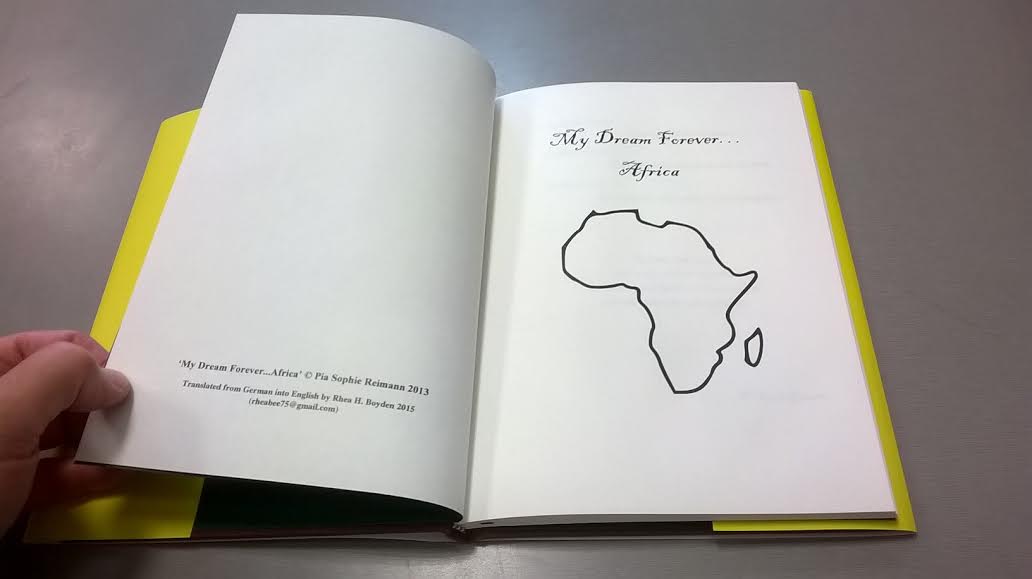
A couple images from the completed story that I translated from German to English for Berlin client Pia Sophie Reimann:

Africa book 1

Africa book 2

‘Stories From The City-A Berlin Anthology’ Book Launch

4 Jul

STB anthology

kop oldkop new

On Sunday July 19th 2015, Slow Travel Berlin will launch a new book- ‘Stories From The City-A Berlin Anthology’. My article about the history of my street in Prenzlauer Berg- Kopenhagenerstrasse- will be included in the book. I talk about how my street changed over the decade I lived there from 2004-2014 as well as some of the fascinating history of some of the buildings on the street. Above are two photos of the building I lived in for that tumultuous decade. The old- photographed in 2009 and the newly-renovated- in 2014.

Breakfast at The Windmill Cafe-Santa Cruz

14 Jun

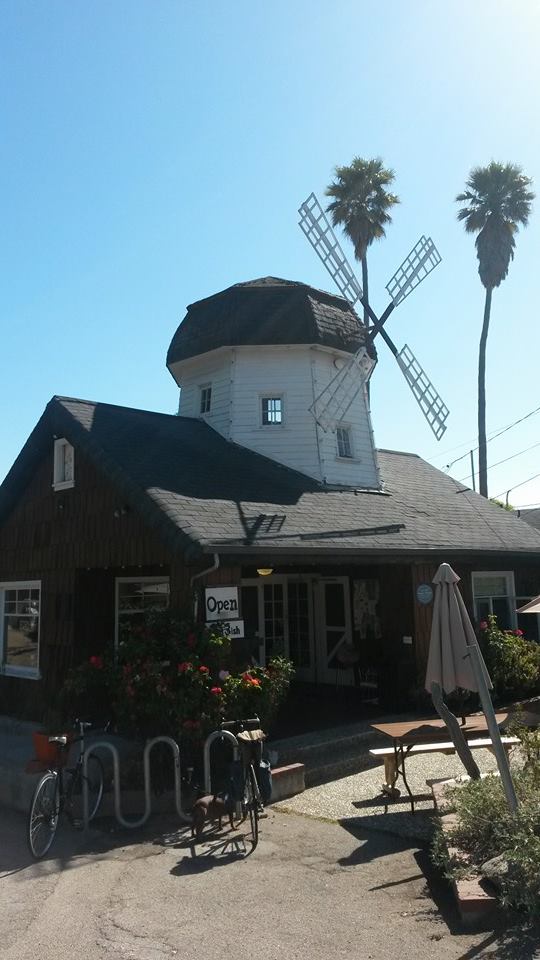
The Windmill, Santa Cruz

by Rhea H.Boyden

Last month I was in California visiting family for a few weeks. I spent some of the time in the Santa Cruz Mountains going for long walks down the canyon with my sister and the family dog, a lovely white German Shepherd. We also went swimming at the UC Santa Cruz pool. I have never been one to see much merit in a lazy or laid back holiday. I like keeping active especially because I like eating good food. I always eat a lot when I am in California in the springtime and it is hard not to when one is surrounded by so much good food. We enjoyed delicious burritos, chips and salsa at a roadside taqueria and bowls of San Francisco clam chowder. We ate blueberries and strawberries each morning with our cereal. We also enjoyed delicious homemade spaghetti carbonara made with fresh eggs from the chickens at my stepdad’s house.

One morning, when a friend was down visiting us from San Francisco, my sister suggested we go into Santa Cruz to her favourite breakfast place: The Windmill Cafe. She told us they had the most delicious sauteed veggie croissant. We drove down the mountain and then along East Cliff Drive in Santa Cruz to the delightful cafe which is an old windmill that was built in 1927 to house a family flower bulb distribution. The area surrounding the windmill was once flower fields.

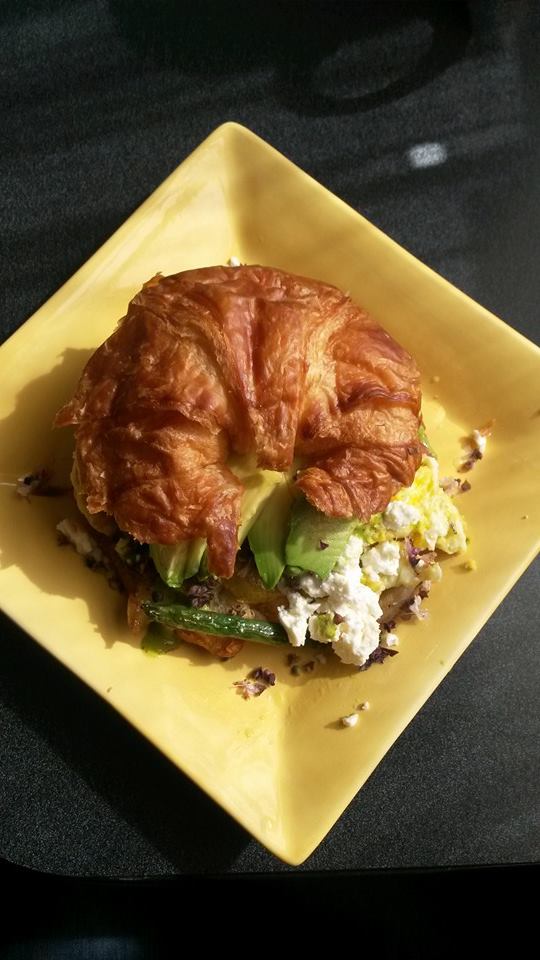
Croissant

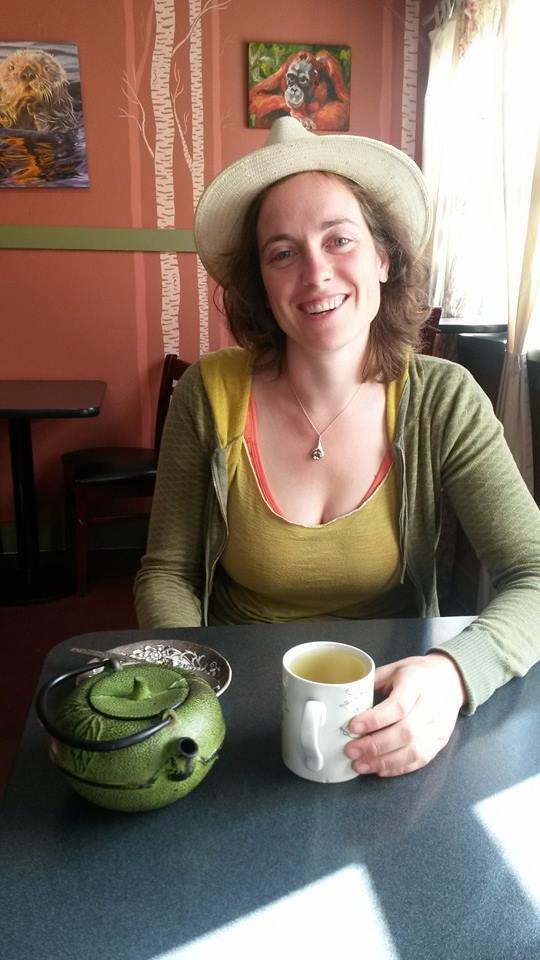
We went in and a friendly waiter greeted us and brought us to our table. ‘Let me just move this table a little so it doesn’t wobble’, he said to us with a smile. ‘This whole side of the room is a little sunken since the Loma Prieta earthquake in 1989’. We looked at the floor in amazement and indeed there was a crack running right through the restaurant. Santa Cruz was struck particularly hard by the earthquake. ‘Would you like to start with a cup of coffee?’ he asked us. My friend and I ordered the freshly brewed French roast coffee while my sister, who has never been a real caffeine junkie, ordered a green tea that was brought to her in a lovely green tea pot that matched her outfit perfectly.

cordelia at windmill

The Windmill Cafe was founded in 2009 by Mary Apra who grew up in a large Italian family who loved cooking and eating good food. She has a background in permaculture gardening, design, theatre and fashion. The menu includes a range of delicious gluten free and organic delicacies such as waffles, pancakes, bagels and a Tofurito which is a tortilla filled with scrambled tofu, cabbage, potatoes, cheese and salsa. I personally would have been sceptical as to how good scrambled tofu would have tasted but I am sure it must be pretty delicious after tasting how good their sauteed veggie croissant was. All three of, us upon the recommendation of my sister, ordered it and it was yummy: A fresh croissant filled with sauteed red cabbage, cauliflower and green beans as well as feta cheese, egg and avocado topped with a delectable honey mustard dressing. We washed it down with a glass of freshly squeezed orange juice and more tea and coffee. We then said goodbye to the friendly waitstaff and went for a walk along the beach to Santa Cruz harbour. I am very much a homebody and I love to cook. I don’t eat out in restaurants that much, but when I do I try and get new ideas for my own cooking. I would like to try and recreate this sauteed veggie croissant, but I somehow doubt I will be able to make it quite as delicious as how Mary Apra and her team of creative chefs managed to make it.

The Windmill Cafe is at 2-1231 East Cliff Drive in Santa Cruz and is open daily from 7am to 3pm.

Review: John Singer Sargent Exhibit – National Portrait Gallery – London

28 Mar

by Rhea H. Boyden

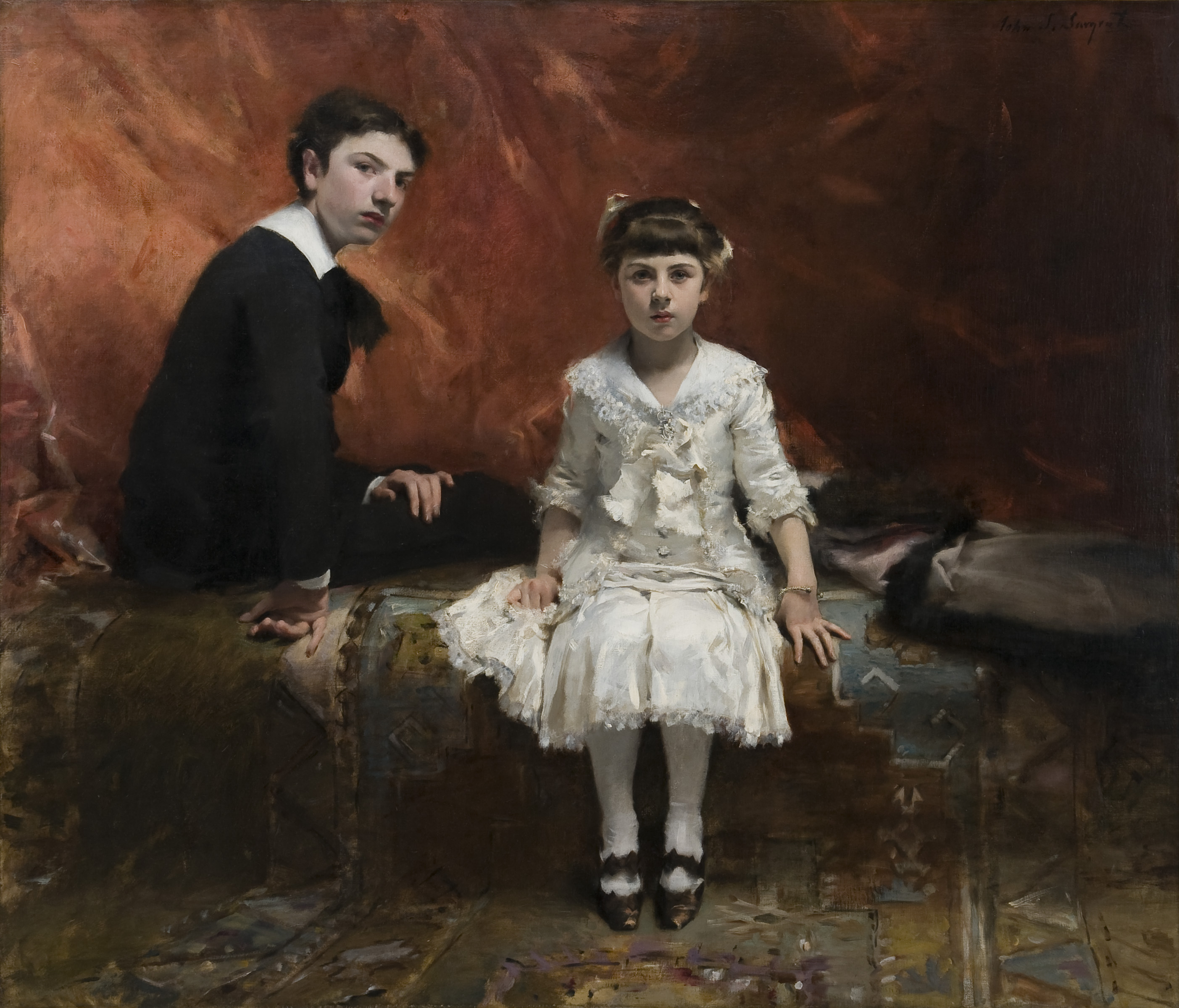
019. Portraits de M.E.P. … et de Mlle L.P. (Portraits of Edouard and Marie-Louise Pailleron)

Édouard and Marie-Louise Pailleron by John Singer Sargent, 1881

© Des Moines Art Center, Des Moines, Iowa

A month ago I attended the fabulous exhibition: ‘Sargent: Portraits of Artists and Friends’ at the National Portrait Gallery in London. A friend of mine had recommended I go while in London and I had no idea what was to await me there. I had learned a little about Sargent in my art history class at secondary school in Ireland, but I had not expected such an incredibly breathtaking and awe-inspiring exhibit comprising over 70 portraits by Sargent brought together for the first time from galleries and private collections around the world.

John Singer Sargent, a distinguished painter and muralist, was born in Florence in 1856 to American expatriate parents, the physician Fitzwilliam Sargent and Mary Newbold Singer. He had little formal schooling in his childhood, as his parents were constantly moving around Europe. His mother (who reminds me of my own restless American expatriate mother) believed that the artistic and architectural wonders of Europe were enough of an education for him and his younger sister Emily. Sargent was encouraged by his parents to draw and paint, and in the spring of 1874 the family moved to Paris to find an art instructor for the then 18 year old Sargent.

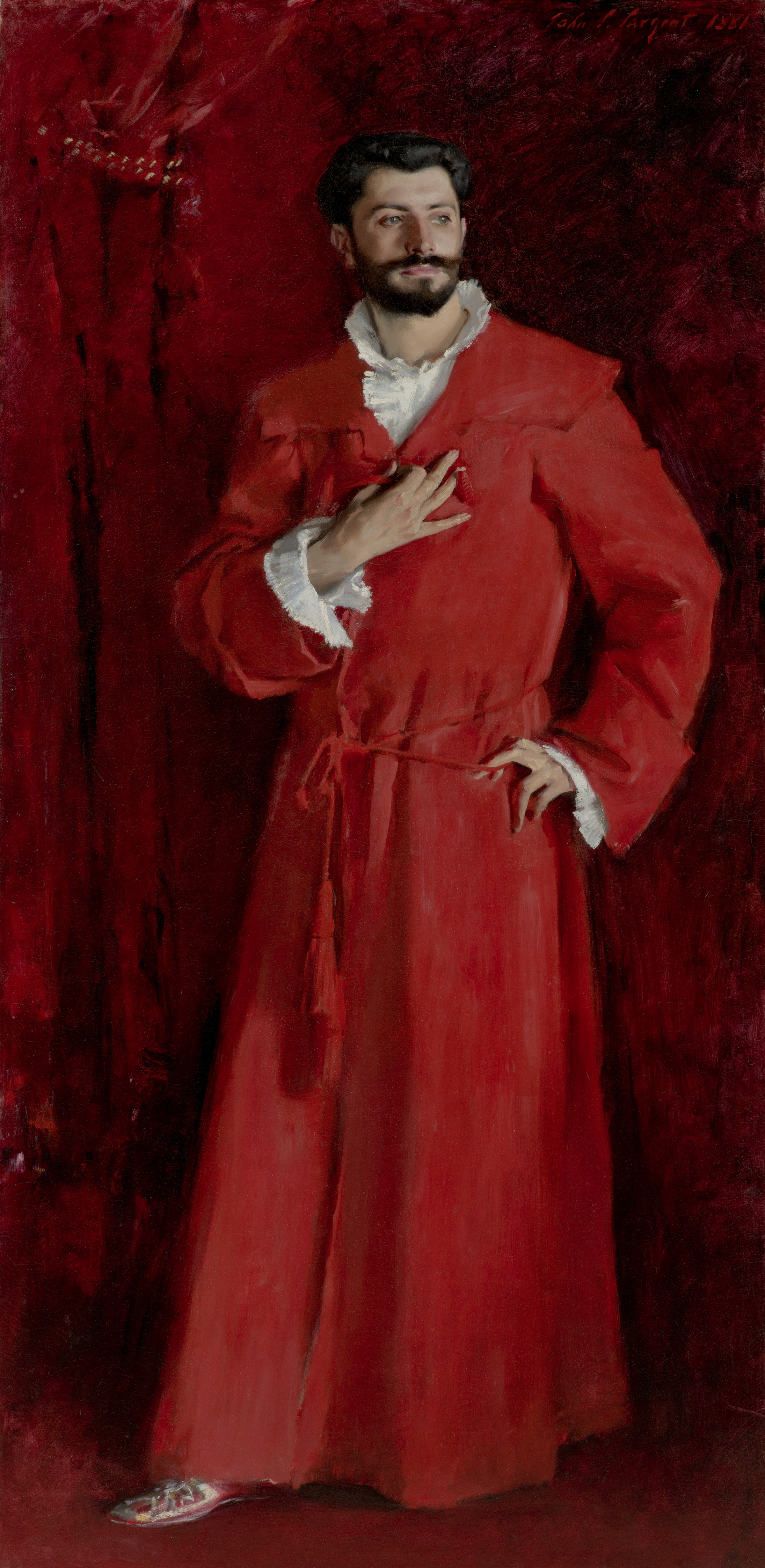
129. Dr. Pozzi at Home

Dr Pozzi at Home by John Singer Sargent, 1881

© The Armand Hammer Collection, Los Angeles

The chosen instructor was the flamboyant Carolus-Duran who immediately recognised Sargent’s immense talent and took him under his wing. Carolus-Duran had many young American artists in his studio in Paris, and it was here that Sargent made his first connections to the North American art world. The most striking thing about Sargent was how incredibly cosmopolitan he was, moving easily in his lifetime between the art scenes of London, Paris, Florence, Boston and New York. Not only was he a hugely talented painter, he was also fluent in English, French, German and Italian making it very easy for him to speak to all his portrait clients in their native languages.

The collection of paintings at the National Portrait Gallery are not portrait commissions, however, but portraits of his many friends in the world of art, music, literature and theatre. These paintings are not formal works created for clients, but daring and sensual portraits painted mainly as gifts for the sitters. It is a collection of highly-charged and unique portraits in which Sargent was free to experiment. And you can feel this energy when gazing at the portraits. I found myself standing in front of a full length portrait of Madame Edouard Pailleron who was the wife of the bohemian writer Edouard Pailleron, a very influential person and a sponsor of Sargent’s early career. Madame Pailleron is outdoors and is wearing a black dress with white lace. The contrast between the black dress and the green background is stunning. A man was standing next to me gazing at the portrait too and I could feel a triangle of tense energy between me, the man and the painting.We fell into conversation. ‘It is astounding how much he achieved in his life.’ I said to the man. ‘And to think that he confided to the author Henry James when sitting to paint his portrait that he felt he had lost confidence in painting portraits? How could this even be possible, that Sargent lacked confidence when you see this incredible exhibit?’ The man and I conversed briefly before going our separate ways in the museum. Next to the portrait of Madame Pailleron is a portrait of her children: Edouard and Marie-Louise Pailleron. Sargent may have had moments of self-doubt regarding his talent, but he certainly seemed to have had a lot of patience with his sitters. It is reported that it took 83 sittings to complete the portrait of the Pailleron children. Marie-Louise battled with him over hair and costume. It is said that Sargent had a great understanding of child psychology. His patience with the spoilt Marie-Louise is surely testament to this.

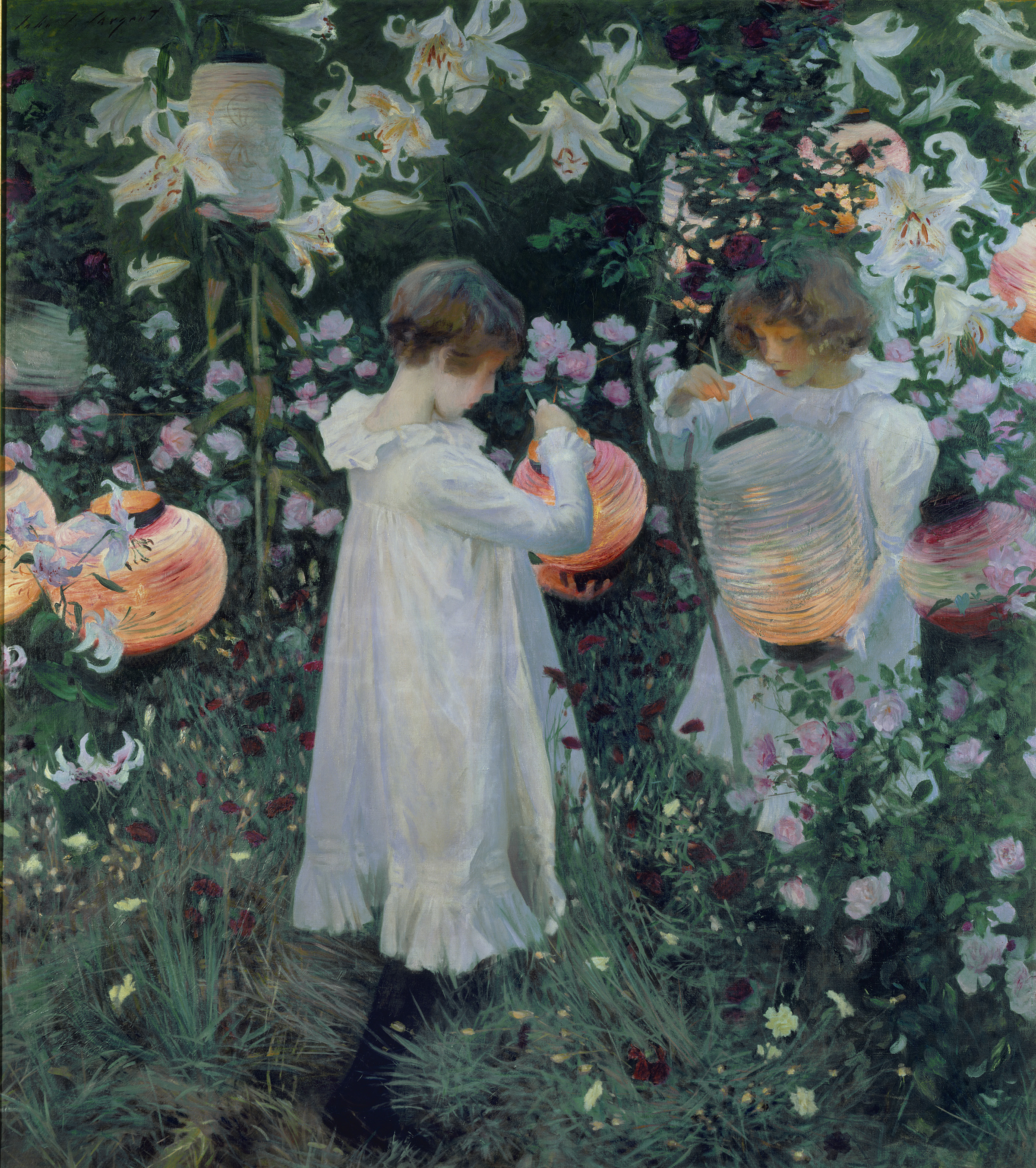
Carnation, Lily, Lily, Rose

Carnation, Lily, Lily, Rose by John Singer Sargent, 1885-6 © Tate, London, 2015

Erica Hirshler,the curator of the Museum of Fine Arts in Boston (which is home to Sargent’s marvelous murals) has said that Sargent was a sponge, soaking up a myriad of influences: Japanese design principals and the techniques especially of Velazquez and Degas. Carolus-Duran was also heavily influenced by the Spanish Baroque portraitist Velazquez, and this influence can be seen in the full length portrait of Dr. Pozzi at Home which hangs right next to the portrait of the Pailleron children. Sargent depicts Dr. Pozzi in an ecclesiastical mode, donned in red robes. Dr. Pozzi was not a cardinal or a priest, however, but the father of modern French gynaecology who advanced reproductive and sexual health for women.

After admiring Dr. Pozzi I ventured on to gaze at what is one of Sargent’s Impressionist masterpieces: ‘Carnation, Lily, Lily, Rose.’ Sargent was close friends with Claude Monet and had learned a lot from him about capturing fleeting outdoor light. One portrait in the exhibit is of Monet sitting outside painting. The past few nights I have been listening to Mozart’s quartets while gazing at my incredible copy of the colourful ‘Carnation, Lily, Lily, Rose,’ for it was the feminist and art historian Vernon Lee who said that the painting’s pleasures remined her of the slow movements of a Mozart quartet. I am sure Sargent would have approved of this musical interpretation, as he was a talented musician himself. He was a lover of Wagner and a fine pianist. One composer he greatly admired and supported was Gabriel Faure. When I gazed upon the portrait of him I shed a tear as his facial features reminded me of a musician I once loved who is sadly no longer in my life. And as if I needed a reminder of the pain that accompanies unrequited love, one of the next images my eyes rested on was a brilliant sketch of William Butler Yeats. Yeats proposed marriage to Irish revolutionary feminist Maud Gonne six times and she rejected him outright. They remained ‘friends’ but I have always been skeptical of the nature of that friendship. As I entered the exhibit I was still nursing the pain of rejection by the man who resembles the portrait of Gabriel Faure, but getting lost in the pleasures of art is certainly a good cure.

Ellen Terry as Lady Macbeth

Ellen Terry as Lady Macbeth by John Singer Sargent, 1889

© Tate, London

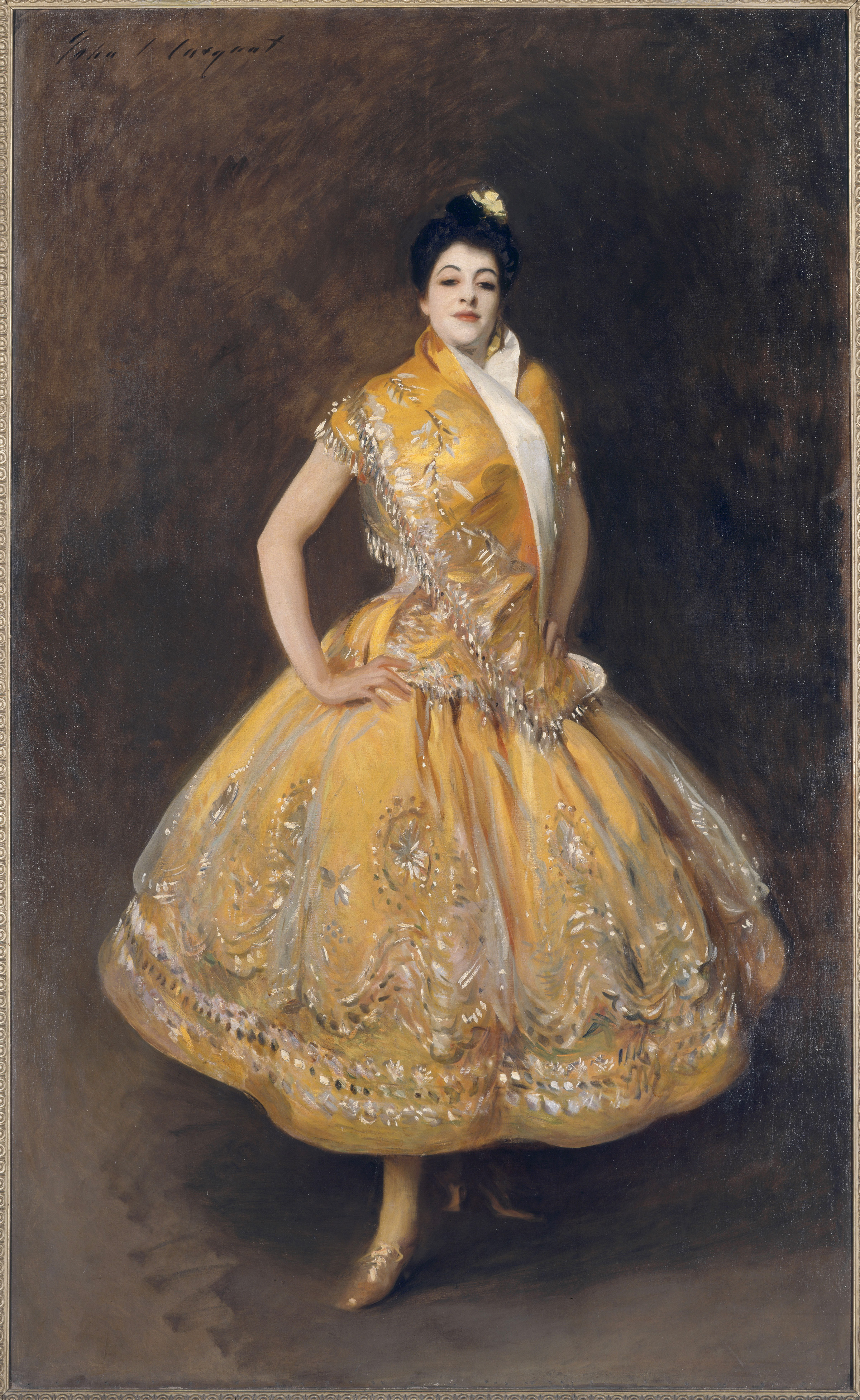
My spirits were lifted as I absorbed the details of the full length portraits of both Ellen Terry as Lady Macbeth and the wild Spanish dancer La Carmencita. Sargent found both women’s theatrical presence electrifying and persuaded them both to sit for him. One of Sargent’s great talents was in capturing fabric in his painting. Barbara Dayer Gallati, author of the lovely book accompanying the exhibit ‘John Singer Sargent- Painting Friends’ said of the green silk and blue tinsel of Ellen Terry’s dress that it ‘provided Sargent with a field day for Impressionistic fireworks and scintillating brushwork.’

068. La Carmencita

La Carmencita by John Singer Sargent, 1890 © Musée d’Orsay,

Paris (R.F. 746)

I then fell into conversation with an elderly American woman as I wandered through the room containing Sargent’s outdoor paintings featuring Wilfried and Jane de Glehn painting at a fountain, another entitled ‘Group with Parasols’ and the underrated but stunning ‘Paul Helleu Sketching with his Wife’. Sargent also painted portraits of August Rodin, Robert Louis Stevenson and the actor Edwin Booth, whose younger brother John Wilkes Booth had murdered Abraham Lincoln. Gallati says in her book on the exhibit that Booth ‘wears a tragic, haunted look alongside a masterful self-confidence.’ I believe it is Sargent’s incredible talent for appealing to a variety of moods and emotions that make his work so astounding, and while looking at the portrait of Edwin Booth it struck me as to why I felt a whole range of emotions while wandering through the exhibit. The joy I felt while gazing at the uplifting and colourful palette of ‘Carnation, Lily, Lily, Rose’, was then starkly contrasted by the romantic yearning that hit me while looking at the portrait of Gabriel Faure. Indeed, the whole exhibit made me feel both connected to the world and completely lost and lonely in it at the same time. The fact that Sargent had so many friends and acquaintances in the world of art, music, literature and theatre on both sides of the Atlantic is cause for both admiration and envy. But then, how could one not be well-connected and accepted when one has the unbelievable talent that Sargent possessed in many fields. I left the exhibit feeling deeply inspired to achieve more, learn more and keep on reading and writing and reaching out to and connecting with other writers, musicians and artists, for only by doing this do I escape the pain of loneliness and unrequited love. Barbara Dayer Gallati’s exhibition book has been my close friend this past month and Sargent’s art has filled my soul with hope and inspiration.

‘Sargent-Portraits of Artists and Friends’ runs until May 25th 2015 at the National Portrait Gallery in London. In June 2015 it then moves to the Metropolitan Museum of Art in New York.

All images courtesy of Sylvia Ross at the National Portrait Gallery Press Office.

I am an aunt!

8 Mar

It is with great excitement and joy I announce that my first niece Lucy Ellen Boyden was born at 10.43pm on March 3rd, 2015 at Cork University Hospital, Ireland. She is first child of my dear brother Tadhg Boyden and his lovely partner Laura Kinsella. She is named after my mother Ellen Riorden and my grandmother Ellen Boyden. This is a first grandchild for my parents and our whole family are over the moon that the new generation has arrived. I very much look forward to being a devoted aunt. Lucy has already inspired many ideas for stories I can write. Happy days!

Baby LucyRhea and Baby Lucy

Excerpt from Essay to be published in The Juniper Tree Project Book

13 Feb

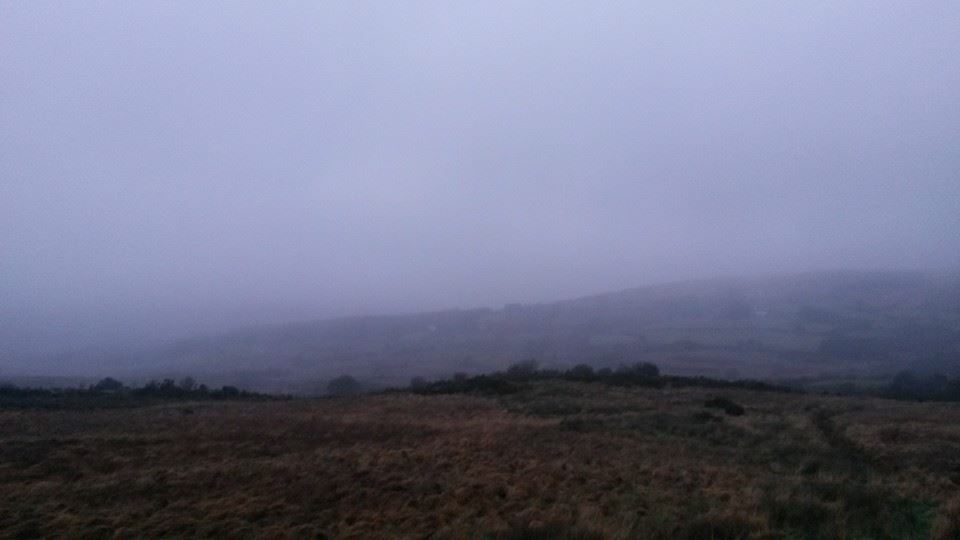
Birthhouse in the fog

We leave on New Year’s Day and it has been pouring rain all day. The river is roaring and the fields are flooded. When we finally leave to drive, the rain has thankfully eased off. As we drive in the fog over the mountain I ask my brother to stop at the top of the pass which is about 10 miles from our current family home. I tell him I would like to photograph the old farmhouse that our parents lived in in 1975. I was born in the house 40 years ago this July by the light of one candle. My mother was alone and I was born nearly two months premature. There was no electricity and the house is truly in the middle of a bog in the middle of nowhere. The story of my birth is a favourite family story. My brother tells me there is no point in stopping because you can’t see the house in the fog. I tell him it is perfect and I want a photo anyway. I am driving by the house I was born in on New Year’s Day of the year I will turn 40 and I will take a photo of it even if I can’t see it. I have just uprooted my life in Berlin and returned to the country of my birth. The writer in me immediately sees the beauty of metaphor. I can’t see the house I was born in in the fog. I still need time for things to become clear now that I have moved back to Ireland. Maybe the next time we drive by the house it will be a sunny day and more things will be clearer in my life.

STB’s Best Long-Read Articles of 2014

9 Jan

Brecht-Weigel-Haus_Buckow_01My Brecht Weigel Article has been included in this round-up of Slow Travel Berlin’s best long-read articles of 2014:

http://www.slowtravelberlin.com/stbs-best-long-read-articles-of-2014/?utm_source=site&utm_medium=internal&utm_campaign=recent_posts

2014 in review

1 Jan

The WordPress.com stats helper monkeys prepared a 2014 annual report for this blog.

Here’s an excerpt:

A New York City subway train holds 1,200 people. This blog was viewed about 6,900 times in 2014. If it were a NYC subway train, it would take about 6 trips to carry that many people.

Click here to see the complete report.

An Evening at the Centre for Creative Practices

21 Dec

naked branches. group photo.

by Rhea H. Boyden

Last week I was sitting in bed at 8pm snuggled up and ready for sleep when I saw an enticing description on a Facebook invite to a performance at the Centre for Creative Practices co-hosted by a childhood friend of mine Greg Felton. The performance description read: ‘A very special one off show about love, loss, HIBERNATION and transformation. Using anonymous harvested regrets and dreams and the myth of all myths, a powerful cast of spoken word, vocalists and musicians will weave a stunning, achingly life-filled spell of story and sound that will capture and invite you into experiencing the entire gorgeous mess of life.’

It was the word hibernation that caught my attention first. My flatmate and I had just been discussing the merits of the long winter’s nap and not to feel guilty about it at this time of year especially as this is how dark it is when I arrive at work at 7.43am in Sandyford, Dublin. A darkness that is thankfully punctuated by a crescent moon:

sandyford moon

I decided to pull myself out of my state of hibernation last week to discover the other ideas the perfomance promised to explore: love, loss and transformation. After work I went with a few colleagues of mine to the Centre for Creative Practices on Pembroke Street in Dublin.

The venue, which promotes cultural diversity and artistic entrepreneurship is a cozy and very inviting space. I walked in and greeted my old friend Greg Felton who I had not seen in 15 years. Felton is a talented pianist who has been praised by The Irish Times as being one of Ireland’s most talented composers and players and an exceptional young pianist.

Greg Promo pictures 033 (1)

Greg Felton

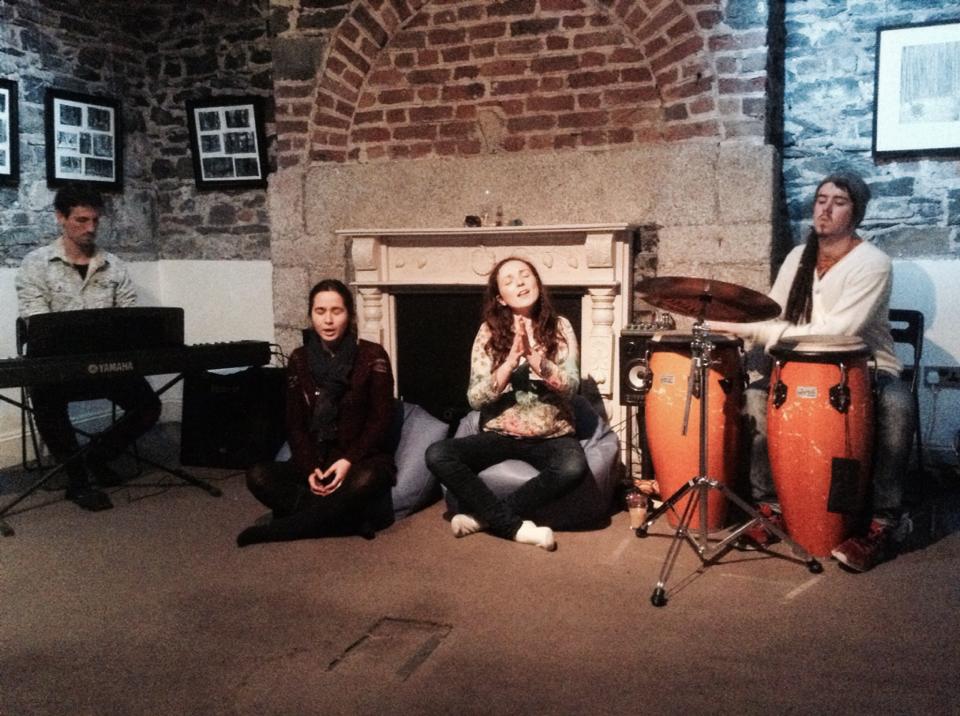
The show commenced with Dave Rock, who is a spoken word artist, pacing back and forth across the room, with Felton on keyboards, Jake Quinn on percussion and Aine Ni Heidhn and Ciara Ryan on vocals. Dave then began his story about the people of ancient Ireland and how happy they were and how they sang and laughed and made love to nature. Until one day, creatures came out of the ocean with tongues and eyes as black as oil and the war began and all the trees were cut down and the people forgot how to sing and make love. The entire show was a brilliant example of improv music and spoken word. They had only rehearsed for a few hours the same afternoon, and it was powerful as Dave engaged the audience and asked us questions about what we love in nature and how we feel when we are disconnected.

Dave, who is a talented story teller, spoken word artist, and gifted teacher told me afterwards that the ‘creatures with tongues and eyes as black as oil’ were the Fomorians who in Irish mytholgy were a semi-divine race said to have inhabited Ireland in ancient times. They were the gods of chaos and wild nature. I couldn’t help but focus on the word oil and how oil is driving our insane economy and how on the Thursday before Christmas a wonderful performance like this only draws a dozen audience members because people are too busy Christmas shopping and caught up in pre-Christmas hysteria. This made me even happier that I had made the effort to come to the show and, indeed how wonderful and important improv theatre and music is for bringing people together and celebrating listening and communicating.

_MG_9980

Dave Rock

My interest in the importance of improv now piqued, I decided to google a bit about it and I immediately stumbled upon a TED Talk hosted by a woman named Jen Oleniczak, a teacher who believes fully in the importance of improvisation to make you a better communicator and, above all, a better listener. ‘In improv’ she says ‘you are responsible for everyone and everyone is responsible for you.’ She says that listening is so crucial because every tiny piece of information is important to creating a scene and also that you are vulnerable and you could fail so you have to be fully in the zone and in harmony with the people you are interacting with. She said doing an improv class makes you self aware of how bad a listener you are and how you can take steps to remedy that.

Oleniczak told a story of a woman who had worked in a bank for 8 years who took one of her improv classes and then came up to her after and told her that she had never felt so supported in her life than she had in the improv class. This comes as little surprise that a woman working in a bank does not feel supported by her bosses. Being in the lovely space of the Centre for Creative Practices made me think a lot about how so many of us have our priorities wrong at Christmas. The banks, shops and advertisers have managed to turn Christmas into the biggest money-maker of the year and when I read some of the stories behind this consumerism I can’t help but get a little depressed. Just a few days ago I read an article in The Guardian entitled ‘Santa’s Real Workshop- The town in China that makes the World’s Christmas Decorations.’ The article talks about the ‘Christmas Village’ of Yiwu thousands of miles from the North Pole where workers who have little idea of what Christmas is, slave for more than 12 hours a day making 60 per cent of the world’s Christmas decorations. They get covered in red powder whilst covering polystyrene snowflakes and stars and have to change their face masks multiple times a day. They only earn 200-300 pounds a month making the stars that we can buy for 99 pence at the check out.

At one point during the show Dave asked the audience what feeling you have when you are not connected to the earth and your community. I offered him the most obvious answer: ‘Alienation’. He looked at me and said ‘Yes, alienation’ and then went on to eloquently talk about alienation for the next minute or so. Why did I say alienation? Because I have, to a certain degree, been feeling a bit of alienation since arriving back in Ireland. But I now feel, after attending this lovely improv show at the Centre for Creative Practices that a bit of that alienation that comes with my repatriation is slipping away and I am slowly becoming part of the community again. After the show I also spoke to Nina Panagopoulou who is a Greek artist who works at the Centre for Creative Practices and whose wonderful artwork is currently on display there. I will definitely be returning to this lovely place to attend its shows and exhibits in the future, for the inspiring evening has set the mood and tone that I like for Christmas: focussing on being together, listening, interacting and not forgeting what it is that makes us sing in tune with nature and with our fellow human beings.

Feature image photo credit: Nina Panagopoulou

Check out Nina’s artwork here: http://www.nina-panagopoulou.com/bio.html

A special thanks to Greg Felton and Dave Rock for providing me with their photos and the time to speak to me on the Sunday before Christmas.