Tag Archives: asia

Trip to Japan – Part Three – Nara and Osaka

1 Dec

Dáire and I left Kyoto on Friday morning, November 14th. We checked out of our room and walked with our bags back to the station. It was a sunny morning and our next destination would be Nara for a few hours en route to our hotel in Osaka. There are two trains between Kyoto and Nara: the local and the express train. We just missed the express because we had to top up our IC cards.(Metro cards that are good on all trains in Japan) Google maps helpfully tells you approximately how much the train fare will be between cities, in this case the local was about 720 Yen (about 3.97 Euro) It took about 1 hour and 15 minutes, which was fine, after all, because we weren’t really in a massive hurry, plus we got seats because we got to the platform early. We also left after rush hour. One feature I especially noticed from our train rides in Japan were the many river beds that only had a small amount of water running through a much larger river area and under wide and tall bridges. In the rainy season – June and July, which also brings typhoons, these rivers really fill up. We were well advised to avoid going to Japan between June and August. First it is bucketing rain, followed by unbearable heat. We found November just lovely. 
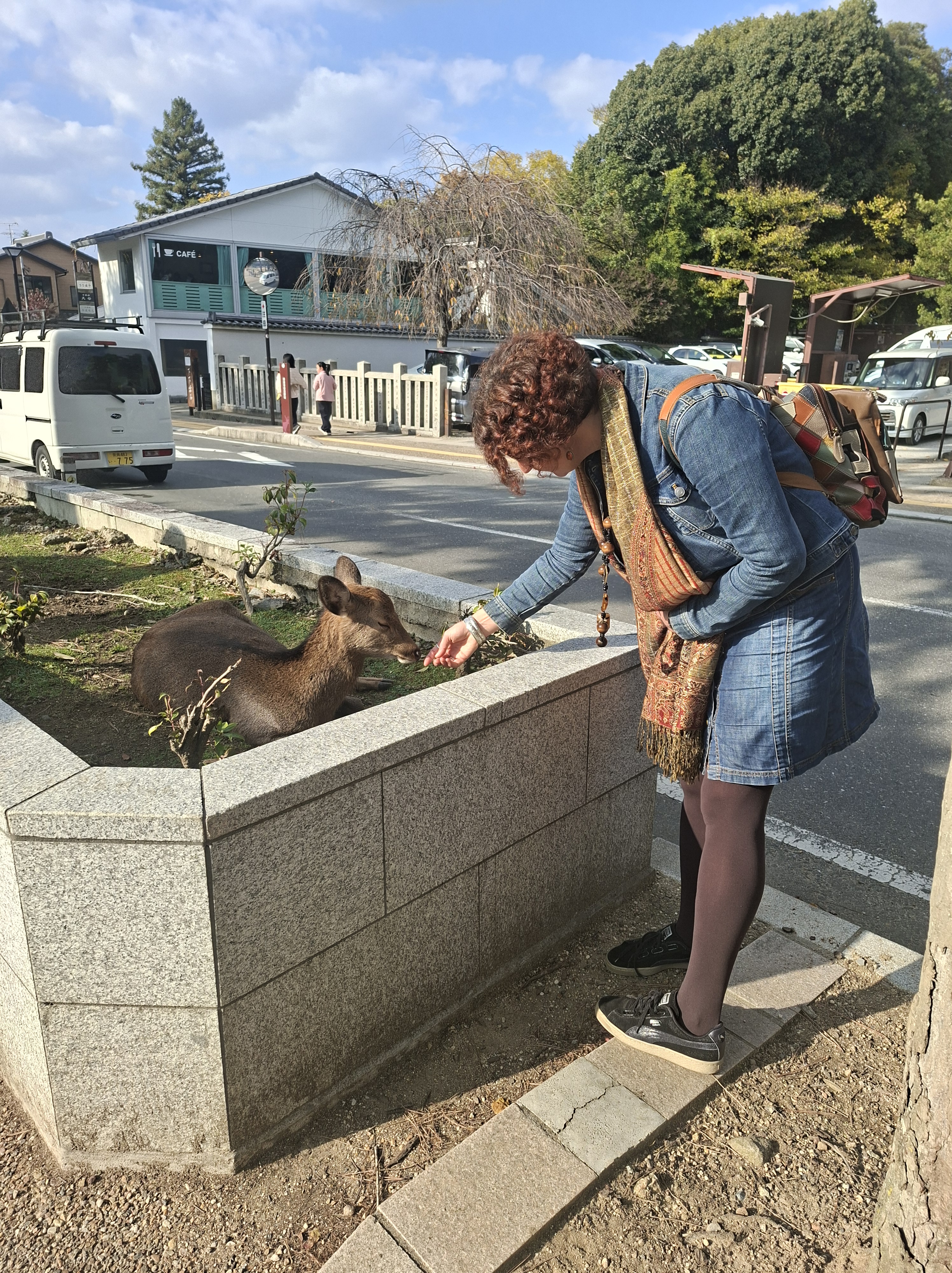
Bowing Deer at Nara Park

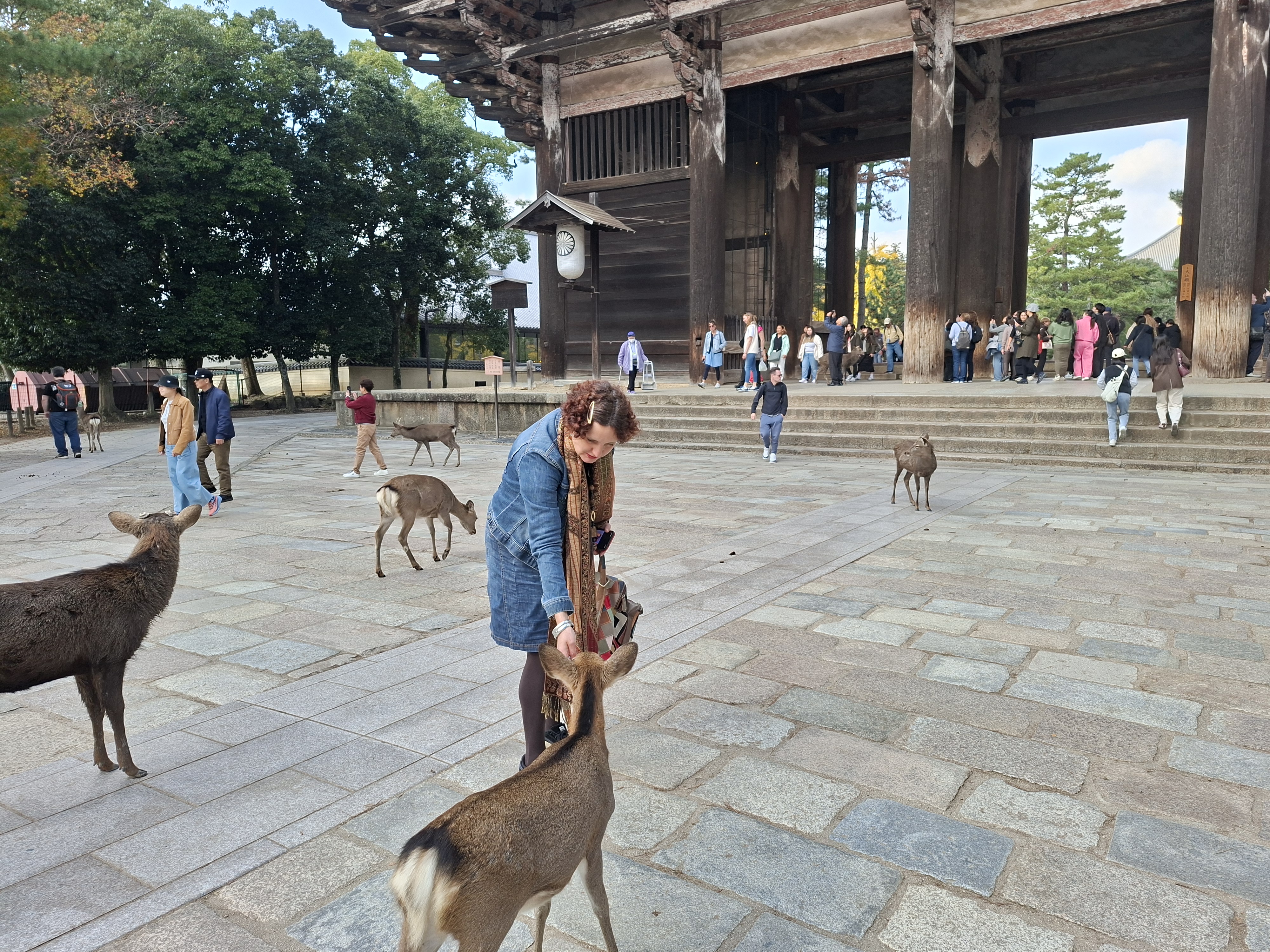
We arrived at Nara Station at about noon and looked for a locker for our bags. This took us about 20 minutes to do because the lockers upstairs were all full, but we found more downstairs in the station. One locker was quite big and fit both our wheelie bags (cabin sized) and both our backpacks. It cost 1,000 Yen (about 5.60 Euros). We then walked out of the station and there was a big sign saying Nara Park and a bus right next to it. This is why visitors come here: to see Nara Park and like most places in Japan, it was easy; there were attendants standing there, instructing you to stand in line and within 10 minutes we were on the bus to see one of the strangest things we have seen: bowing deer. Yes, that’s right. As soon as you arrive at Nara Park, there are deer everywhere: sitting at the side of the street, wandering around freely, sitting in raised flower beds resting. City authorities have clearly given up on trying to grow any plants in these raised, concrete flower beds; the deer use them as their beds. As soon as you walk up to the deer, they stand there in front of you, bowing at you and let you stroke them. We couldn’t help but be highly amused by this. In Japan, where people bow, the deer also bow! They especially bow to people who purchase the special deer crackers to feed them. 

Toda-Ji Temple Entrance Gate and Dáire with a friendly deer

The deer were entertaining and they were all over the park, but the other incredible attraction in Nara besides these creatures is, of course, the unbelievable Toda-Ji Buddhist Temple. First you pass through a huge entrance gateway (with deer everywhere), then you walk past a beautiful pond with large orange koi swimming in it surrounded by perfectly landscaped gardens. From there you can pay a modest entrance fee into the temple which houses the world’s largest gilded bronze Buddha statue. The Buddha is seated on a platform and its height is 50 metres. We had just seen a lot of temples and shrines the previous week but this building blew our minds. It was the biggest one, by far, that we had seen. The site is a UNESCO World Heritage Site and it is no wonder. We have never seen anything like it. 

The Great Buddha Hall at Nara

Nara Park covers about 500 hectares and has multiple shrines, temples and beautiful gardens, but we really didn’t have time to do more because we still had to get back to Nara Station, retrieve our bags and get on the train to Osaka before rush hour but we were very happy we took this detour slightly east from the direct route between Kyoto and Osaka because it impressed us greatly. It was a beautiful day, so instead of taking the bus back to the station, we walked the half hour which was lovely. We were on a train to Osaka by 3.30pm. 
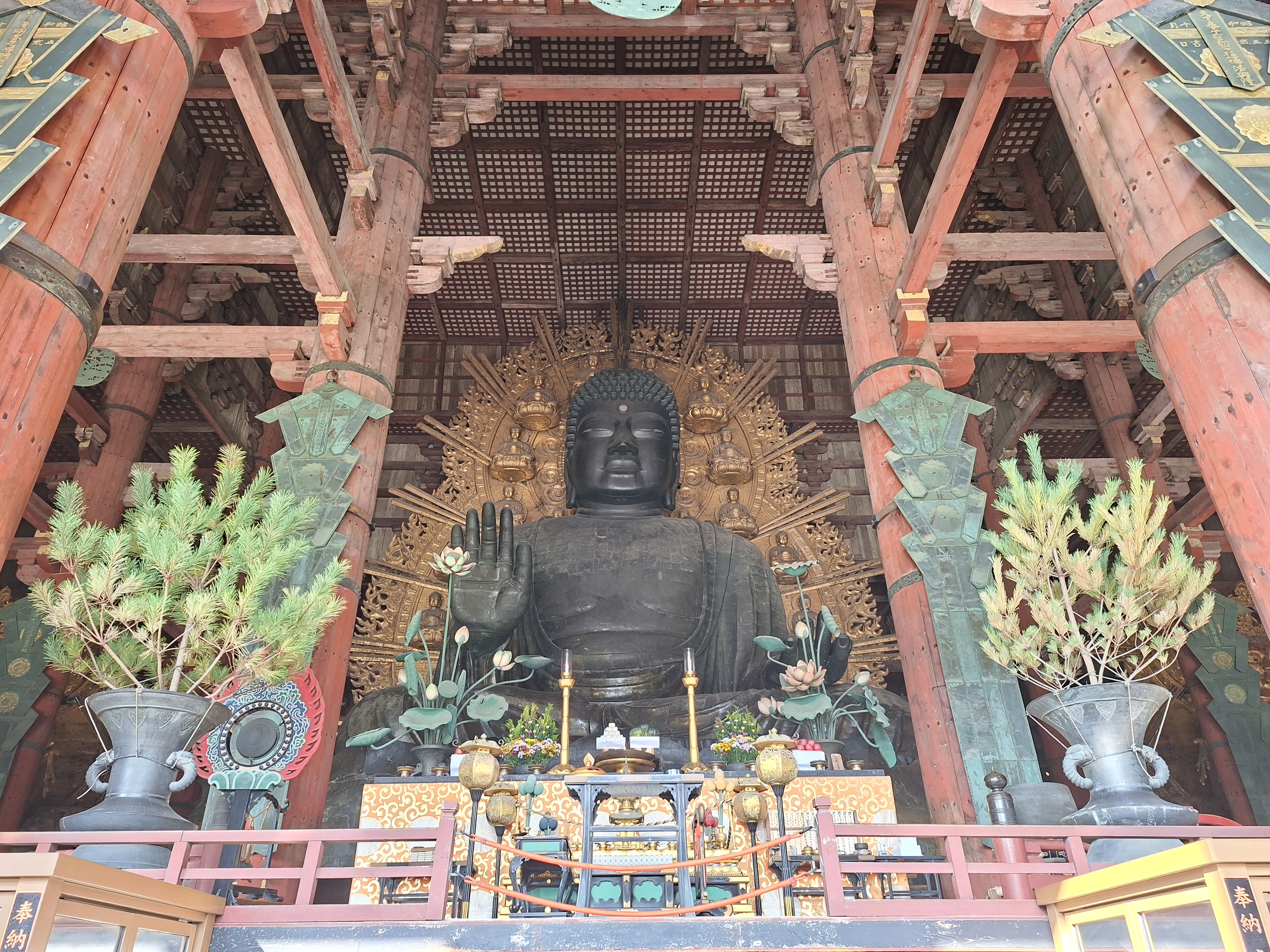
The World’s Largest Gilded Bronze Buddha Statue

We arrived at Tennoji Station in Osaka by about 4.30pm. During our whole trip to Japan we had no problems finding our way around on public transportation, with the exception of Tennoji Station. We had to change from the Japan Rail Station to the Metro Station which wasn’t more than a 6 minute walk but it was very confusing and not very well signposted. We found our train eventually. We also had to transfer back through this station en route to Osaka’s Kansai airport 2 days later and we weren’t stressed because we had left plenty of time, but apart from the station being quite confusing, the train to Kansai Airport also decouples after about 5 stops. The front half of the train goes to the airport and the back half goes to Wakayama. The announcements for this are only made in Japanese and English. Too bad if you don’t speak either of these languages. It seemed bizarre to us that, of all trains, they would decide to decouple the one going to the airport! We wondered how many travellers got caught out by this and missed their flights. 

Cooking my own meat in Osaka

In any case, we arrived at our hotel, the Hotel Luxcare, in Osaka by about 5.30pm. It was another lovely room with a separate room with a bidet toilet (They are EVERYWHERE in Japan) and another lovely high pressure shower room. The price: a very reasonable 230 Euros for 2 nights sharing. We consider 57 euros each a night a really good deal. It also came with endless toiletries and bottled water and tea. We dropped our bags and headed out pretty quickly to find something to eat. We found a place nearby where you order raw meat and they bring it to you and light the grill right at your table and you cook it yourself. We had a salad and an alcohol free beer with this meal. I found the meal okay, but I am not going to highly rate this restaurant, neither do I remember the name of it, because we didn’t have any rice or noodles with it so the meat didn’t sit well with me. Either they didn’t provide this or I didn’t see it on the menu but my stomach needed something to soak up the fat. Still, it wasn’t bad. It was an experience. The Japanese seem to love their interactive meals. You cook your own food, right at the table. Clearly this experience is not suitable for children because they could easily burn their hands.

Osaka Castle at Night

We had chosen a very good location in Osaka to stay considering this was the end of our trip and we only had 2 nights here. We were only a short walk from the impressive Osaka Castle which we walked to right after our dinner and we saw it illuminated in blue. We walked around the castle grounds and moat and then walked back to our hotel stopping at the 7-11 right opposite to get some milk and bananas for our breakfast. We had brought the rest of our muesli with us. We had just enough to last us the final 2 mornings in Osaka. We were also a short walk to two Metro stations.

Osaka Metro

We had booked a 5 hour bicycle tour the following morning on the Get Your Guide app for about 100 Euros each. We were so lucky because there wasn’t a cloud in the sky and it was 20 degrees. It was the perfect day to get on a bike. We also really welcomed it after the many miles of walking we had done the previous 2 weeks. This was mid November and it was gorgeous weather. It was all the more appreciated when we looked at the current weather back at home in Ireland: storms and floods. We would be flying back to that in 36 hours. 

Our tour started at 10am at the Temmabashi Station only a 5 minute walk from our hotel which made our life easy. We met our guide, a very pleasant Japanese man, probably in his late 30s. There were 4 other Americans on our tour. We highly recommend these small group tours. You get to meet a few other people and talk to them, but you are not in such a big group that you get overwhelmed or the tour is held up by too many people. I would definitely do these again while travelling. Fully private tours are very expensive and it is actually quite enjoyable to meet a few other people for a few hours and exchange experiences with them. None of our tours had more than 4 to 6 other people on them and were perfectly paced with chilled out guides who we found very pleasant. We picked up our bicycles from the station parking garage. (the bikes only had the flimsiest of locks. Bike theft is a problem in Japan, but not half as much as other places. Bikes were unlocked in Kyoto, but this was Osaka, a city of 18 million people.)
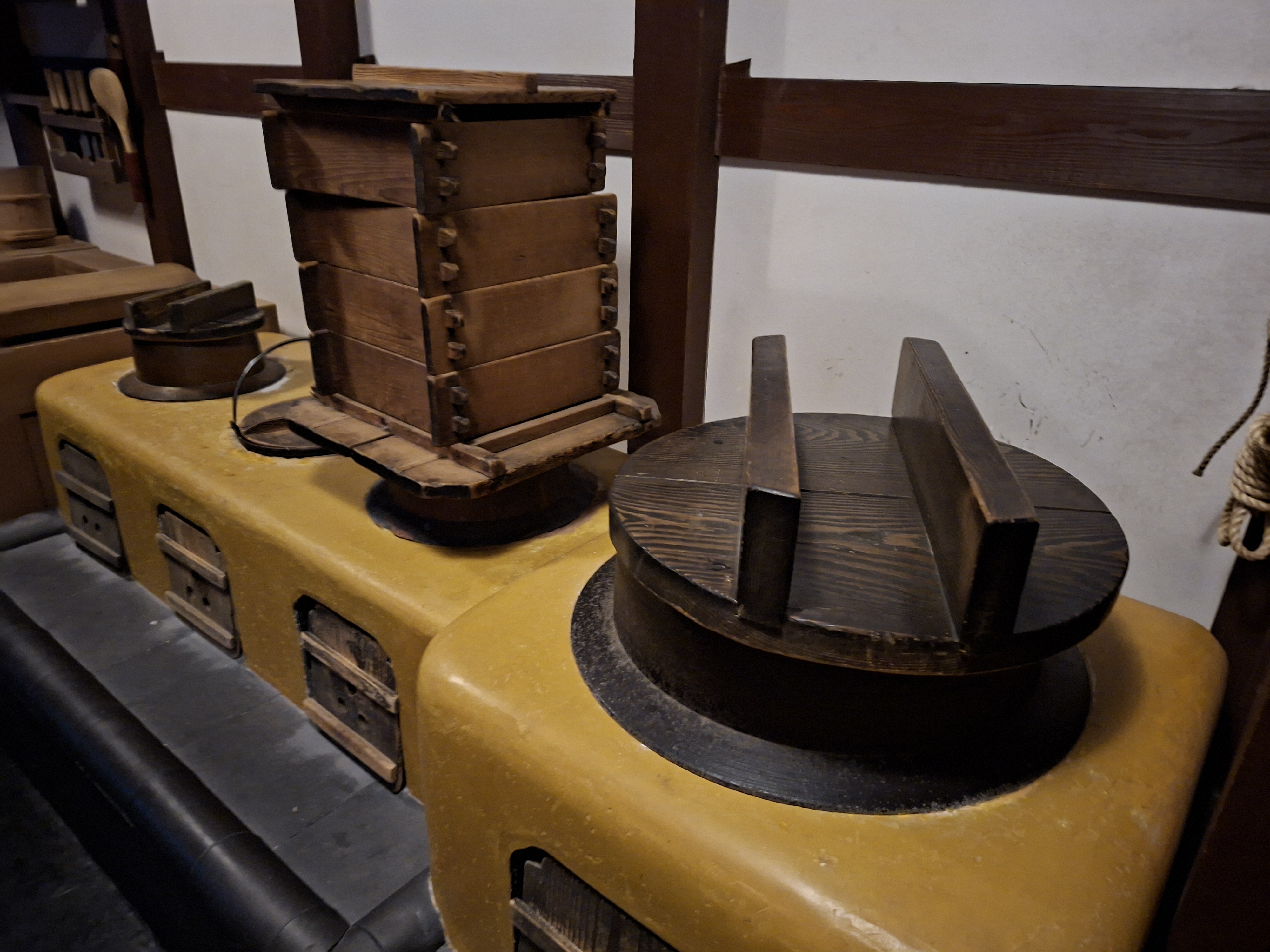
Traditional Oven and Rice Cooker at the Museum of Housing and Living

Our first stop on the bike tour would be Osaka Tenmangu Shrine. Here we saw quite a few young children in colourful outfits getting blessings for their health and growth. We then cycled to the Osaka Museum of Housing and Living. There was a reconstructed village from about 1830 showing us how life was in many parts of Japan then. It was interesting to see how the houses were laid out with their raised platforms for sleeping and resting on bamboo mats and futons (where removal of shoes is required) and their kitchens on the lower levels. A staple of each house was, of course, the rice cooker in the old style ovens. 
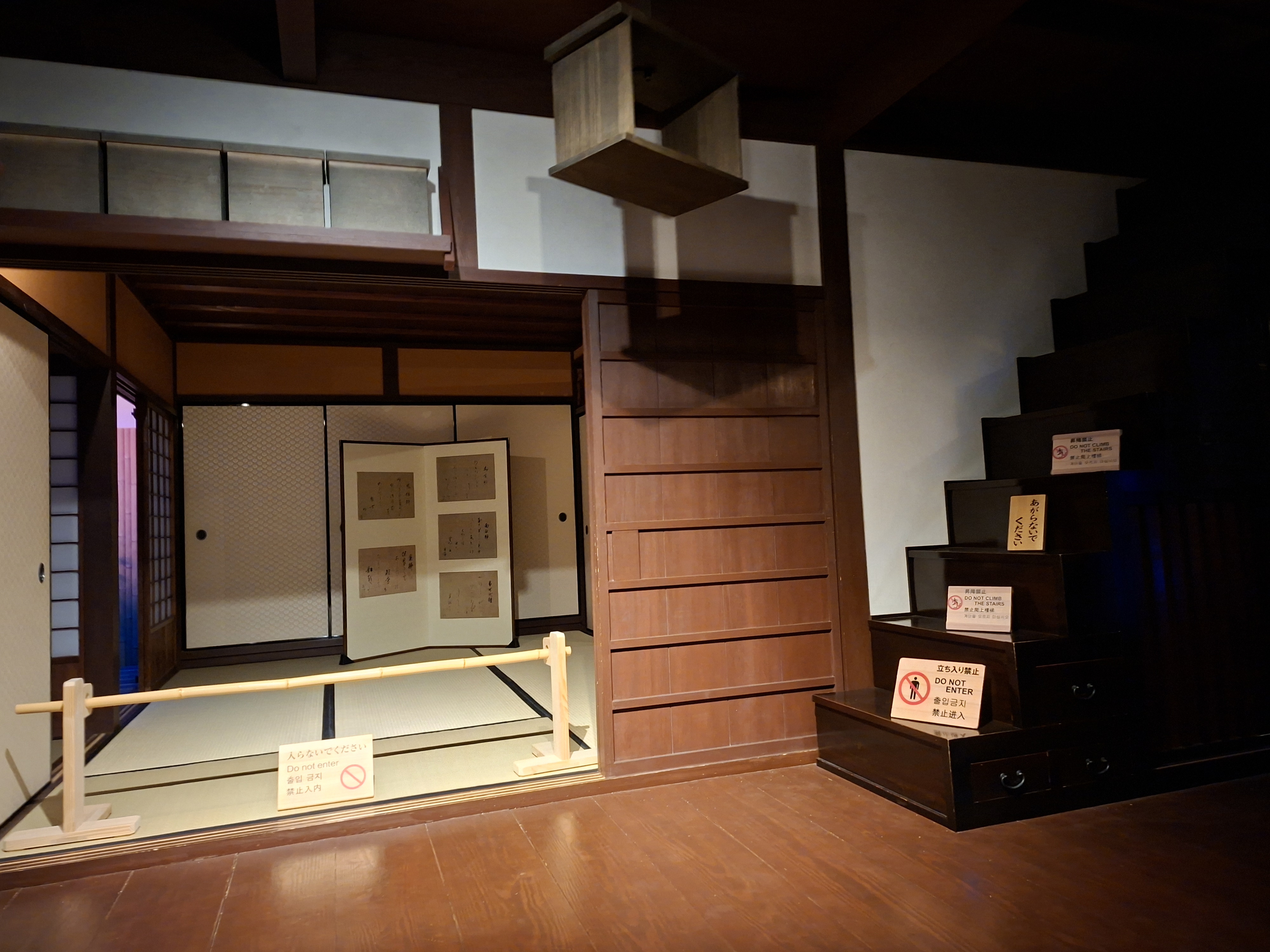
Interior Living Quarters at Museum of Housing and Living

From there we cycled along the Yodo River. Our guide pointed out a building that had a large round feature on it that looked like a giant coin. The city mint, he informed us. The Japanese love cash and you can pay almost anywhere with cash and a lot of places only take cash. The smallest denomination is a One Yen coin which equals about half a penny. We arrived at a restaurant at exactly 12.30pm for our lunch reservation. I credit our guide for his excellent timing with this. He obviously knew exactly what he was doing. We went in and had a semi private room in the back of the restaurant; a large table with a large griddle in the middle and lots of delicious condiments. We were here to try an Osaka speciality; Okonomiyaki which is a delicious Japanese savoury pancake made of wheat flour, batter and other ingredients. Dáire ordered the one with pork and I ordered the one with cheese and we shared them. It also had cabbage and spices in it. It is brought to you cooked and kept hot on the griddle while you pile it up with aonori (seaweed flakes) bonito flakes, okonomiyaki sauce (which is basically Worcestershire sauce) and a good squeeze of Japanese mayonnaise. We were hungry after all the cycling that morning, so we really enjoyed this. 

Okonomiyaki – An Osaka Speciality

After lunch we got back on our bikes and cycled another 15 minutes to the next stop on our tour: Osaka Castle. We parked our bikes and walked up and around the castle grounds which were stunning. It was Saturday afternoon so there was a long line to get into the castle. Our guide told us there is really no point trying to get in on a weekend when it is packed with visitors, this is why he opts for the Museum of Housing and Living instead. In any case, it was a lovely day so we were happy to stay outside. He took us to a great spot to take a photo of the castle with a pond and maple trees. Others were also waiting in line to get this picturesque shot. I found Osaka Castle to be quite a stunning piece of architecture. It is one of Japan’s most famous landmarks and was built in 1583 by Toyatomi Hideyoshi who unified Japan. The castle you see today is a 1931 reconstruction and it sits on a formidable stone base. 

Osaka Castle

After a while we got back on our bikes and peddled to our last stop: the foyer of a museum where they had a lovely matcha cafe. We sat on bamboo mats surrounded by huge plate glass windows and our guide ordered another Japanese speciality for us: matcha green tea and mochi. We had already eaten a lot of matcha green tea soft serve ice cream in Kyoto but this was the first time we had actually had a matcha tea. Personally I found it a little bland only frothed with water but I suppose it was good to taste it pure. (I would add hot frothy milk and honey to it).
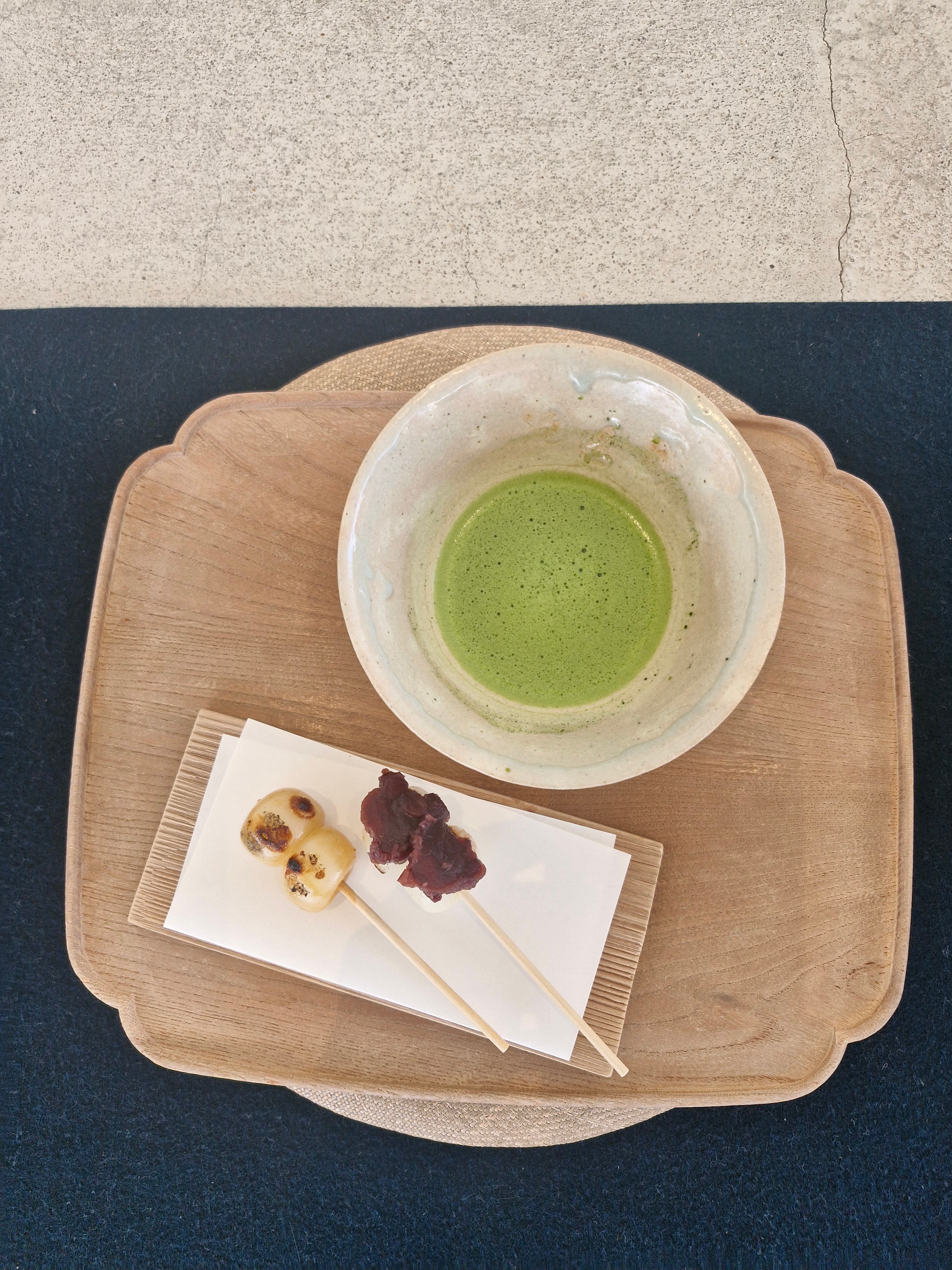
Matcha Tea and Mochi

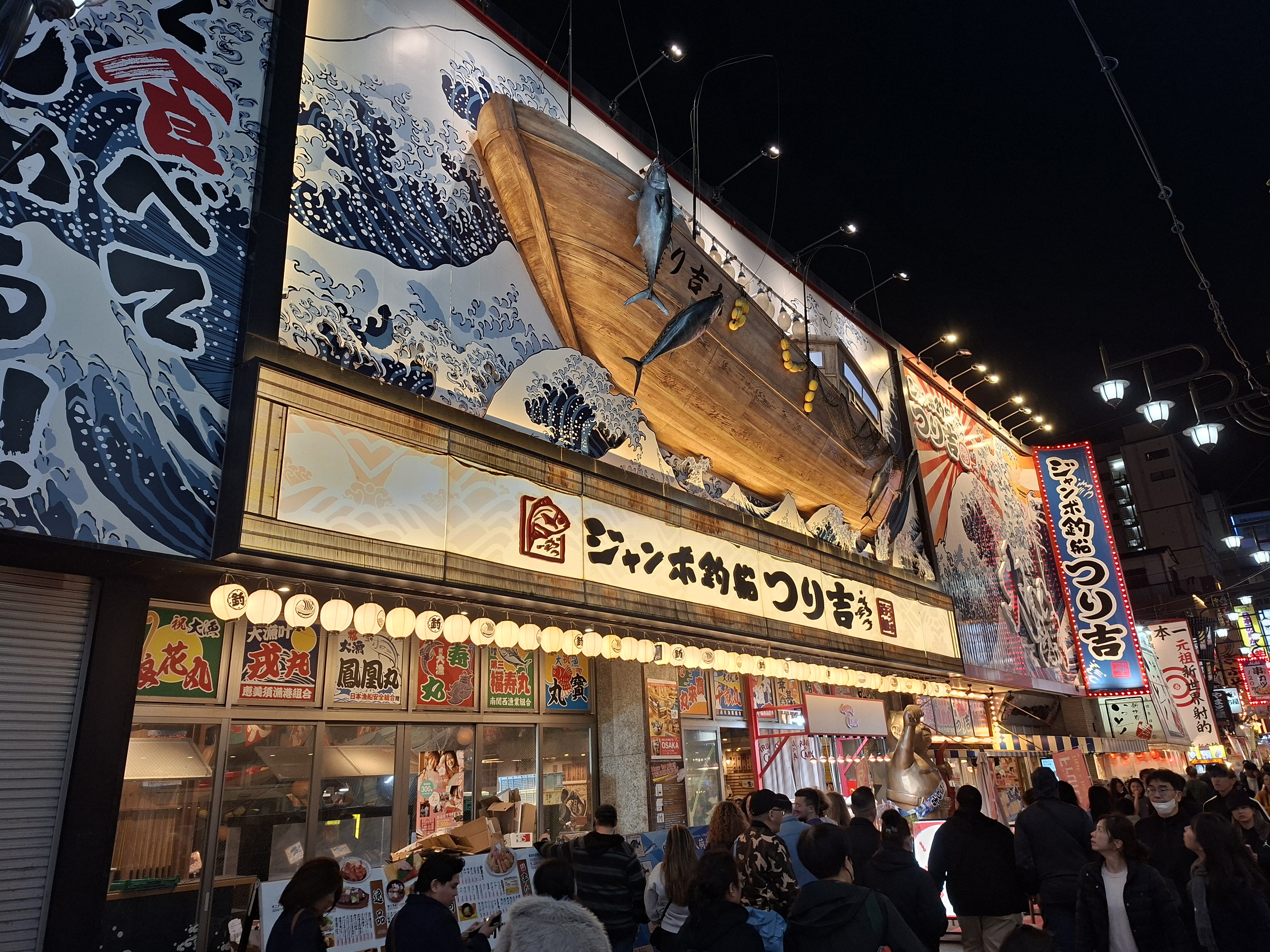
After tea we cycled back to Temmabashi Station, put our bikes back in the garage and walked the 5 minutes back to our hotel to relax for a while. We were tired but this was our last night in Japan so we had showers and went out again to an area that had been recommended by our guide: Osaka’s Shinsekai District and the Tsutenkaku Tower which was originally built in 1912 and modelled after the Eiffel Tower. The current tower was rebuilt in 1956 after World War 2 damage. It also has a slide from the 3rd floor down for people seeking an adrenaline rush. We took the train back to Tennoji Station and walked through Tennoji Park. It was dark and we could see the brightly lit tower in the distance. Before long we were in a bustling street with tonnes of neon lights and vendors selling all kinds of fried foods. A speciality of Osaka are fried octopus balls known as takoyaki. Vendors have hot skillets that have little round holes in them which they pour batter into and then add a bit of octopus into the middle of each ball. We decided not to eat these because they looked really greasy and we like octopus alive and not cooked because they are highly intelligent and lovely creatures. We saw a sign in Osaka that made us laugh. It was an octopus holding out a tray of fried octopus balls. Basically saying: ‘Eat me!’ Um, no thanks. Still, it was a kick to experience the atmosphere of this area on a Saturday night.

Octopus with Octopus Balls known as Takoyaki

We went up the tower and expected it to have a bar and restaurant on top, but no, it had a lot of weird looking figurines in glass cases and practically looked like a temple in the sky. People were getting their goshuin stamps in their colourful booklets as a souvenir of having been there. We learned later that the attraction up here for Japanese tourists is to rub the feet of the Billiken statue; The God Of Things As They Ought To Be. It is said to bring you good luck. 

Shinsekai District and the Tsutenkaku Tower

From there we walked back to Tennoji Station and back to our hotel room for hot showers and another pair of clean, fresh pajamas. This was our last night and we were very satisfied with how the trip had gone. After a good night’s sleep we checked out at 10am, stored our bags at reception and headed to Osaka’s famous Dotonbori district. Our flight wasn’t until 10.30pm that night so we still had time to do some exploring and have another meal. It was yet another beautiful day. Dotonbori has wooden boardwalks along the edge of a canal and is lined with restaurants and shops. We bought some matcha tea, matcha chocolate and sweets to bring home and also sat right at the canal in the sun and ate one last bowl of ramen and some gyoza. 
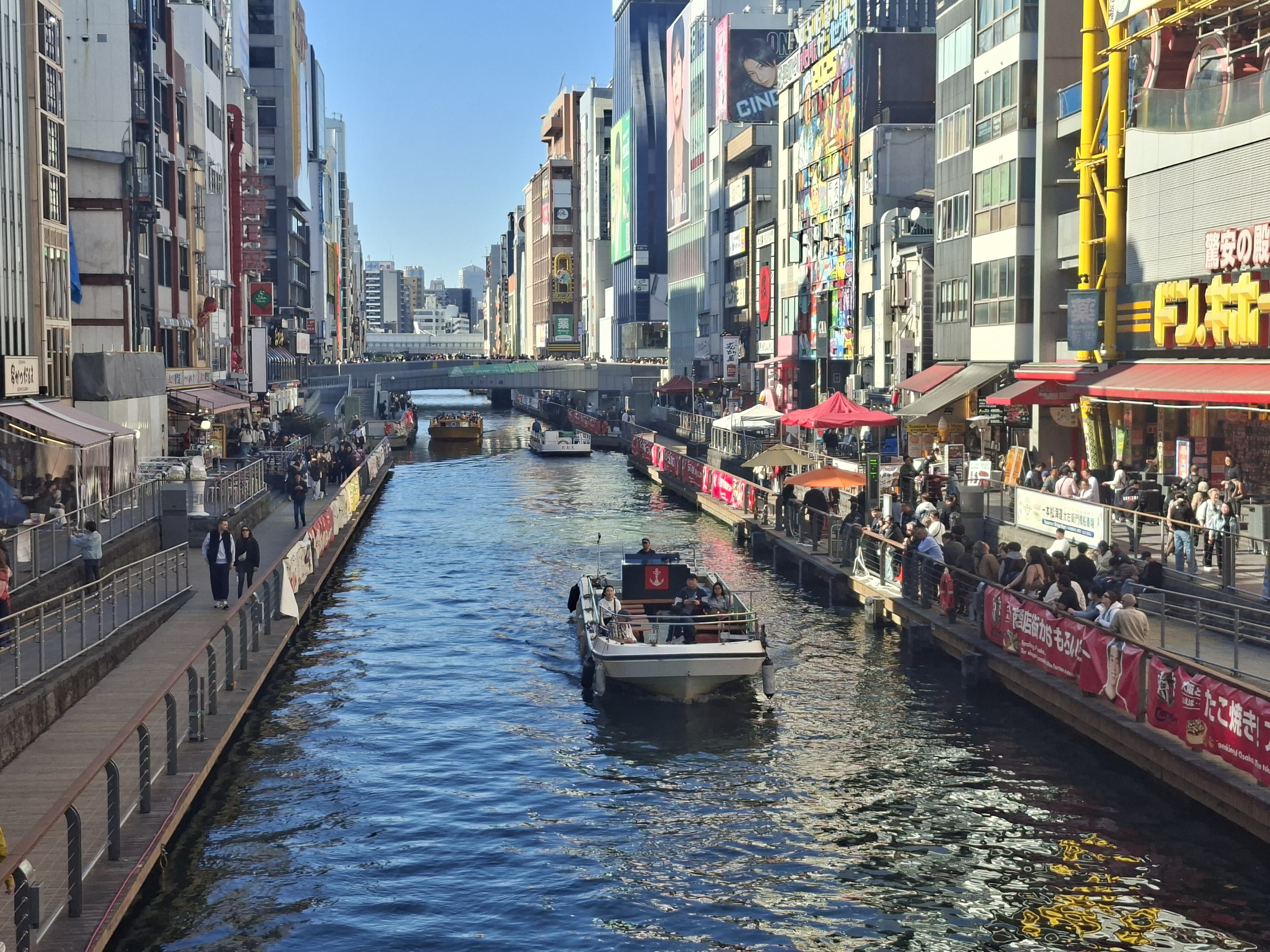
Dotonbori Canal and Kuromon Ichiba Fish Market

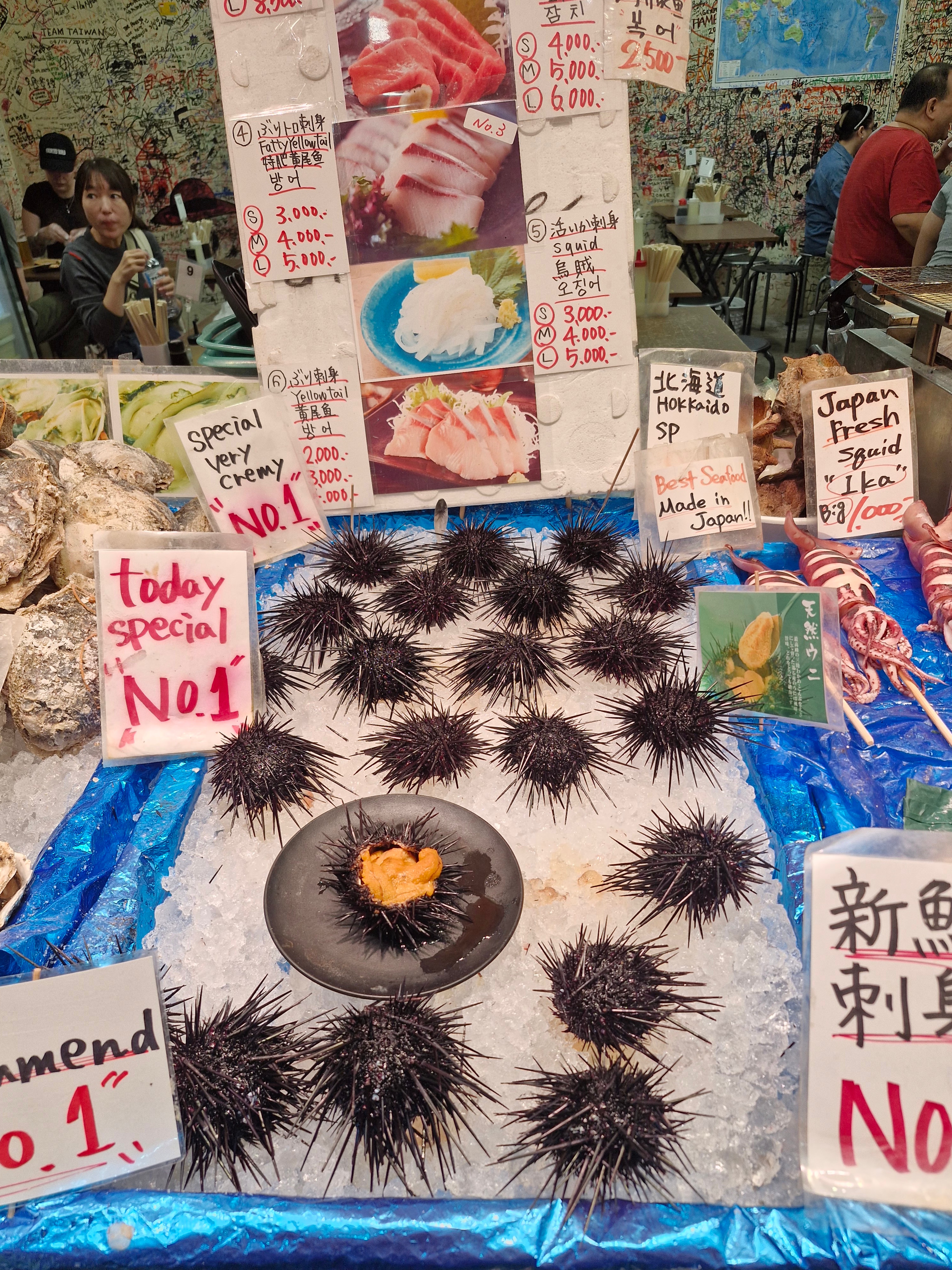
As we wandered out of Dotonbori, we happened upon the Kuromon Ichiba Market with its many stalls selling fresh fish; crab, sea urchins and many other delicacies. This was the most authentic market we had been to in Japan so far and also seemed a little off the beaten track. It was fun to just observe people and their goods for sale. We wandered a little more, aimlessly, enjoying the exercise and sun because in a few hours we would be heading to Kansai International airport for a 20 hour journey back to Dublin via Istanbul with Turkish Airlines which have excellent economy class service. We headed back towards our hotel, stopping again at a Cafe Veloce to have a large coffee for 2.18 Euros plus lots of free, very drinkable water. We got our bags from the hotel, headed to the airport in plenty of time (to deal with the Tennoji Station change and the decoupled train) As we waited to board our 12 and a half hour flight to Istanbul a group of at least 30 Japanese teenagers in their school uniforms (on a Sunday night) walked up to our gate. They were a bit excited as they stood there and we thought ‘Oh no, a school tour, we won’t get any peace.’ How wrong we were. They boarded and were seated all around us. We didn’t hear a sound out of them. That is Japanese discipline for you! We had our dinner and then fell asleep, so happy that our Japanese adventure had gone so smoothly. We had, of course, barely dipped our toes in Japanese culture and we had stayed on the well trodden tourist path, but it was a fantastic introduction to this fascinating culture and the time we had spent planning and researching what we wanted to do really paid off. We really recommend a 10 day trip to Japan. We broke the journey on the way there with 3 days in Istanbul which was also fantastic. When flying from Dublin you can generally fly via Dubai, Abu Dhabi or Istanbul and we chose the latter because we thought it would be the most interesting. It all worked out great. I am looking forward to the next adventure. Who knows where it will take us! 

Photos by Dáire Delmar and Rhea Boyden

Trip to Japan – Part Two – Kyoto

27 Nov

Dáire and I arrived at Kyoto Station after a fabulous, speedy Shinkansen (Bullet train) ride from Tokyo which only took 2 hours and 14 minutes to cover more than 450 kilometers. We took the Nozomi train which is the fastest service between the cities and we splurged on first class tickets which cost 107 Euros each. It was so worth it for this once in a lifetime experience: being whisked along at speeds of up to 300 kilometres an hour sitting in comfortable, reclining armchairs with lots of legroom. It was a sunny afternoon when we arrived so we decided to walk with our luggage to our accommodation which was less than a half hour walk away. Central Kyoto is a grid so it was easy to navigate. We had arrived in the city of shrines, temples, lanterns and Geishas and we had 3 nights here to explore this fascinating city on 2 tours to maximise the use of our limited time here. Kyoto is not a small quaint town with a couple shrines but has a population of two and a half million people and has approximately 1,700 Buddhist temples and a further 400 Shinto Shrines. 

The Gojo area of Kyoto

We stayed in the lovely residential area of Gojo at the Hotel Mondonce in a large self catering room with 2 double beds, a balcony, a kitchenette, a bathroom with bathtub and a separate room with a bidet toilet. It felt spacious after our Tokyo hotel. I wanted to call it the Moondance hotel but Mondonce simply means a concrete block of flats in Japanese and nothing quite so romantic as the ideas I have while humming the famous Van Morrison tune. We were quite satisfied with our room that cost us 64 Euros each per night. We had brought our muesli and tea and bought more milk, bananas, prunes and walnuts to start the day. They also offered fresh pajamas every night and lots of toiletries. We had to take off our shoes at the door of our hotel room, but any establishment that required us to remove our shoes provided slippers.

Flower Garden in the Gojo area of Kyoto

As soon as we dropped our bags we headed out and walked towards the Kamu River to find a bite to eat before joining an evening walking tour of the Gion District of Kyoto. We happened upon a restaurant called Kacto next to the river and their menu seemed appealing to us because it wasn’t ramen, sushi, gyoza or tempura, which we had just eaten a LOT of in Tokyo so we were craving something different, namely: vegetables. We ordered a large kale and sweet potato salad with pomegranate, followed by an excellent caesar salad and then a delicious beef ragu with pasta. We split each dish and it was a satisfying meal. We each had lemonade and lots of water. The bill came to about 22 euros each which was a bit pricier than Tokyo but it also wasn’t typical Japanese food so you pay a premium for it. The service and atmosphere was excellent and our guts welcomed the change in diet. 

Tea House in the Gion region of Kyoto

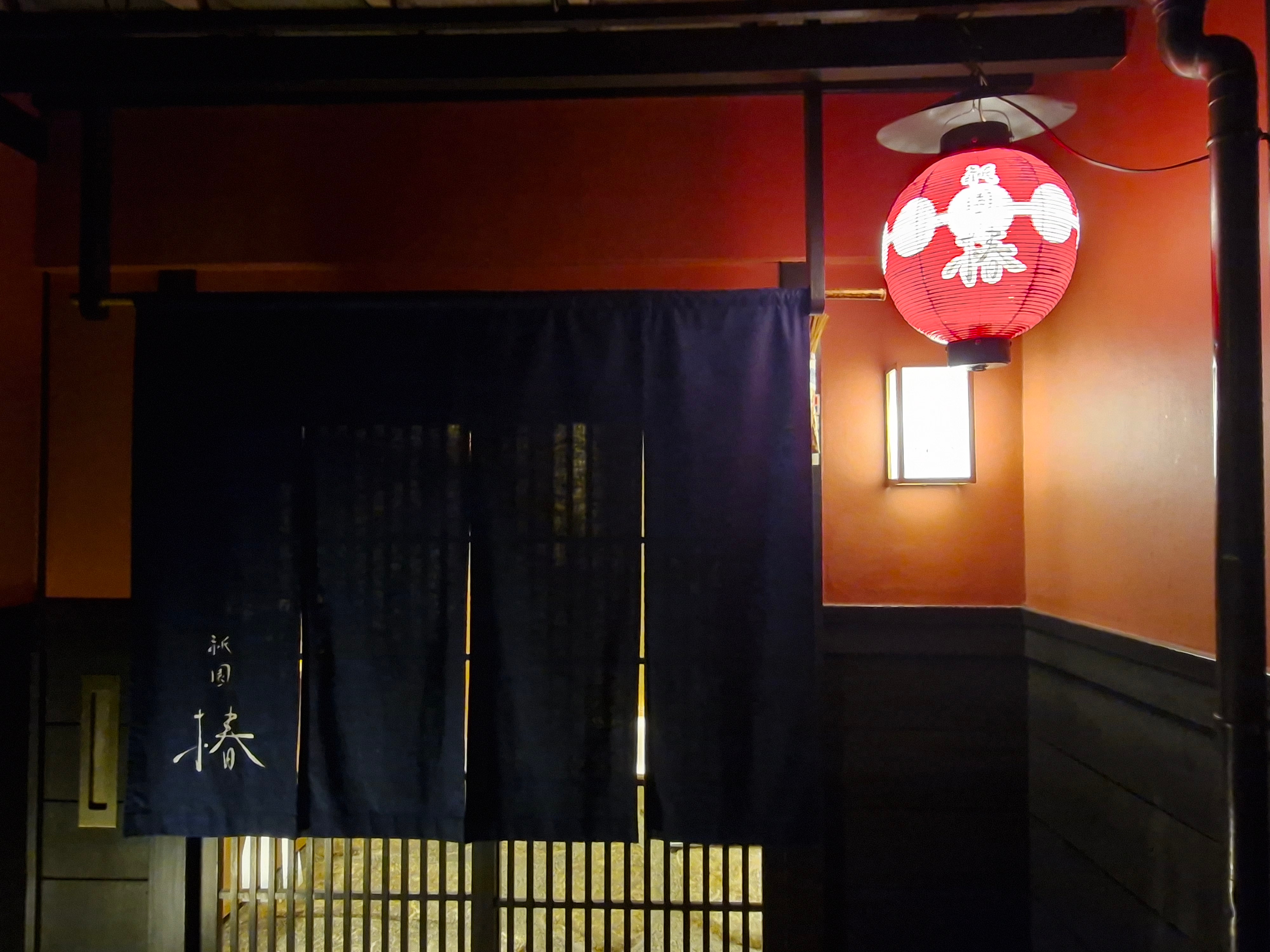
We arrived right on time for our 7pm tour of the Gion district of Kyoto. Our guide was a knowledgeable and very pleasant young Chinese man named Ryu who has lived in Kyoto for years. There were 6 other people on the tour. He walked us through the tea house area of Kyoto and these tea houses with their many lanterns are elite institutions and are mostly only accessible by invitation or booking: they are frequented by wealthy businessmen who have lengthy tea ceremonies and meals with many courses accompanied by Geisha performances. Someone in our group posed the question ‘So are the Geishas prostitutes?’ The answer: no. 

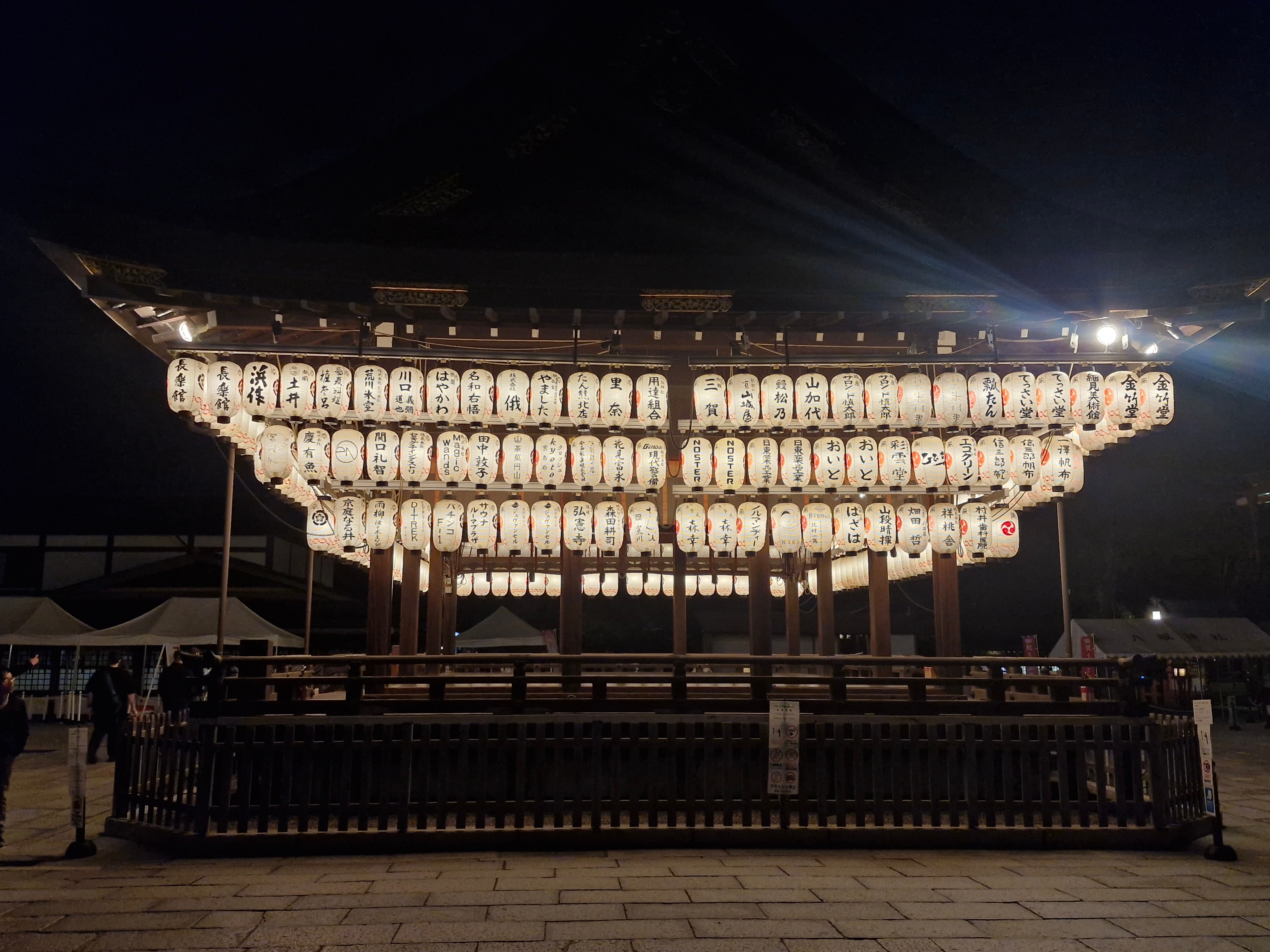
Yasaka Shrine

Our guide walked us past the front gate of Chionin Temple, through Maruyama Park and into the main grounds of the Yasaka Shrine. Shinto Shrines and Buddhist Temples exist side by side in Japan with most Japanese following both faiths. Buddhist rituals are especially used for funerals. Our guide told us that an evening walking tour is popular because it isn’t as busy as the day time tours. Kyoto is packed with tourists. Not only foreign tourists. The bulk of the tourists are Japanese from all over the country. It is a firm favourite with them and it is no wonder, with its incredible architectural charms on every corner. We walked onto the main grounds of Yasaka Shrine. There was Japanese script on the lanterns and it looked charming to us as foreign tourists. We liked to think that it is some kind of poetry or rituals written on the lanterns, but no, it is the name of wealthy individuals and corporations who pay for the upkeep of the shrine. It is basically an illuminated billboard, albeit a very pretty one. We ended the tour at the Kyoto Opera house and our guide gave a tonne of links and tips for Kyoto. It only cost 10 Euros each on the Get Your Guide app and was a great thing to do the first evening we arrived in Kyoto – dive right in and see that area of the city. But we were tired after travelling from Tokyo and we also had to get up at 5.30am to be back at Kyoto Station at 7.15am for a 6 hour Kyoto highlights tour also booked on Get Your Guide for 100 Euros each. 

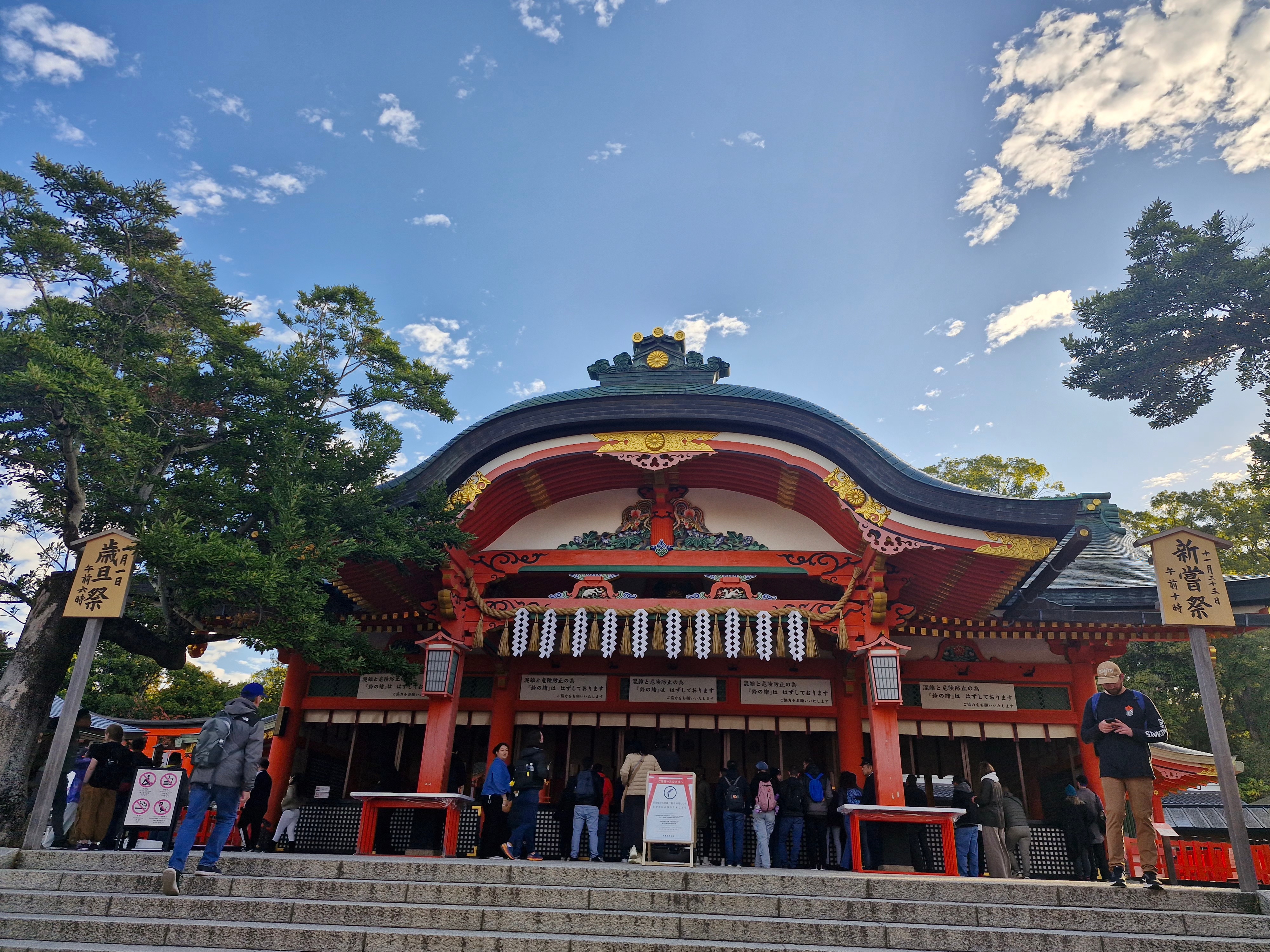
The Fushimi Inari Shrine

We had a short but good night’s sleep and were back at Kyoto Station by 6.50am, giving us enough time to grab a coffee at 7-11. (We had had our breakfast in the room and walked to the station). It was a nice morning and we met our guide, Leo, a fairly young Japanese student in Kyoto. There were 2 couples from Los Angeles on our tour, one with their 10 year old daughter. (They didn’t know each other beforehand). We all introduced ourselves as we would be together for 6 hours and they were all very pleasant. It was great to be in such a small group. The tour was well paced and was worth every penny because we had 3 main destinations to go to that were spread across the city: The Fushimi Inari Shrine, Arashiyama Bamboo Forest and Kinkaku-Ji- The Golden Temple. We took trains and buses to reach them. It was nice to be led around because there is no way we would have easily managed to see all three places as easily on our own. When you have limited time a tour is the best deal. 

Torii Gates at Inari

We took the train to the Fushimi Inari Shrine with its approximately 10,000 orange torii gates leading up Mount Inari. We arrived there before 8am and it was already packed. This is iconic Japan and everyone wants to see it. As I mentioned already, the crowds of people in Japan didn’t bother me or feel as overwhelming as in other places because people tend to be quiet and well-behaved. Everyone wants their photos for Instagram in front of the beautiful temples and gates so you just wait your turn and people politely take photos of each other with their smart phones. This is modern tourism. Like it or hate it, it is what it is. There are simply a lot of people on the planet who have money and want to travel. I sometimes get depressed and think, ‘Oh God, everywhere has been discovered, there is nothing new any more. Maybe I shouldn’t travel anymore because it causes problems with the local economies, housing and the environment’ and so forth. But then I am planning the next trip (and it is nice to get out of Ireland in November). I try to lessen my impact, respect local customs and be grateful that I can have these experiences. This is why we wanted to go to Japan in the first place: because it is something completely different. I am really glad we went but it is highly unlikely that I will ever return. It was a once in a lifetime trip that we had as much fun planning as we did on the trip. 

Torii Gates Leading up Mount Inari

We stopped at the shrine and our guide explained to us the prayer rituals at a shrine. First you purify yourself by washing your hands at a fountain with water flowing through bamboo pipes, then you make an offering by throwing a coin into the donation box. A five yen coin is considered good luck. (about 2.8 cents), you then ring the bell to get the deity’s attention. You then bow twice to show your respect. Then you offer your prayer (for good grades, gainful employment etc.) clap your hands twice to express joy and then bow a third time. There was a large sign that said, ‘This is a place of prayer, not an amusement park.’ Indeed. How do authorities combine a place of meaningful prayer and reflection for people and accommodate tour groups at the same time? It’s a tricky combo. We saw the same at the Hagia Sofia in Istanbul which has grappled with this dilemma forever and has had to pose different solutions: the upper part of the Hagia Sofia is now for tours and the floor of the mosque is for the devout only. It  must be hard to pray in peace with hoards of gawking tourists every day. But, the tourists bring in money for the upkeep of these buildings and monuments. 

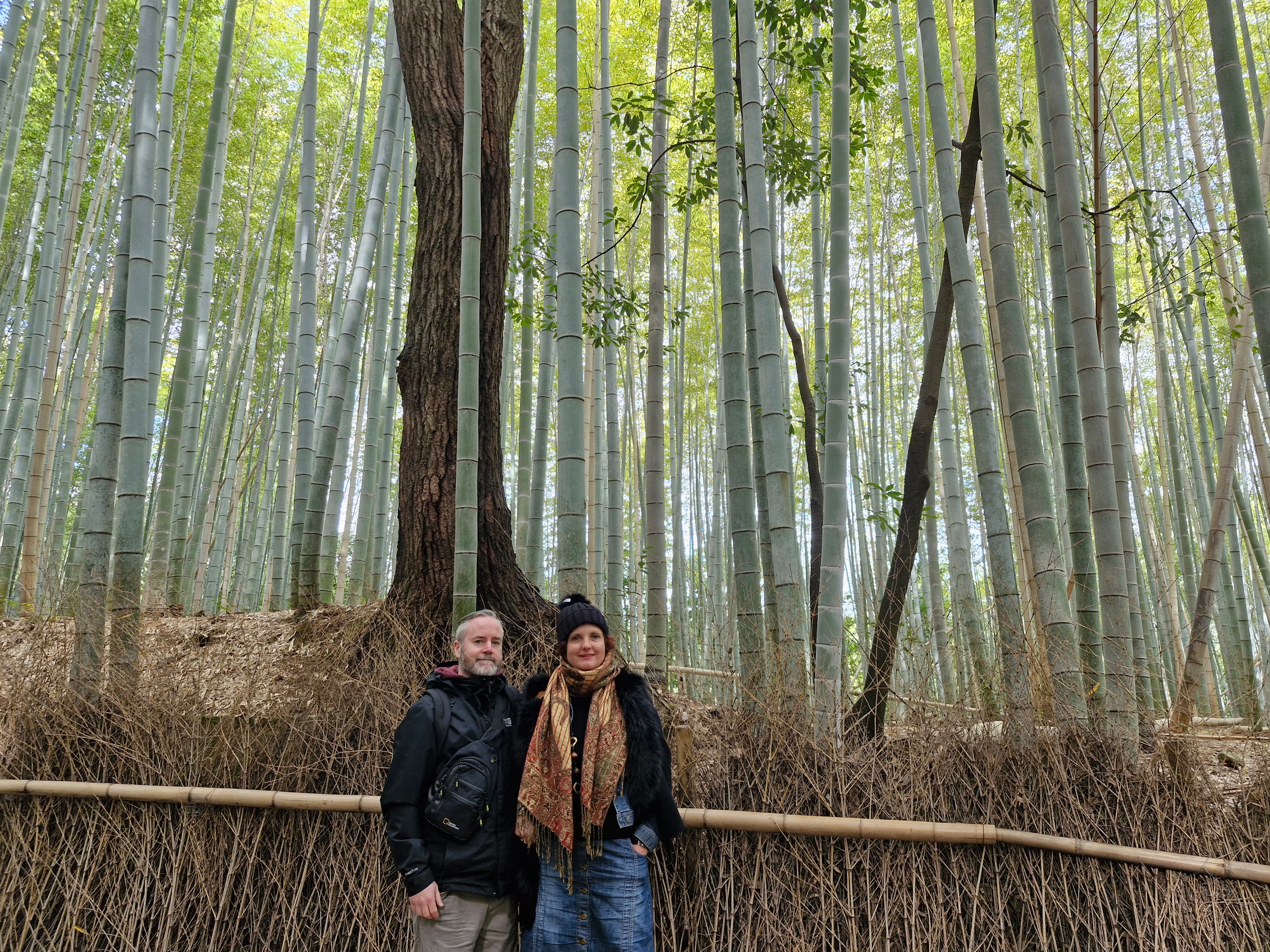
Arashiyama Bamboo Forest

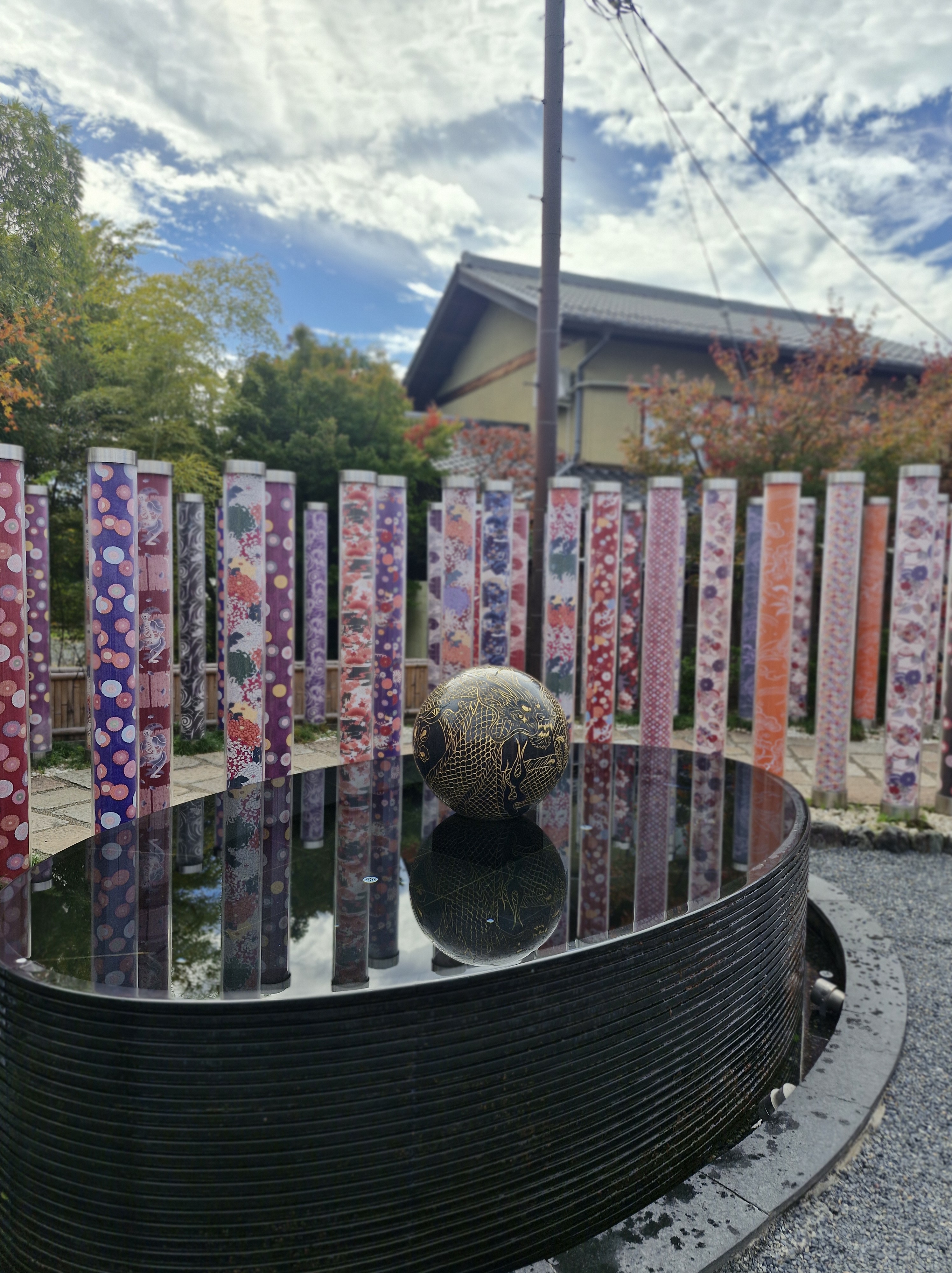
From there we took the train to the Arashiyama Bamboo Forest, which is a natural bamboo forest in the western part of Kyoto. We were there by 10am and it was packed, especially with groups of Japanese school children in uniforms. About a third of the Japanese population visits Kyoto every year. We walked with the throngs of other tourists, got our photos and then walked out of the forest through a quieter area of maple trees turning red and then down along the Katsura River where we saw boats being navigated by Japanese men wearing traditional round oriental bamboo sun hats. We then walked through what was called a Kimono forest which was basically a lot of poles which had colourful kimonos wrapped around them. There were many places where you could rent a kimono but I have mixed feelings about this. It’s one thing to buy a beautiful kimono in Japan and bring it home, but renting one as an American or European tourist and parading around Kyoto wearing it seems like a strange sort of cultural appropriation to me. 

A boat on the Katsura River and The Kimono Forest

Our tour was well paced and it was really relaxing to be led around and not have to think too much. Our guide then ushered us onto a bus and we headed to our next stop: Kinkaku -Ji – The Golden Temple. A note about buses in Japan: the bus driver is masked, has a microphone headset on and is constantly talking (very politely) telling passengers to move in more to the front, and away from the door, because the bus is packed. You board the bus through the door in the middle and you only pay as you exit the bus at the front and apart from having to drive the bus and instruct the passengers on what to do, the bus driver also nods and thanks every passenger individually as they exit the bus; in Japanese and in English if the person doesn’t look Japanese. If the bus is too full for the person to exit at the front, they get off at the middle door and walk to the front of the bus and board again to pay their fare before exiting again. When the driver isn’t talking there is a recorded female voice announcing the next stop no less than 3 times repeatedly in Japanese followed by once in English. People talk a little more on buses because there seems no real compulsion to remain as quiet when you are hearing a constant stream of announcements anyway. We have never seen anything like it. In Dublin, you thank the driver as you exit the bus, not the other way around! 

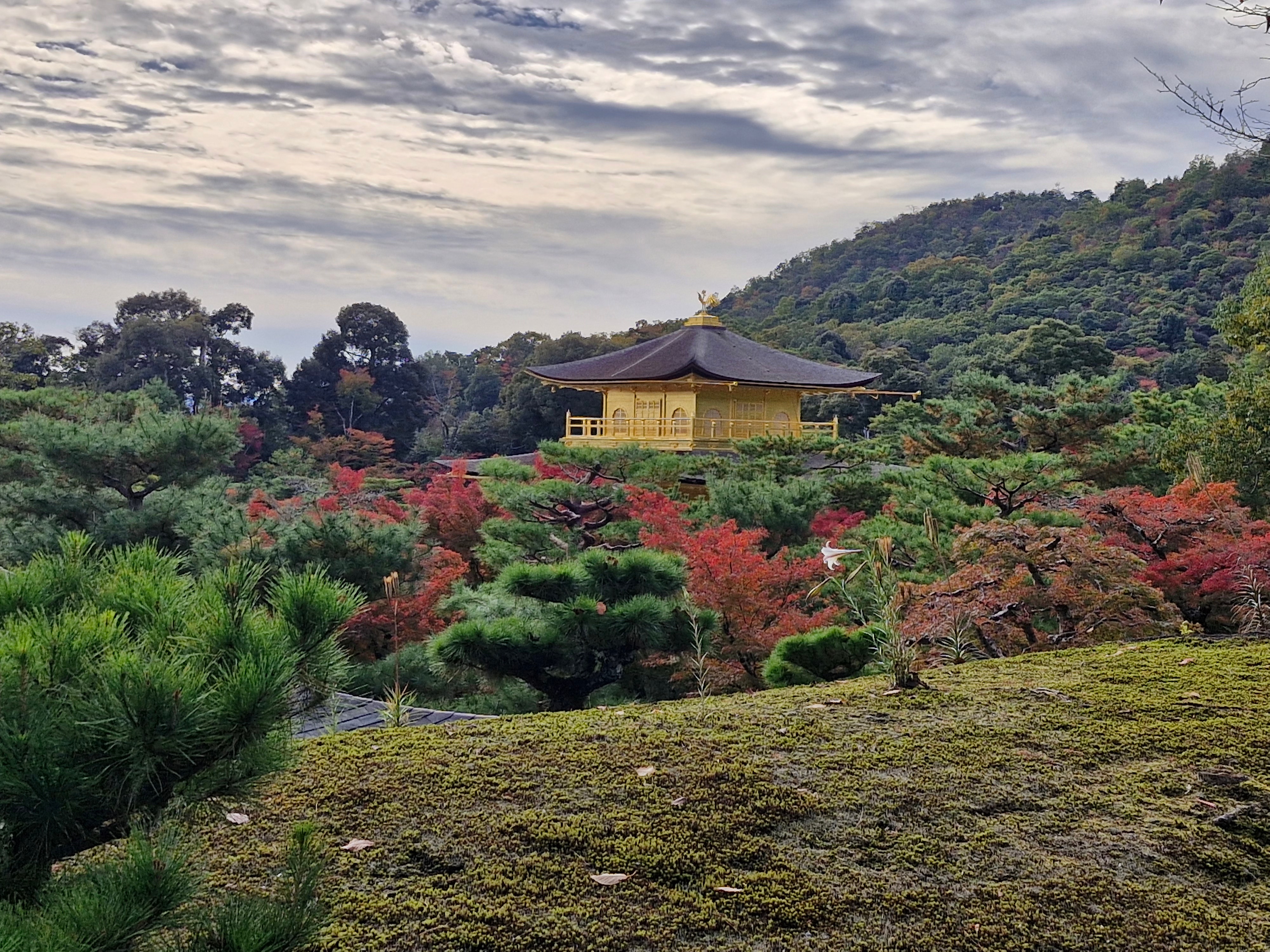
Kinkaku -Ji – The Golden Temple

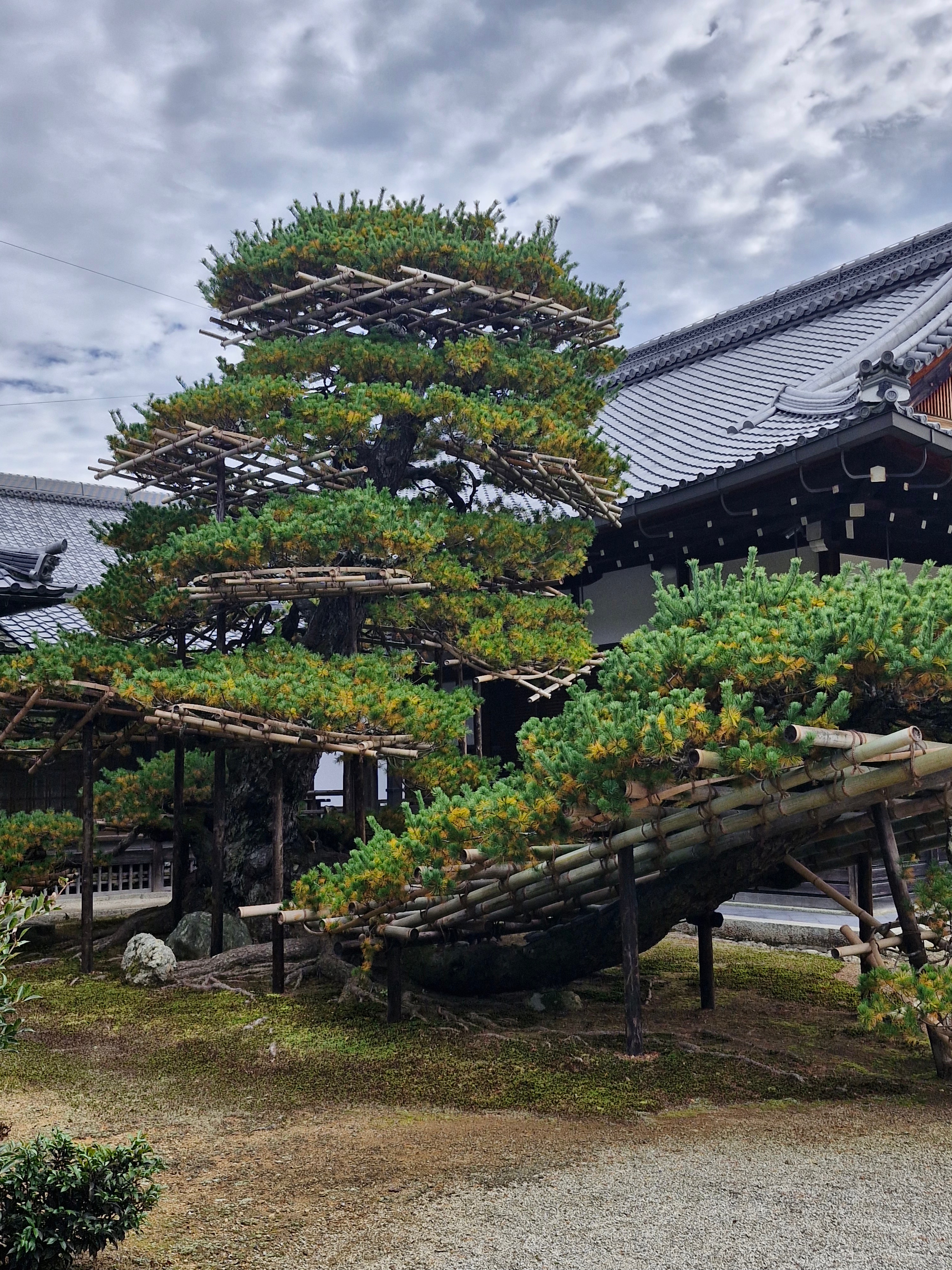
Our next stop was the Kinkaku -Ji – Golden Temple which is a Zen Buddhist Temple and is a designated World Heritage Site situated on beautifully landscaped gardens which included a huge bonsai tree that is 600 years old and shaped like a ship. You are not allowed to access the temple itself but only walk around it because it is, indeed, coated in real gold leaf. Our guide also pointed out that you are not allowed to drink alcohol on the site of the temple and as we exited, there was immediately a stall selling Sake (rice wine) again. Many temples and shrines have huge barrels of sake on either side of the entrances as offerings to the rice Gods for a good harvest. Rice, as most people know, is the staple grain of Japan and there have been shortages in recent years. 

600 Year Old Bonsai Tree

As we exited the temple grounds we said goodbye to our group and were told which bus to board for the half hour ride back to Kyoto Station. We got seats, which seemed like a miracle. Our feet were tired after all the walking so it was a welcome break. When we got back to the station we went to Cafe Veloce, a chain in Japan that serves large black coffees for about 2.18 Euros a cup. We went to this cafe several times in different cities. After our coffee we walked back to our hotel to take a break, as we had been up since 5.30am. We got back to the hotel just after 3pm. We also noticed on our walk back through our neighbourhood that not a single bicycle was locked (amazing!) and there were lots of them parked right outside houses. 

Small vans seen everywhere in Japan

A lot of Japanese also drive these small box shaped vans which are practical because they fit into the many small alleyways and people park them very precisely into their designated spot. We also couldn’t help but notice in Tokyo that everyone seemed to drive black, white or silver cars that were different to cars in Europe and The U.S. and also that practically every car looked brand new with not a scratch on them. Where do the old cars go? The exception being the vintage taxis that were nearly all black. Kyoto had more variety in cars but it was still fairly uniform. 

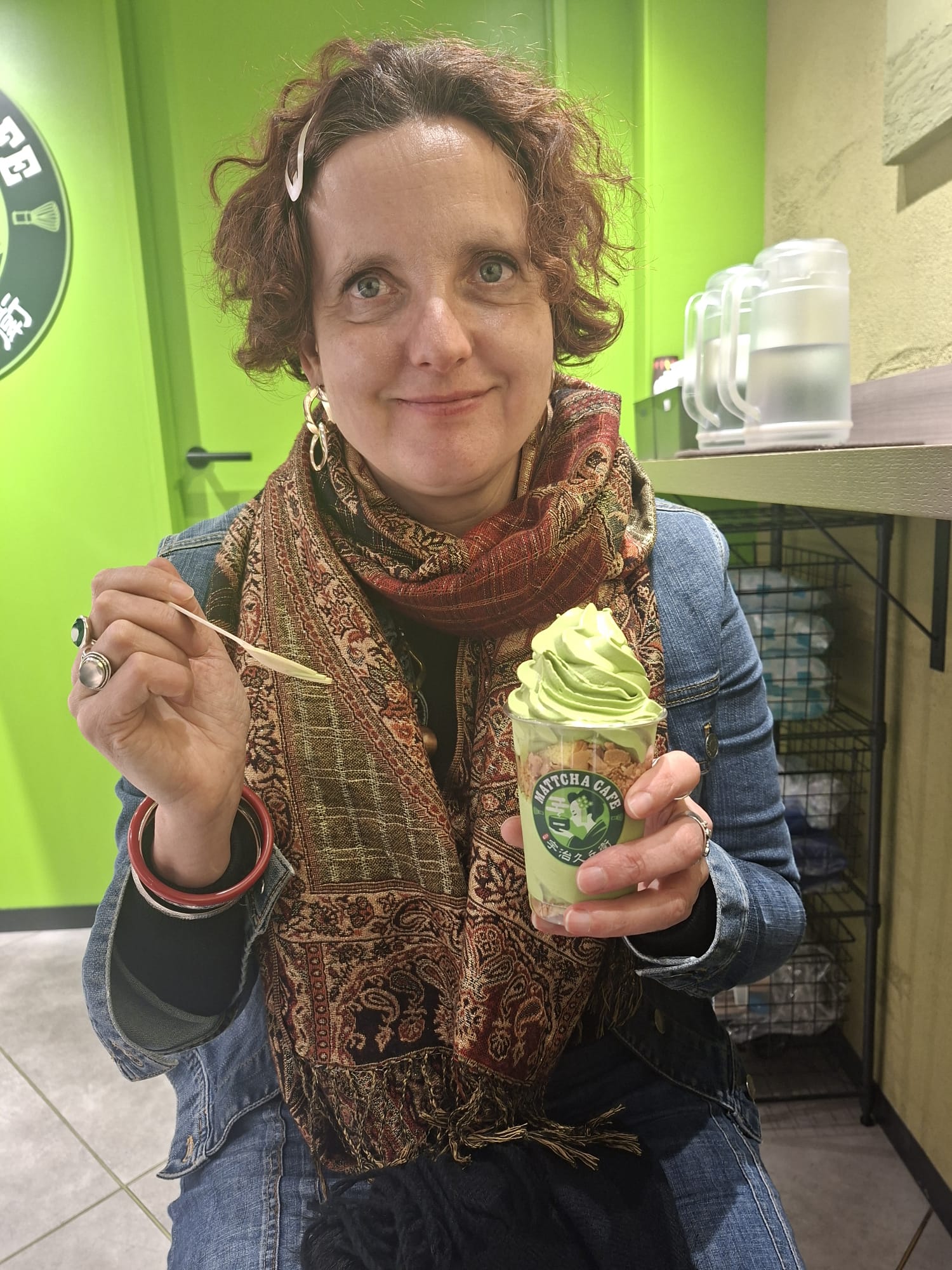
After relaxing for a while we were hungry and so ventured out to find some food. At this point, I will admit that we were really craving the following: PIZZA. Yup, after eating 4 bowls of ramen, lots of sushi, tempura and gyoza in Tokyo we really wanted CHEESE and TOMATO SAUCE for a change. At this point in the development of our planet, there is probably no place left on Earth that does not at least attempt to make some kind of pizza. We found really delicious pizza in Kyoto that night with a yummy salad at Pizzeria Osteria. It was a small restaurant with a brick oven. It satisfied our palates and was also very affordable. The next night we would eat more Japanese food. After dinner, we went and had one of the culinary delights of Kyoto: Matcha Green Tea Soft Serve ice cream. It was delicious. We ate it a few times there. 

Matcha Green Tea Soft Serve Ice Cream

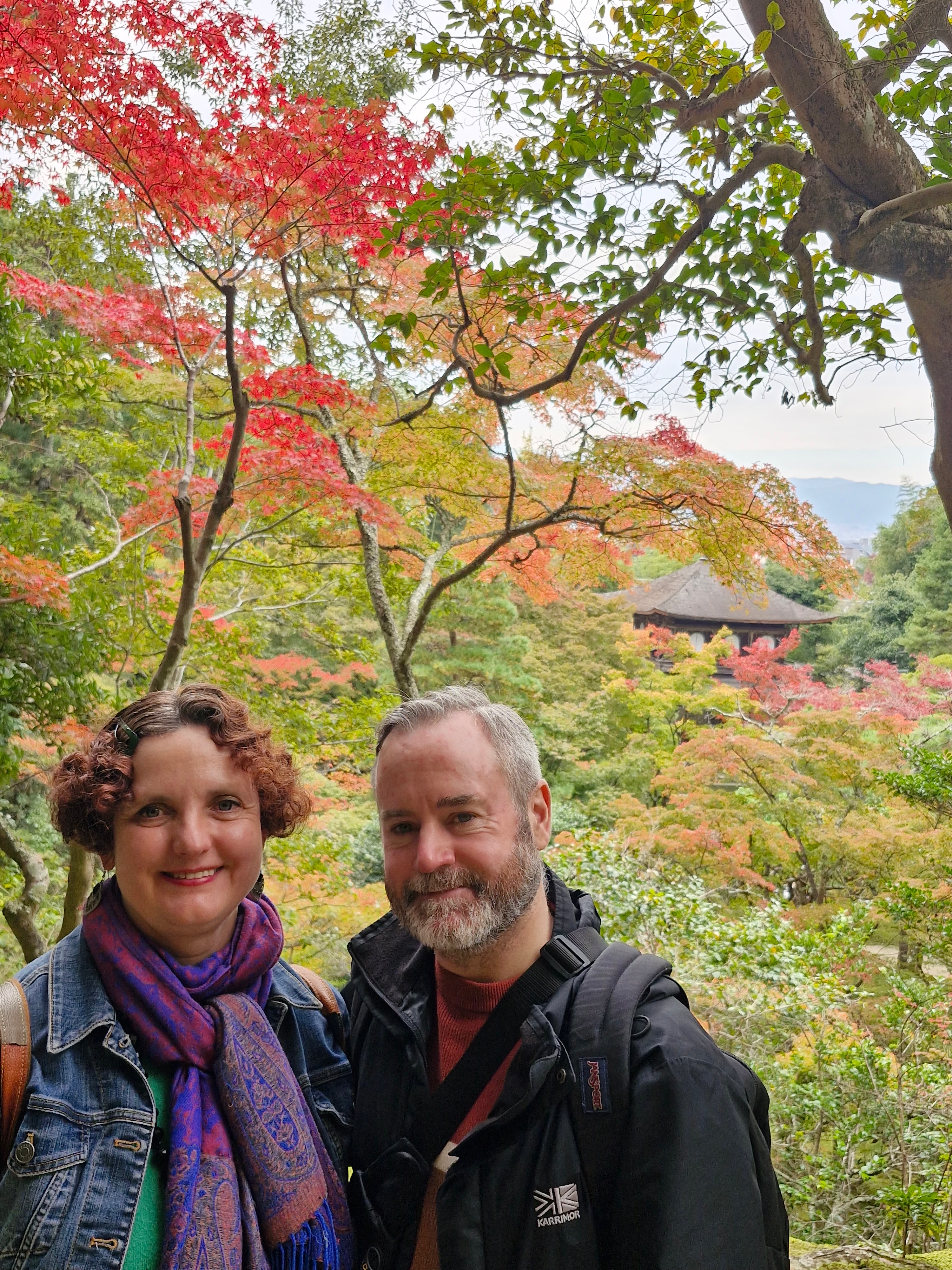
The next morning we slept in a bit after our whirlwind tour of Kyoto of the previous 24 hours. After a leisurely breakfast we took the bus (now that we knew how it functioned) to the Ginka Kuji Temple –  the Silver Pavilion. We didn’t have a guide for this section of Kyoto so we just rode the bus near to the temple, stopped for a coffee and then paid the small entry fee of 500 Yen to enter the temple grounds which were absolutely beautiful. As you enter you see a raked sand monument that is called the sea of silver sand. It is meant to look like ocean waves.

The Silver Pavilion and the Sea of Silver Sand

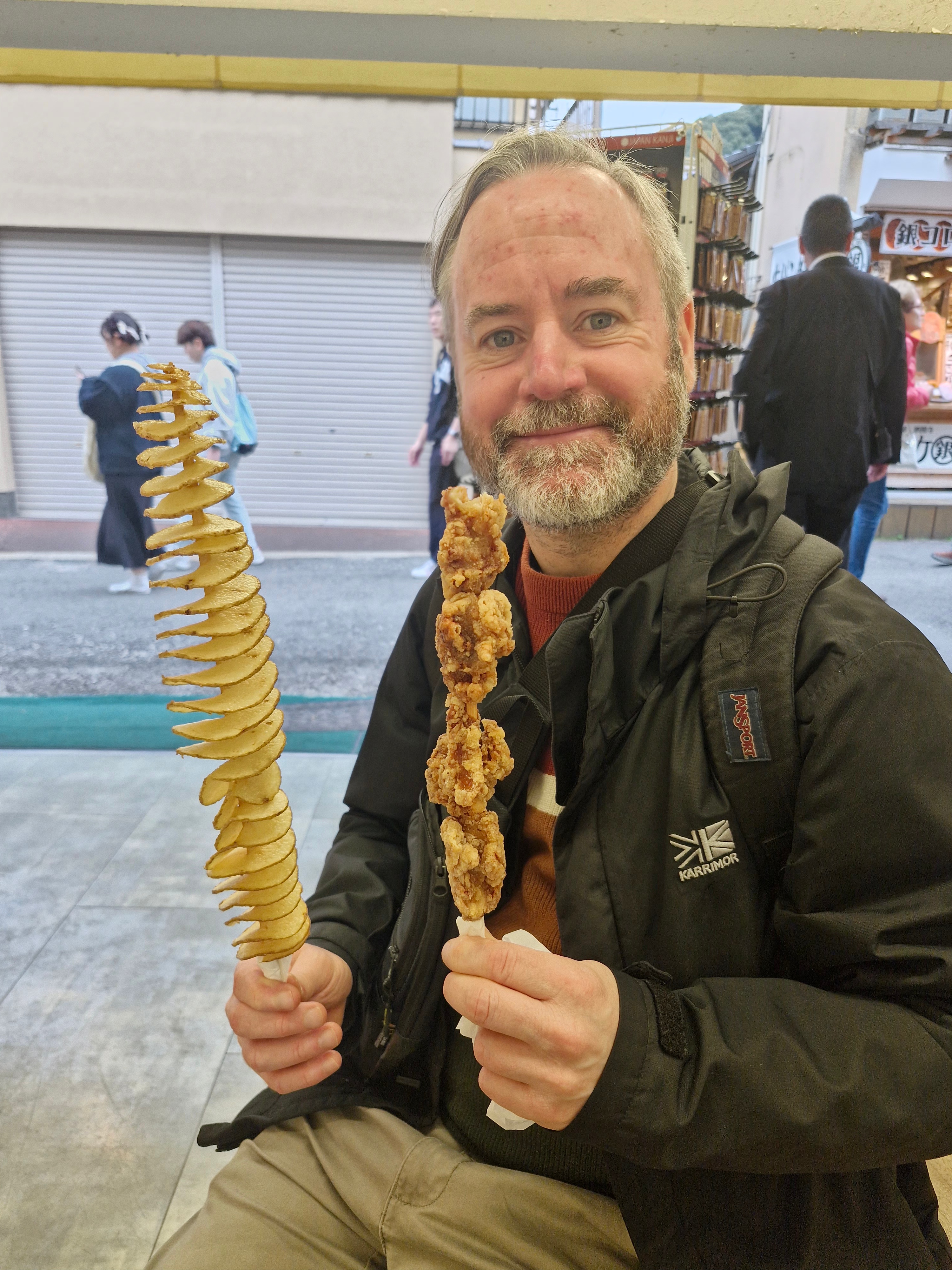
You then walk a loop uphill over bridges, streams and ponds and a well-maintained moss garden. The maple leaves were turning red and it was pleasant but overcast weather. We had noticed many Japanese people with beautiful coloured notebooks and they were lining up not for tickets to enter the temple but to get their goshuin stamps in their books. It is a souvenir and also a record of your visit to that shrine. Many of the goshuin stamps are hand painted calligraphy. It seemed to be a very important part of visiting the temple. When we left the temple we were a bit hungry so we got some chicken and potato swirls on sticks. Yakitori is the Japanese word for grilled chicken on a skewer but the term is used more broadly to refer to various savoury foods on skewers.

Yummy Yakitori make a great snack when you are walking miles every day

Another reason we had come to the eastern end of Kyoto was to walk along the famous Philosoper’s Walk. It is a 2 kilometre walk along a narrow canal (with no guard rails and very shallow water). It is lined with cherry trees so naturally it is packed in springtime, but it was very pleasant and quite peaceful to walk under the autumn cherry trees. There were ducks and large koi swimming in the canal. We even happened upon another temple that was completely empty. We had the whole temple to ourselves for a few minutes. A rare occasion on this trip! 

The Philosopher’s Walk

At this point we were getting hungry and Dáire had said he wanted to eat another Japanese speciality: tonkatsu, which is cutlet made from pork and battered in breadcrumbs and fried. He had done a bit of research and found a lovely place for dinner that evening called Katsukura Sanjo in downtown Kyoto. We entered the restaurant through a long alleyway off a shopping mall and suddenly we were in a wonderful atmosphere with excellent smelling food. We were immediately seated by a man who was probably in his sixties. We didn’t understand what he was saying but we could understand by his gestures and tone that he was probably saying quite loudly something akin to:“Welcome! Come in and have a seat, enjoy the food!” and handed us menus. He greeted every guest in this enthusiastic manner. He seemed like a real character. We ordered the tonkatsu (breaded pork) and the breaded shrimp and shared it. It was served with rice, miso soup and shredded white cabbage. We were also each instructed to grind a bowl of roasted sesame seeds and add various savoury sauces to it for dipping the pork and shrimp into. It was such a delicious meal that we thoroughly enjoyed and it only came to about 15 euros each including a lemonade and an alcohol free beer. After dinner we walked around exploring a bit more and had another matcha green tea soft serve ice cream cone. 

Delicious Food at Katsukura Sanjo in Central Kyoto

One thing that stood out to us while wandering around Japanese cities was just how many vending machines there were selling not only drinks (mainly iced coffee and energy drinks) but also machines called Gachapon which sold little plastic capsules with toys in them. You don’t know what you are going to get when you put your coin in so it is a little like gambling (which is illegal in Japan) There are whole stores filled with these machines. We did not buy anything in them, but the woman who was on our tour confided in me that her 10 year old daughter had been nagging her constantly for coins for these machines. One of the funniest things we saw in Kyoto was a sort of talking robot-like machine that clapped its hands over its head and tried to urge you to come into one of these Gachapon stores. It spoke to us in Japanese and English and we laughed at it every time we walked by it on our way to the station. 

This guy talked to us and clapped his hands every time we passed by

We packed as much as we possibly could into 2 and a half days in Kyoto. On the last evening we had nice, long hot baths, got into yet another clean pair of pajamas and got a good night’s sleep before departing for our next destination which would be Nara Park for a few hours followed by Osaka for 2 nights. We would be taking the regional train and leaving, as always, after rush hour. 

Photos by Dáire Delmar and Rhea Boyden

Trip to Japan – Part One – Tokyo

23 Nov

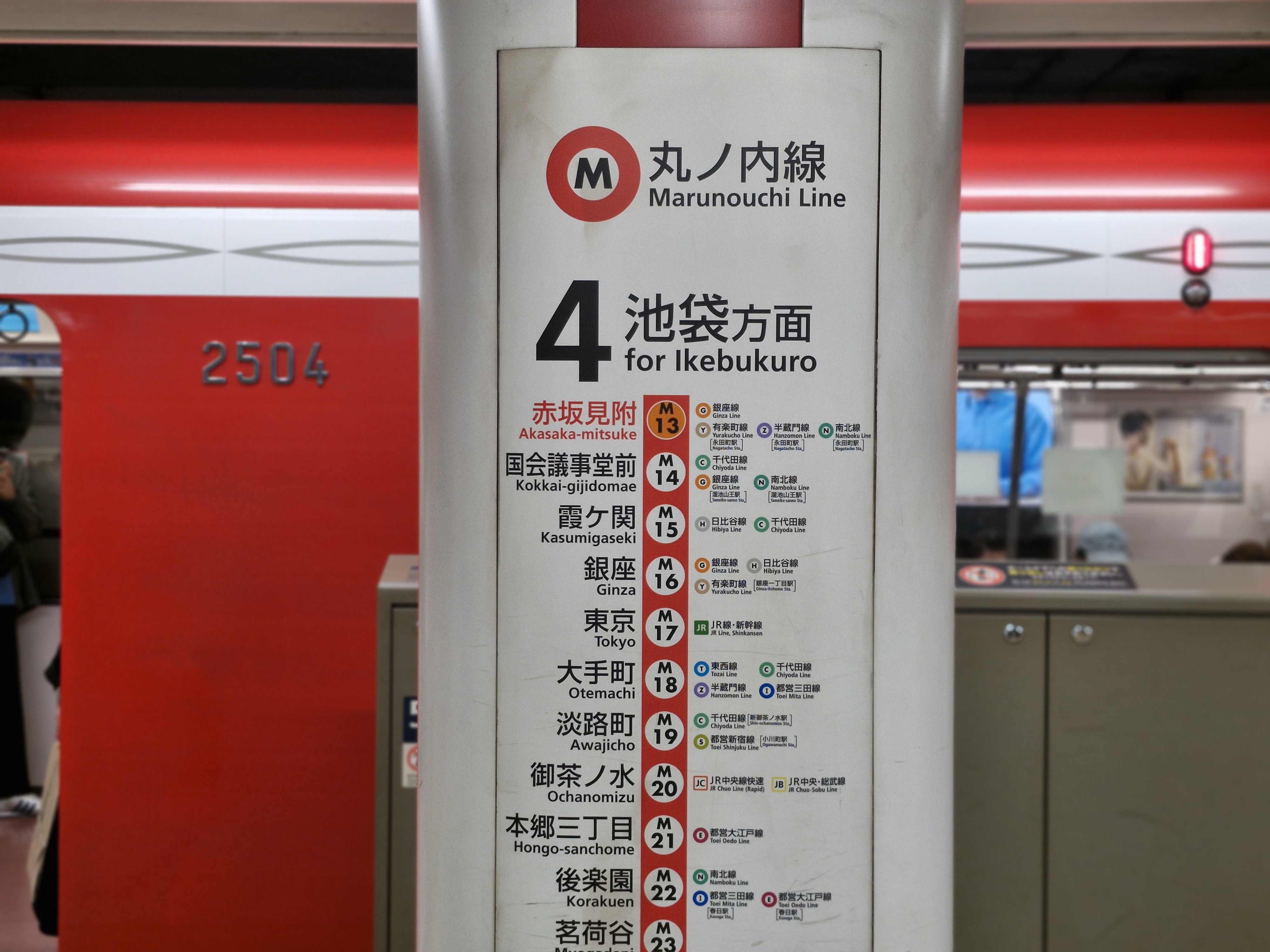
On the morning of November 6th, Dáire and I landed in Tokyo after an 11 and a half hour flight from Istanbul. We both expected to be somewhat overwhelmed by the language and the culture, (we had learned a few phases of basic Japanese) but from the first moment it was easy because a lot of things are also written in English and announcements are made in American English in airports and on trains. Neither of us had ever been to Japan and this was a long anticipated and well planned out trip. Last March, I turned to Dáire and said, half jokingly, ‘Shall we go to Japan?’ And he turned to me and said, ‘Sure, let’s do it.’ I have travelled a lot but the reason I thought Japan was a fantasy destination is because of the idea that it is so far away, exotic, expensive and somehow not easily accessible for a holiday. I was proven wrong in the planning phase by a couple of friends who had been there recently and informed us that Japan, is in fact, quite affordable with its weakened Yen and your Dollars and Euros stretch far. After disembarking from our flight, we easily went through customs because we had filled in all our immigration details beforehand on The Visit Japan website (strongly recommended) and had been issued a QR code which was scanned a couple times by polite immigration officers. Our eSIMS that we purchased in advance from Saily worked immediately on our phones which was also a relief. We then walked out, bought train tickets on the Skyliner train from Tokyo Narita airport for about 15 Euros each and were on a train 5 minutes later for the 40 minute ride to Ueno Station where we transferred to the Marunouchi Line and rode a couple more stops to the lovely Tokyo neighbourhood of Akasaka, which indeed proved to be an excellent choice to base ourselves with its wide range of affordable restaurants right in the neighbourhood and good connections to multiple subway lines. 

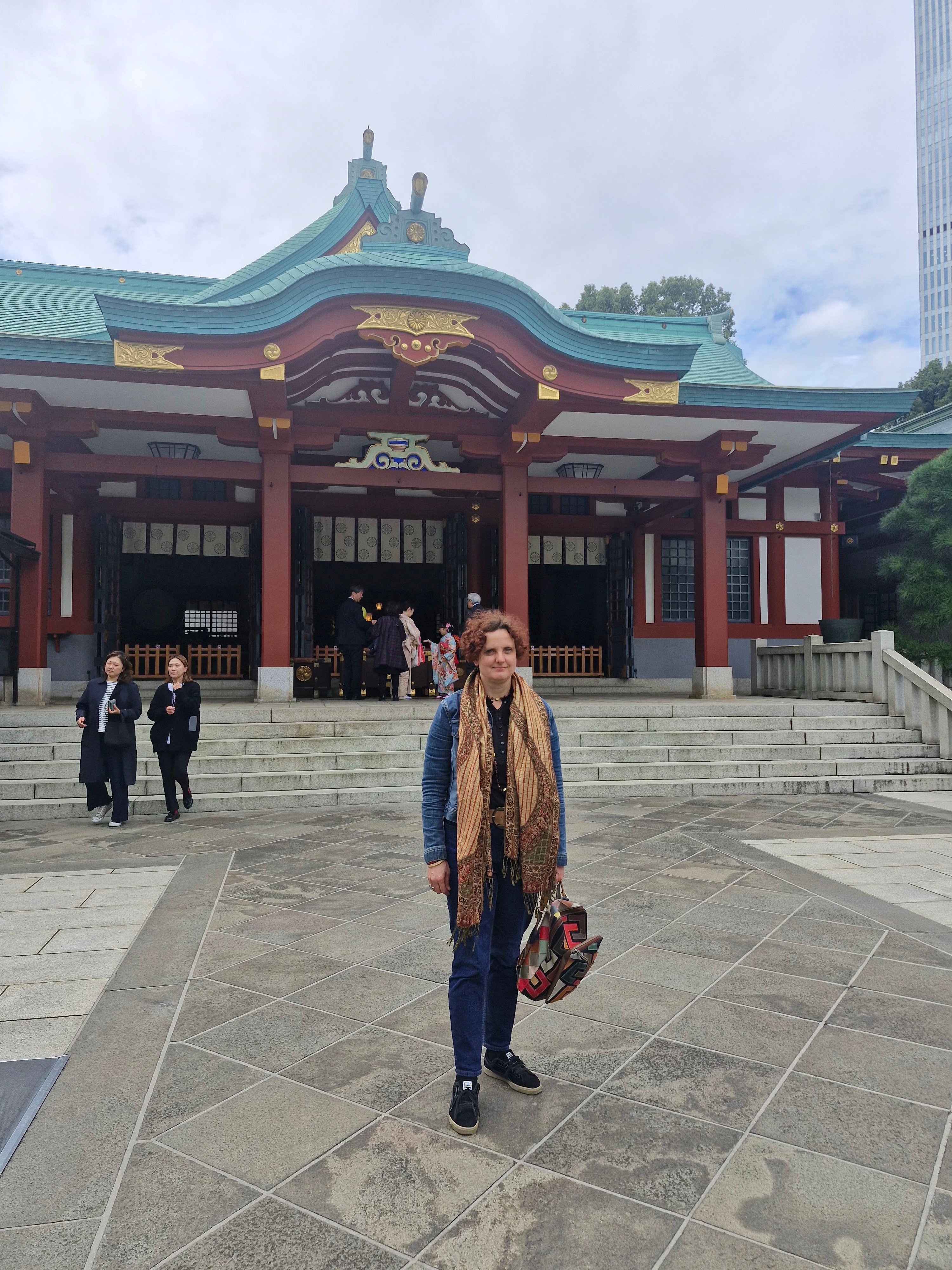
Hie Shrine in Akasaka

Our hotel was the lovely and affordable Hotel Risveglio Akasaka and we arrived there by about 12pm and dropped our bags. They offered free coffee in the reception so we recaffeinated and decided to go out walking and explore the neighborhood to beat the jetlag. (check in wasn’t until 2pm) It was a sunny day and we headed straight over to the Hie Shrine where we saw a few families with young children dressed in beautiful and colourful Japanese outfits. We learned later in the trip that the Shinto Shrines are especially revered as a place to take young children when they are aged 3, 5 and 7 to pray for blessings for their good health and growth. Shinto is centred on the belief in Kami, which are sacred spirits and deities found in natural elements like rivers, mountains and trees, as well as deceased ancestors. We then walked around the National Diet, the central government buildings in Tokyo and over to the Imperial Palace that is surrounded by a formidable wall and moat. We walked to the front gate and peered in but both the government buildings and Imperial Palace are guarded day and night by policemen and women in light blue uniforms wearing white gloves and holding long sticks. You can tour the Imperial Palace on a guided tour but decided against this.

 Imperial Palace Moat and Walls

We were starting to fade so we headed back to Akasaka and poked our heads in the first ramen restaurant we came across which was a little hole in the wall place about 5 minutes from our hotel. The proprietor, a friendly and welcoming man probably in his sixties beckoned us in in Japanese which was a relief. A woman cook came over and showed us how to use the ticket dispensing machine; you stick your cash in, hit the button of the type of ramen you want and it spits out a ticket that you hand to the cook. We sat at the counter, happy to be so hospitably received. We opted for the spicy pork miso ramen with egg; 2 large bowls of delicious ramen were placed in front of us within 10 minutes. The price: about  5.60 Euros a piece. Iced water was readily available to drink for free. The Tokyo tap water is of excellent quality. 

Our local Ramen Restaurant that served incredible ramen

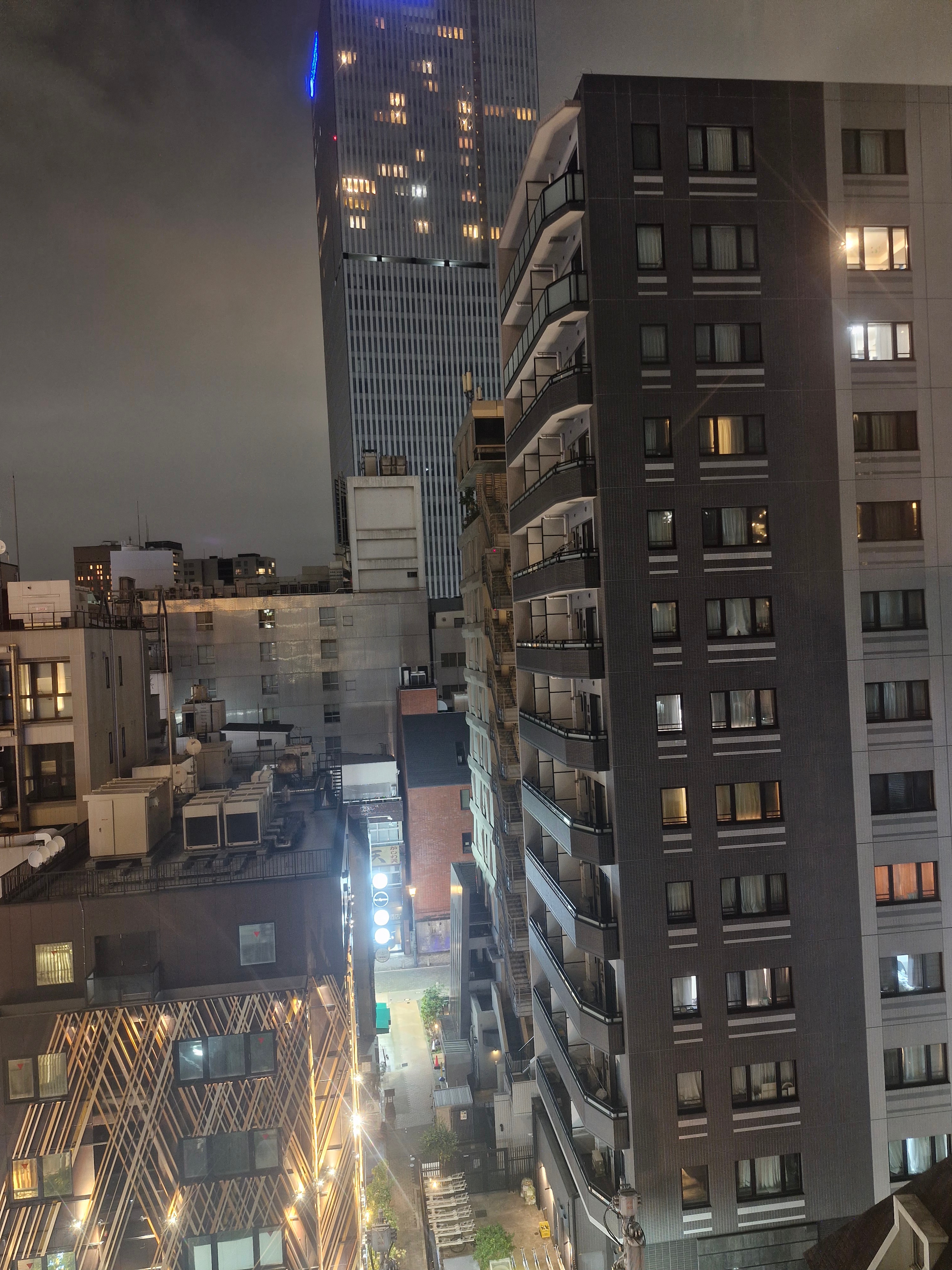
We then went back to our hotel, checked in, had long hot, high pressure showers, put on the complimentary white cotton pajamas and fell into bed. The ramen had been the perfect meal after a long journey and we were both so delighted that our arrival in Tokyo and our first day had gone so smoothly. The bed was so comfortable and clean and the room was on the 9th floor with a view out over apartment buildings and office buildings and the pedestrian street below us. This was to be our base for the next 5 nights. Price: 890 Euros for 2 people sharing including breakfast. So, 89 Euros each per night, in central Tokyo in a desirable neighbourhood. We consider this a bargain for what we got. We opted for mid range hotels sharing the cost as a couple but Japan is apparently great for the solo traveler offering affordable capsule hotels. 

The view from our hotel room on the 9th floor

The next morning, after a somewhat broken night’s sleep due to jetlag, we headed downstairs to get our complimentary breakfast. We opted for what they called an American breakfast of an omelette (with no cheese or anything else on it) 2 pieces of toast with bacon, some rice crispies with yogurt and some pineapple. The breakfast was okay. It also came with a salad. We ate the salad for breakfast because our guts needed the vegetables. It also came with as much orange juice, grapefruit juice and delicious coffee as you wanted. I drank a lot of coffee and orange juice to get my day started. It tasted great. It was good to eat eggs for the protein because we were walking at least 20,000 steps a day, but by day 4 I couldn’t eat any more eggs. That’s just me. I am funny with eggs. We found a supermarket and bought muesli, prunes, bananas, walnuts and milk and also ate that in our room for good digestive health as well as the hotel breakfast because that is what our guts are used to and it kept us healthy during the trip. 

After breakfast we walked to the Mori Building in the Azabudai Hills. It was a sunny morning and only took half an hour to walk to what had been recommended as a highlight in Tokyo: Team Lab, Borderless, an immersive museum known for its colourful digital art installations. It had many different rooms of fascinating and constantly changing digital images. We enjoyed it and spent about 2 hours there. Advance booking is essential for a timed entrance ticket. Everything is so well organised in Japan and the staff everywhere are polite and accommodating. As we exited the museum and were walking back down the sunny street, a Japanese woman was holding a bunch of flyers advertising Tokyo Art Week and she dropped them on the ground. We helped her pick them up and she was so grateful and thanked us repeatedly for helping her. It seems to be a cultural phenomenon to express gratitude effusively like this. We encountered it a few times. Are we just less grateful in the West? On our walk back to the hotel we stopped at a grocery store and bought a small tub of Haagen Daz Green tea ice cream. We sat outside the store and ate it because it is not good manners in Japan to walk and eat at the same time.

Team Labs Borderless Digital Art Museum

After we got back to the hotel we were tired but we packed a backpack with our dirty laundry and walked to a nearby coin laundry. We lucked out as one of the washer and dryer machines was just being emptied so we put our laundry in and were instructed how to use it by a very friendly Japanese man. (We had spent 3 days in Istanbul before arriving in Tokyo so it was time to do laundry. I will write another post about Istanbul, which was fabulous). Our laundry was washed and dried in one machine in about an hour and 15 minutes which was fantastic because this was an easy task to complete and proved to not be complicated or time-consuming in the least. We walked around the neighbourhood while it was washing. We then went straight back to our hotel and then headed out to another ramen restaurant to try their fare: more ramen and gyoza.  We then went back to our room, had long hot showers again and got into another pair of fresh clean pajamas. We were offered clean pajamas every night of our holiday in Japan which was amazing and definitely made it easier to travel light. We only did one load of laundry the whole time. I wore the same shirt a couple days in a row but this is fine when the weather is lovely and mild between 11 and 20 degrees the whole time and you aren’t sweating. You couldn’t do it in summer, which one of our guides said was miserable this past summer with record breaking temperatures of 43 degrees celsius. November is a great time to visit with the maple leaves turning red and it was busy but not as busy as Sakura – Cherry blossom season – in March and April when Japan gets PACKED with tourists to see the cherry blossoms (and ducks struggle on ponds to dive for food because the ponds are so clogged with cherry blossoms).

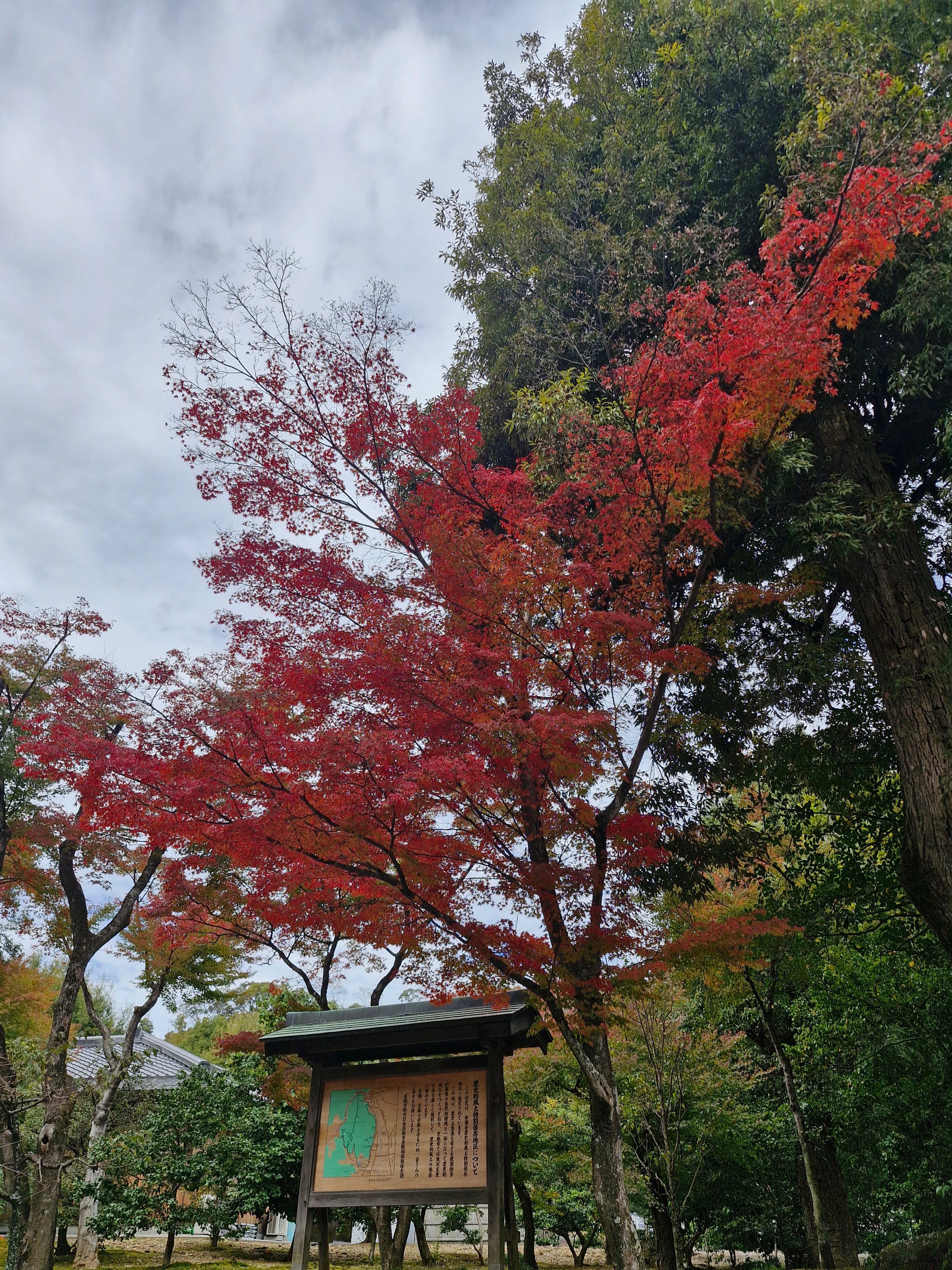
Maple Trees in November in Japan 

The following morning the jetlag caught up with us and we didn’t wake up til 9.50am and we jumped out of bed, pulled on our clothes and ran downstairs hoping to still get breakfast which is served until 10am. We walked in at 9.59am and the Japanese woman serving breakfast looked at her watch and said to us with a big smile that we were still on time. (I suspect if we had arrived 2 minutes later she would have said it was too late. This is how everything is so orderly; rules are abided by. Japan reminded me of Germany quite a lot, a country I lived in for 15 years). After a leisurely breakfast and showers we took the subway over to Tokyo Station and jumped on the hop on hop off bus that has 3 different routes accompanied by an audio guide. We booked this and 4 other tours on the Get Your Guide app. This was a good choice because we knew we would be tired so there was no pressure to be at any specific timeslot. We rode past the Tokyo Sky Tree (which is the world’s tallest tower standing at 634 metres) a memorial to the victims of the Great Kanto Earthquake in 1923, as well as a memorial to the victims of the Second World War. 

Tokyo Sky Tree – The World’s Tallest Tower

We saw a lot of highlights from the bus and then got off not far from the famous Shibuya Crossing which is basically Tokyo’s equivalent of Times Square in New York. The biggest difference being that it just isn’t as loud as New York. We are so loud in the West. Being quiet and respectful in public is simply ingrained in Japanese culture and it makes even the craziest and busiest tourist spots quite simply not as overwhelming as their counterparts in London, Paris and New York. Dáire spotted a large Tower Records store so we went in there so he could browse. While he was browsing I got a message from Get Your Guide saying our Mount Fuji Tour had been cancelled because of people dropping out due to the bad weather forecast. We didn’t get to see Fuji but we did then have an extra day in Tokyo which we used well. Get Your Guide refunded the full ticket price within a few days. 

Shibuya Scramble Crossing from the Top of Shibuya Sky Observation Deck

Shibuya

It was so fascinating just walking around central Tokyo on a Saturday night watching the people. I would have loved to photograph the people of all ages and genders with their daring and incredible fashions which are so different from our own. Young women especially stood out in their high heeled boots,  mini skirts, slender and beautiful figures and their love of white socks, leggings and lace stockings. But even the more conservative fashions on older people were markedly different to our own; the combination of different textiles and shoes that you rarely see on the streets in the West. (Unless you want to get laughed and stared at). 

As we wandered out of Shibuya we happened upon a cat cafe which was next to a veterinary hospital. We had read about this so we decided to just go in. We went up the elevator, took off our shoes, as instructed, and put them in lockers with our bags and then got a drink from the vending machine which came with the price of the ticket (Our guide on one of our tours told us there are more vending machines in Japan than people and this is not hard to believe as they are EVERYWHERE. Japan’s current population is about 123 million and is dropping due to low birthrates.) We went into the cat cafe and petted a lot of cute kitties and fed a couple of them a tuna lollipop. It was a novelty. We both love cats. However we did notice during our whole time in Japan that there are shops that sell small dog breeds right in the centre of really touristy areas next to other accessory shops and this made us sad. It made it seem like these poor animals are nothing more than accessories, although I suppose the Japanese look after their animals and pets with as much respect as they do everything else. 

Cats in a Cat Cafe in Tokyo

After spending half an hour in the cat cafe we took the subway back to Akasaka and ate some vegetable and shrimp tempura with fried rice and an ice cold alcohol free beer in a cheap restaurant right near our hotel. We then went to the 7-11 right across the street from our hotel and bought a tub of Haagen Daz Green tea ice cream and a tub of purple sweet potato and pumpkin ice cream which we dutifully took back to our hotel room to eat. No eating on the street. And also, absolutely no smoking on the street. We saw several smoky smoking booths on our travels filled with people inhaling each other’s smoke. After our ice cream we took lovely hot showers again but not before laughing our heads off at a small sign that was posted at the top of the shower stall that we hadn’t even noticed till then. It read: ‘Caution. For one person only. No horseplay. Please refrain from using after alcohol intake. Please ensure that the water temperature is moderate before taking the shower.’ Well, we were respectful of Japanese culture so we refrained from engaging in any horseplay but I do like really hot showers so it was hard for me to abide by that rule. But no showering after alcohol intake? There are sake and whiskey bars everywhere in Japan. You aren’t allowed a shower after your night out? 

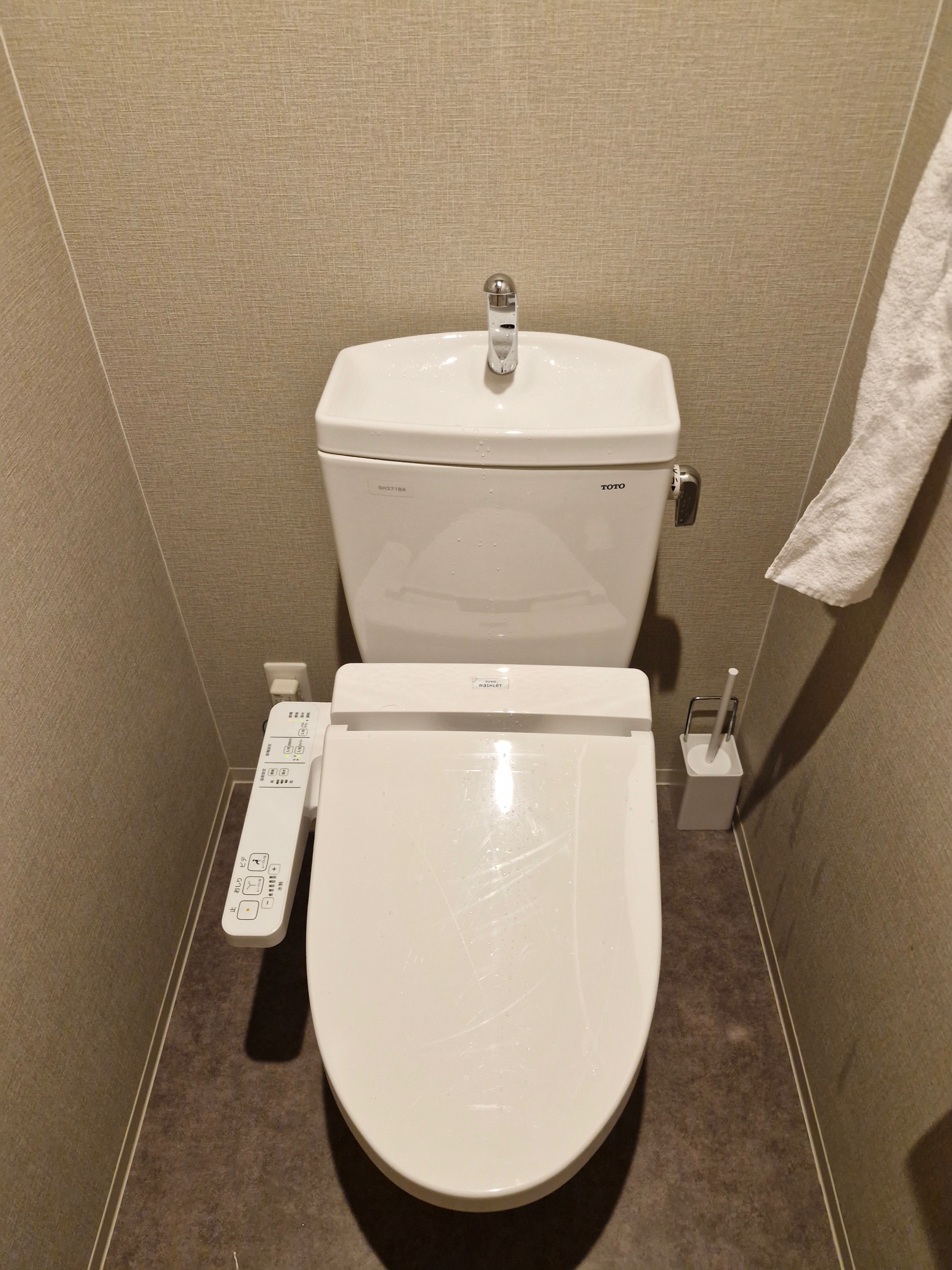
A Toto Bidet Toilet

We may have laughed at the sign at the top of our shower but we were in awe of the toilet in our room. It was a Toto toilet equipped with a heated seat and multiple bidet functions. It had an on/off button to control the time and pressure of warm water to your front or rear. Never have I experienced such clean nether regions as the duration of our stay in Japan. It had a pulsating and oscillating function to make it quite an enjoyable experience. It self flushes and the toilet lid closes automatically. These luxurious toilets are not limited to nice hotel rooms, oh no, not at all, they are EVERYWHERE in Japan. In all public spaces: parks, airports, train stations, museums, shrines, temples; you cannot walk 10 minutes without finding a clean public bidet toilet.  And they are spotlessly clean everywhere. This was wonderful for me: a middle aged woman with a weak bladder who gets stressed on long excursions wondering where the next toilet will be. Some toilets were even equipped with lights inside the toilet bowl and most toilets in public stalls had a privacy setting. You press a button and a musical and watery sound starts up to spare you the embarrassment and indignity of having someone hear you poop in a public stall. Some toilets are even equipped with sinks on top of the cistern so that the water you use to wash your hands goes straight back into filling the cistern instead of wasting it down the drain. A great solution for areas plagued by drought. Our guide told us that there is even a Shinto God protecting Japan’s toilets and this did not surprise me in the least. I noticed, however, that quite a few women’s bathrooms had no hand dryer so I would walk out shaking the excess water off my hands. I then noticed some Japanese women in the bathrooms pulling  their own little hand towels out of their handbags. The hand towels had different quirky patterns on them as well as animals including Miffy the Bunny and Hello Kitty. 

A spotlessly clean woman’s bathroom looking out onto a bamboo forest

The next morning after breakfast it was raining so we decided to go to the MOMAT – Museum of Modern Art Tokyo. It was a Sunday morning so the subway was peaceful. We observed a sign in the subway which very clearly indicated which annoying and noisy behaviours you are expected to refrain from in public spaces especially on trains and as we discovered that day: museums. We spent 3 hours at the museum and it was busy but so peaceful and quiet. The Japanese are really quiet on trains. No talking to each other or on your phone. All phones set to silent. There are even designated cars on the train that are only for women during really busy rush hour times, with signs telling you to the minute what time these cars are to only be occupied by women. (presumably so they do not feel harassed during the peak travel times when people are packed into each carriage.) We planned our activities to avoid peak rush hour. 

Tokyo Subway sign indicating which behaviours to refrain from engaging in

We really enjoyed the MOMAT with its large collection of Japanese art. We also couldn’t help but notice the lifespan of some of the artists; a LOT of the featured artists died in their thirties or forties. What was the cause? We pondered. Suicide? Feeling outcast for being different? A Google search gave the following answer: ‘the extreme pressures of work in a demanding industry, stress related health issues, and personal struggles with mental and physical health’. I am not inclined to now Google all of the artists and find out their cause of death, but we can conclude that many probably did die of suicide or alcoholism. We decided to enjoy the art and not dwell on their short lifespans too much, but it did make us think about the extreme work ethic in Japan. Harue Koga, whose art is featured below, died of the result of extreme pressure, chain smoking and syphilis. 

Woman Divers by Harue Koga (1895-1933) MOMAT 

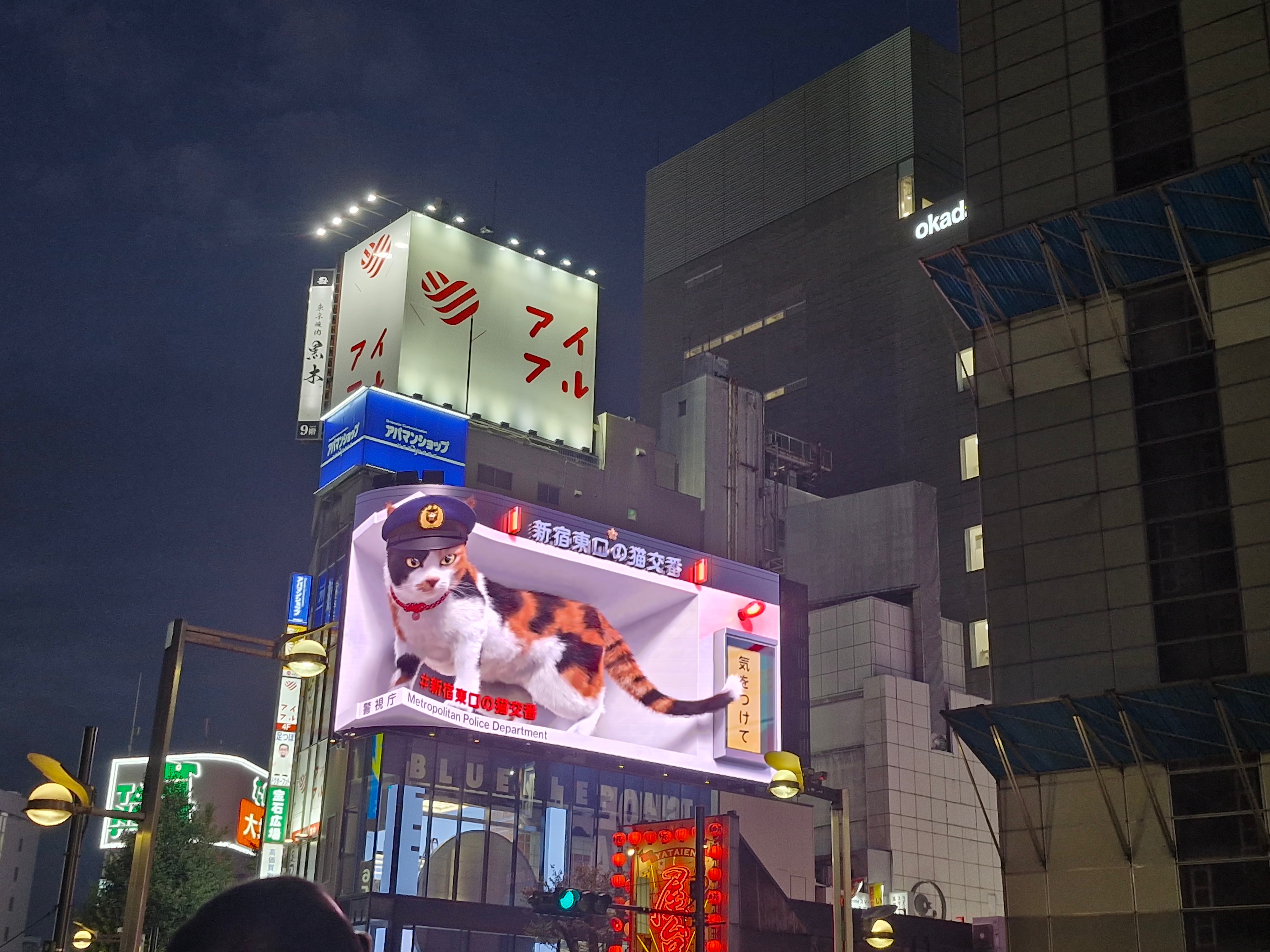
After visiting the art museum, we wandered to the Shinjuku district with its amazing mixture of old and new architecture; lanterns and neon lights. A silly highlight there is to stand on the corner and watch a massive 3D billboard of a cat meowing and talking in Japanese. There is also a The Hotel Gracery that has a giant Godzilla looking into the windows of the dining room. We considered staying there during the planning phase of our journey but were happy we opted for the laid back Akasaka instead. Again, I simply enjoyed watching the people that populate this city, their fascinating fashions inspiring me to be more daring. I had just finished an 18 month contract working in a charity shop (thrift store) in Ireland and had the chance to try on and purchase many interesting garments but nothing matches the daring of the Japanese. 

The Shinjuku Cat

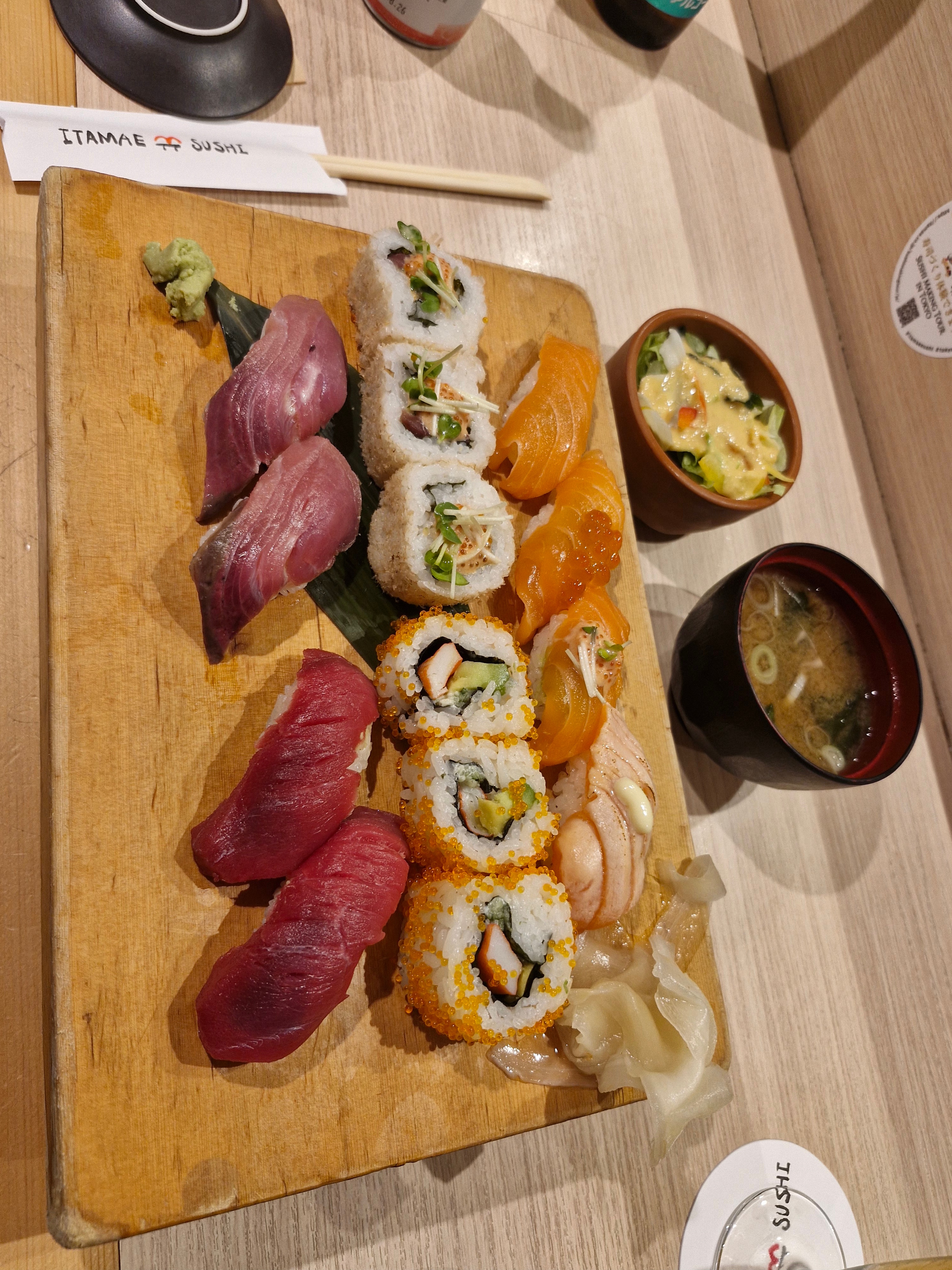
After several hours wandering around Shinjuku we were hungry so we took the train back to Akasaka and went to a sushi restaurant. We had spotted a nice place earlier that day and it didn’t disappoint. We watched the chef make the large plate of sushi right in front of us that we had with bowls of miso soup, a salad and an alcohol free beer each. It was nice to eat some fish after indulging in pork ramen and greasy tempura and gyoza. Again, the entire meal came to about 11 Euros each. Also, you don’t tip in Japan. The price you see on the menu is the price you pay. Service charges are included. 

Delicious Fresh Sushi at Itamae in Akasaka

The next morning we were up early and had our breakfast and headed back to Shibuya to our timed entry slot of 10am to the Shibuya Sky Observation Deck. It cost about 15 Euros each and was worth every penny. It wasn’t too busy yet. (At sunset it gets packed) It was a beautiful morning and we got stunning views of Tokyo in all directions from the 46th floor of the building which looks down on Shibuya Crossing. We formed an impression of just how huge and sprawling this city is with its 37 million inhabitants, making it the most populous city on the planet. The three main tall towers in Tokyo that have 360 degree observation of the city are The Tokyo Skytree, Tokyo Tower and Shibuya Sky. We opted for Shibuya Sky and it was fabulous. There is loads of space to wander around on several levels both indoor and on the rooftop. There is also lots of comfortable seating up there so you can just relax with a drink and snack and enjoy the view. They have a full bar and snack menu. (We didn’t buy any food or drinks but the prices seemed reasonable enough. Some people were having cocktails). We spent nearly 2 hours there.

Shibuya Sky Observation Deck

After descending from the Shibuya Sky we walked in the direction of the Shinjuku Gyoen National Garden. En route we passed a building site which was well fenced in and the traffic lights were still working. No matter, there were still no fewer than 4 policemen and women with white gloves, sticks, and red and white flags, guarding the site and making sure that pedestrians are safe as they walk by it. We would never see these levels of safety and vigilance near a building site, especially if it is fenced off!  We saw this a lot on our travels. Also about half the people in Japan still wear masks: pandemic or no pandemic. 

A Masked and White-gloved Policewoman/Security Guard

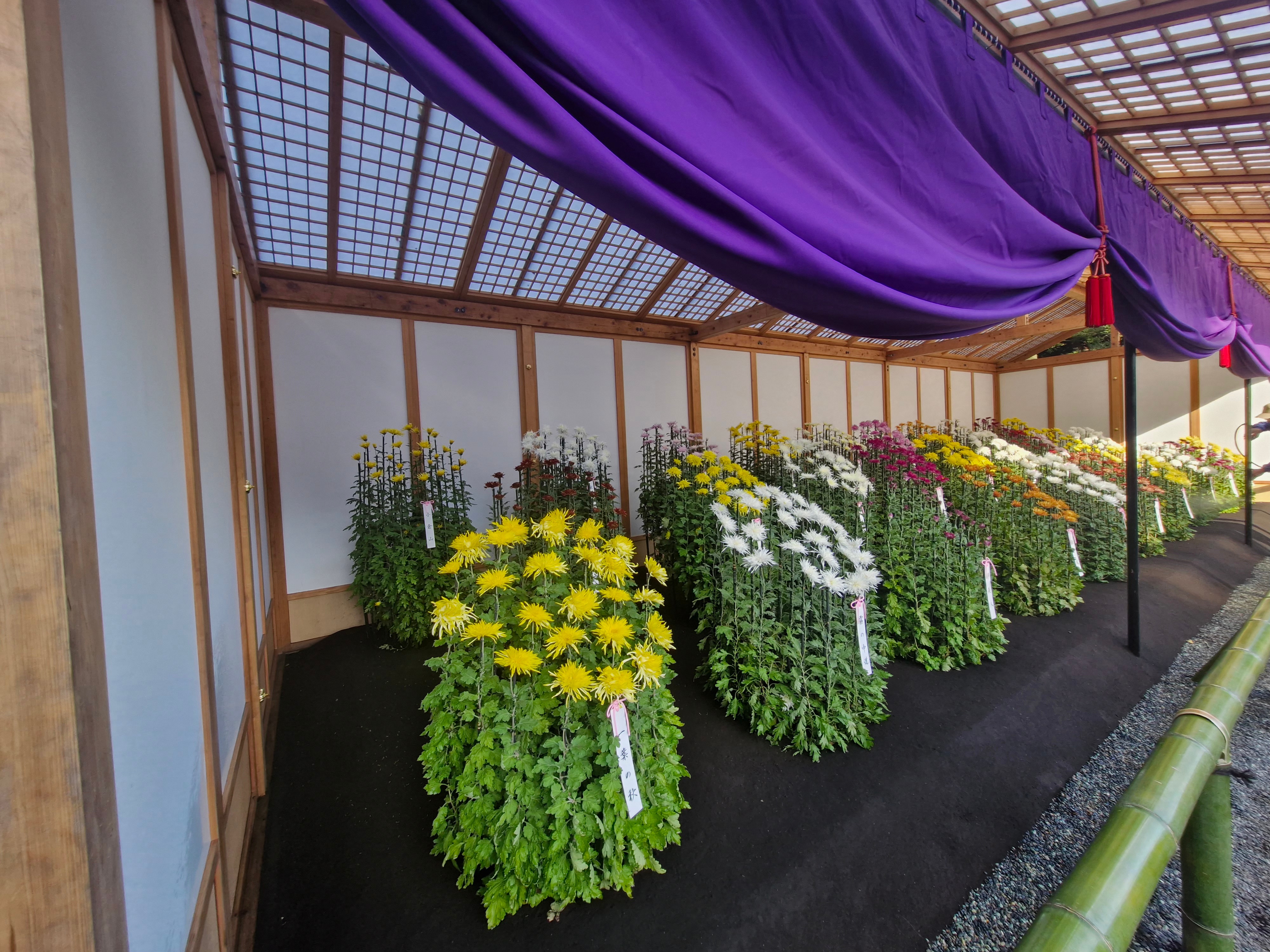
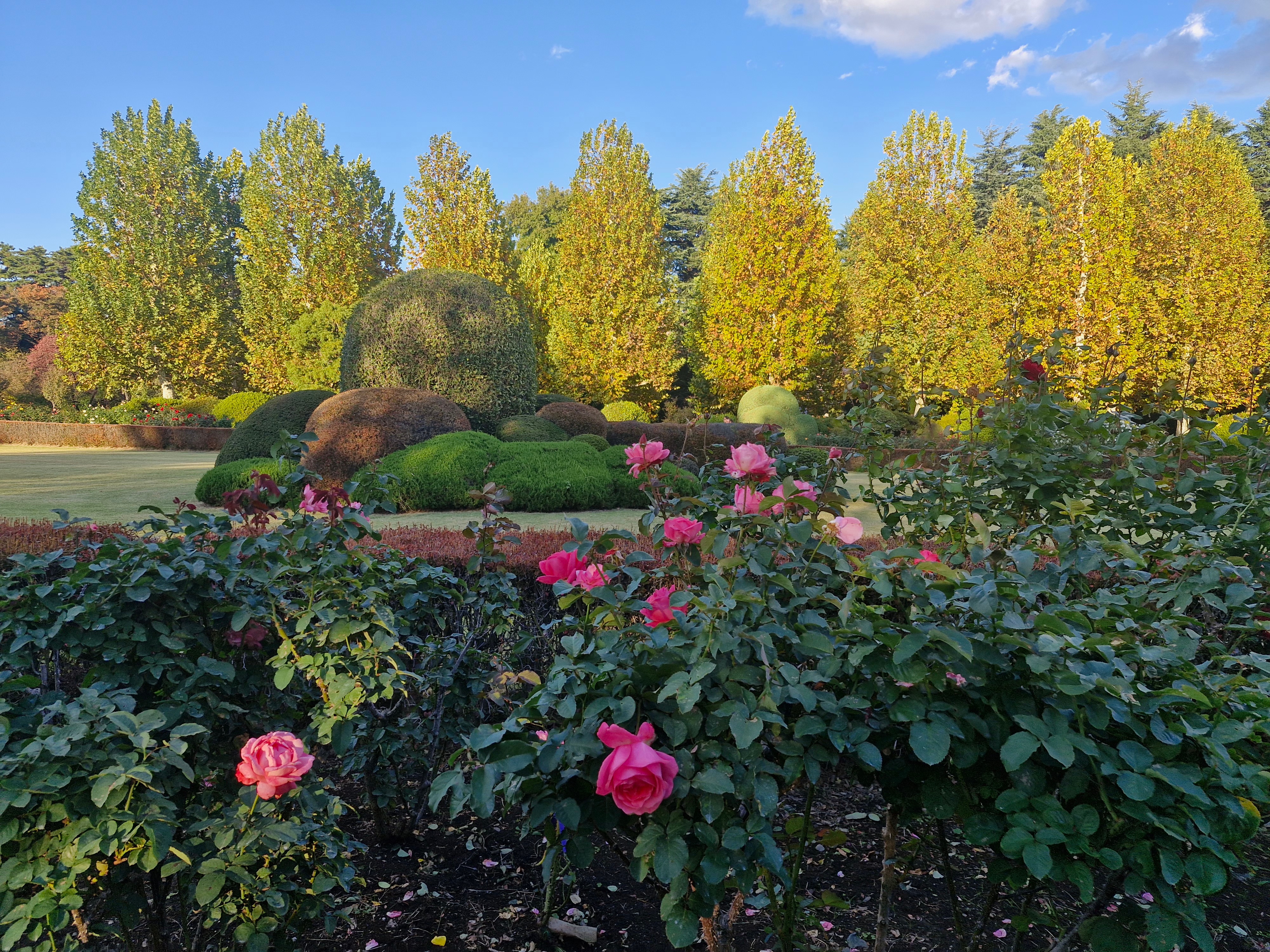
The Shinjuku Gyoen National Gardens were definitely a highlight of our trip to Tokyo. The well landscaped gardens were bathed in dappled sunlight and roses were still blooming in November. It is a 144 acre park that blends 3 distinct types of gardens; Japanese traditional, formal and sprawling lawns with other natural landscaping. One feature that we found humorous were the perfectly landscaped and pruned sets of chrysanthemums and other flowers that were growing in perfect sets and rows under canopies with purple curtains decorating the sides and tops. The flower groups looked like ballerinas on stage about to jump up and dance. I have never seen anything like it. 

Flower Stages in Shinjuku Gyoen National Gardens

We gained entry to the gardens with our IC Card which is the Tokyo equivalent of the Irish Leap card or metro card. Entry was 500 Yen which is about 2.76 Euro. The Japanese love cash. You can pay with cash just about anywhere and some places only take cash. The IC card is also good for subways, buses and trains across Japan, plus as we discovered at the end of our trip, it was good to tap on vending machines! We couldn’t believe it. On our last day in Osaka we were trying to use up all our yen only to discover that we couldn’t top up our IC cards for our trip to the airport with our debit cards and so were forced to take out another 10,000 Yen which is about the equivalent of 56 Euros. (No smaller amount was available for withdrawal). And so to our delight, we discovered mere minutes before we boarded our flight that we could buy bottled water and juice and more packets of matcha green tea chocolate biscuits in order to empty our IC cards before we boarded. So, the IC card has many uses. We could see that this minimal entry fee to a park through turnstiles was well invested in the spectacular upkeep of these gardens right in the centre of Tokyo. What a beautiful and peaceful haven in the city centre. We walked the whole perimeter of the park before exiting where we entered and headed back to Akasaka to our favourite ramen restaurant for one final bowl of delicious ramen on our last night in Tokyo. 

Shinjuku Gyoen National Gardens

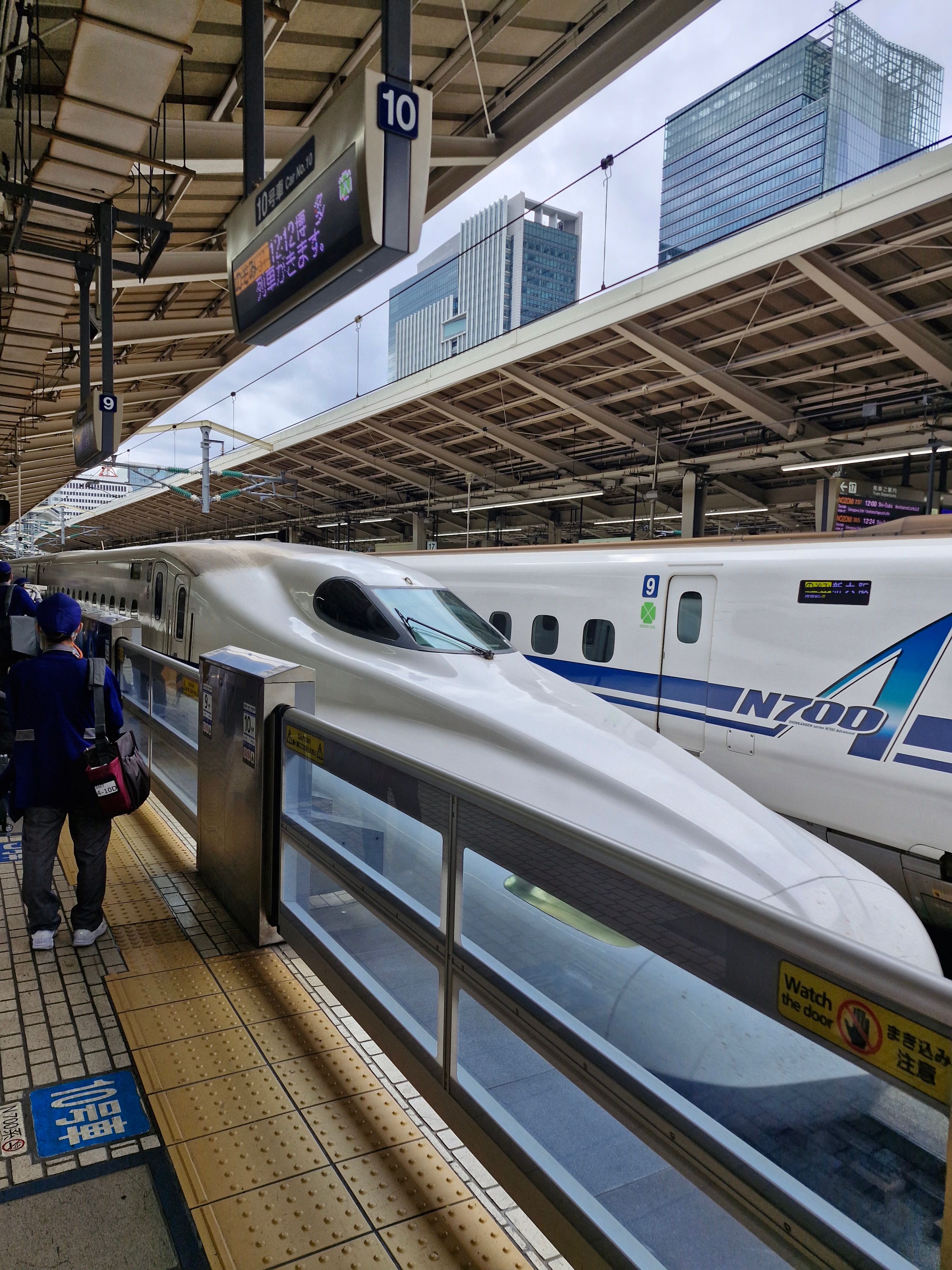
The next morning we were up bright and early for one of the highlights of our trip: riding the Shinkansen – the bullet train to Kyoto. We splurged on first class tickets in the Green Car which were only marginally more expensive than 2nd class blue car tickets. We also sat on the right side of the train which should give you a view of Mount Fuji. Alas, it wasn’t to be, our second chance on the trip to see Fuji didn’t happen. First our tour was cancelled due to rain, then it was under cloud during our train ride. Oh, well. We looked at some nice photos of Fuji. Everything else went extremely smoothly on our trip. Japan is an easy country to travel in. Our next stop would be Kyoto.

The Shinkansen – Japan’s Bullet Train

As we waited to board the train, service workers in light blue uniforms boarded the train with mops, hoovers and buckets to clean the whole train in about 15 minutes before we boarded for our 2 hour and 14 minute train ride to Kyoto travelling at 300 kms an hour. Talk about Japanese efficiency! The cleaners did their job, we boarded and the train left the station exactly on time. It has to depart punctually because the next bullet train for Kyoto departs 15 minutes later. It was a treat to ride this smooth and sleek train. Again, it was peaceful and quiet. We arrived in Kyoto, right on time, but I will tell that story in my next installment. We were so satisfied with the amount of activities we had packed into our limited time in Tokyo and now had multiple activities and tours lined up for Kyoto. 

Photos by Dáire Delmar and Rhea Boyden