
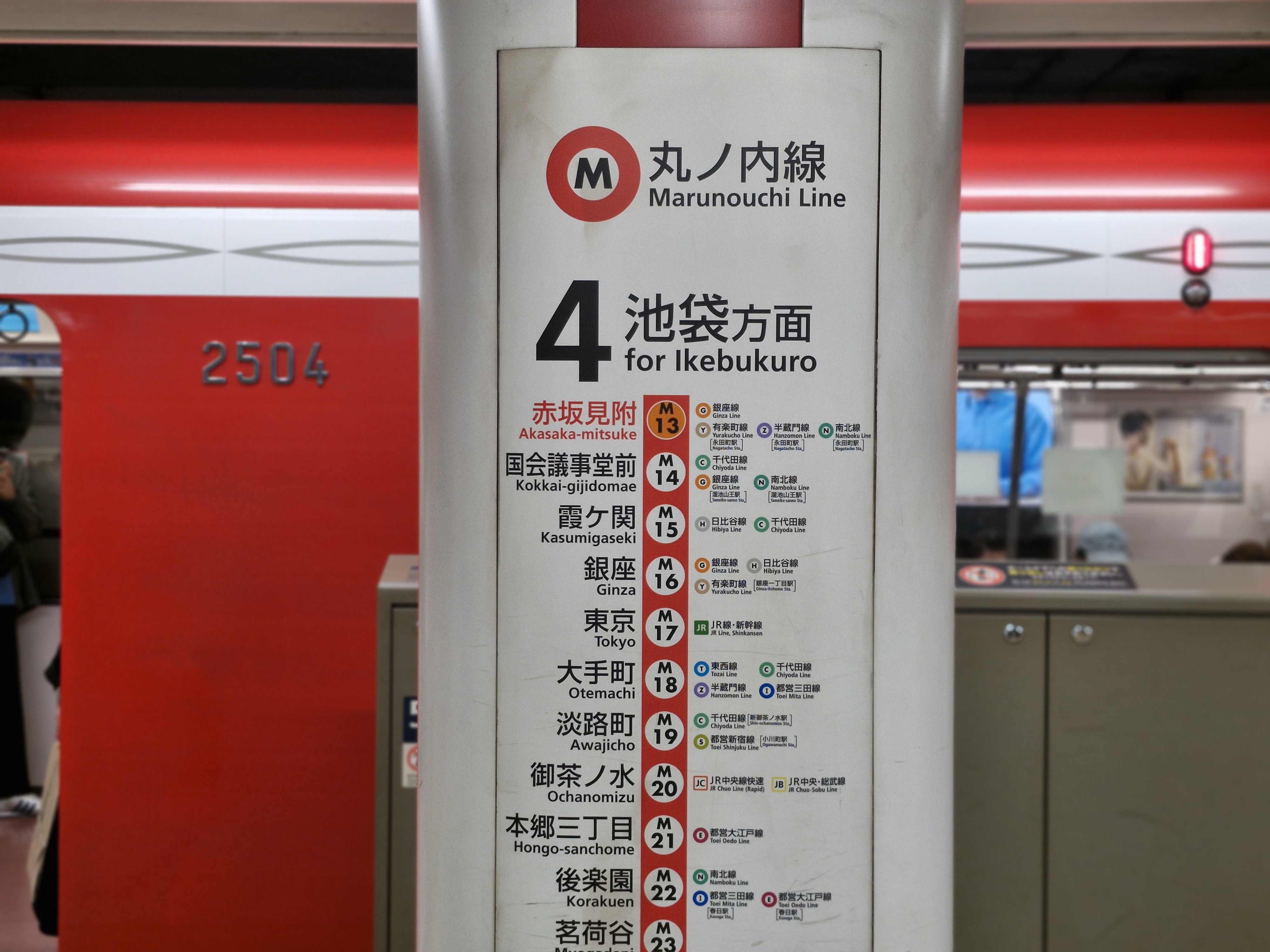
On the morning of November 6th, Dáire and I landed in Tokyo after an 11 and a half hour flight from Istanbul. We both expected to be somewhat overwhelmed by the language and the culture, (we had learned a few phases of basic Japanese) but from the first moment it was easy because a lot of things are also written in English and announcements are made in American English in airports and on trains. Neither of us had ever been to Japan and this was a long anticipated and well planned out trip. Last March, I turned to Dáire and said, half jokingly, ‘Shall we go to Japan?’ And he turned to me and said, ‘Sure, let’s do it.’ I have travelled a lot but the reason I thought Japan was a fantasy destination is because of the idea that it is so far away, exotic, expensive and somehow not easily accessible for a holiday. I was proven wrong in the planning phase by a couple of friends who had been there recently and informed us that Japan, is in fact, quite affordable with its weakened Yen and your Dollars and Euros stretch far. After disembarking from our flight, we easily went through customs because we had filled in all our immigration details beforehand on The Visit Japan website (strongly recommended) and had been issued a QR code which was scanned a couple times by polite immigration officers. Our eSIMS that we purchased in advance from Saily worked immediately on our phones which was also a relief. We then walked out, bought train tickets on the Skyliner train from Tokyo Narita airport for about 15 Euros each and were on a train 5 minutes later for the 40 minute ride to Ueno Station where we transferred to the Marunouchi Line and rode a couple more stops to the lovely Tokyo neighbourhood of Akasaka, which indeed proved to be an excellent choice to base ourselves with its wide range of affordable restaurants right in the neighbourhood and good connections to multiple subway lines.
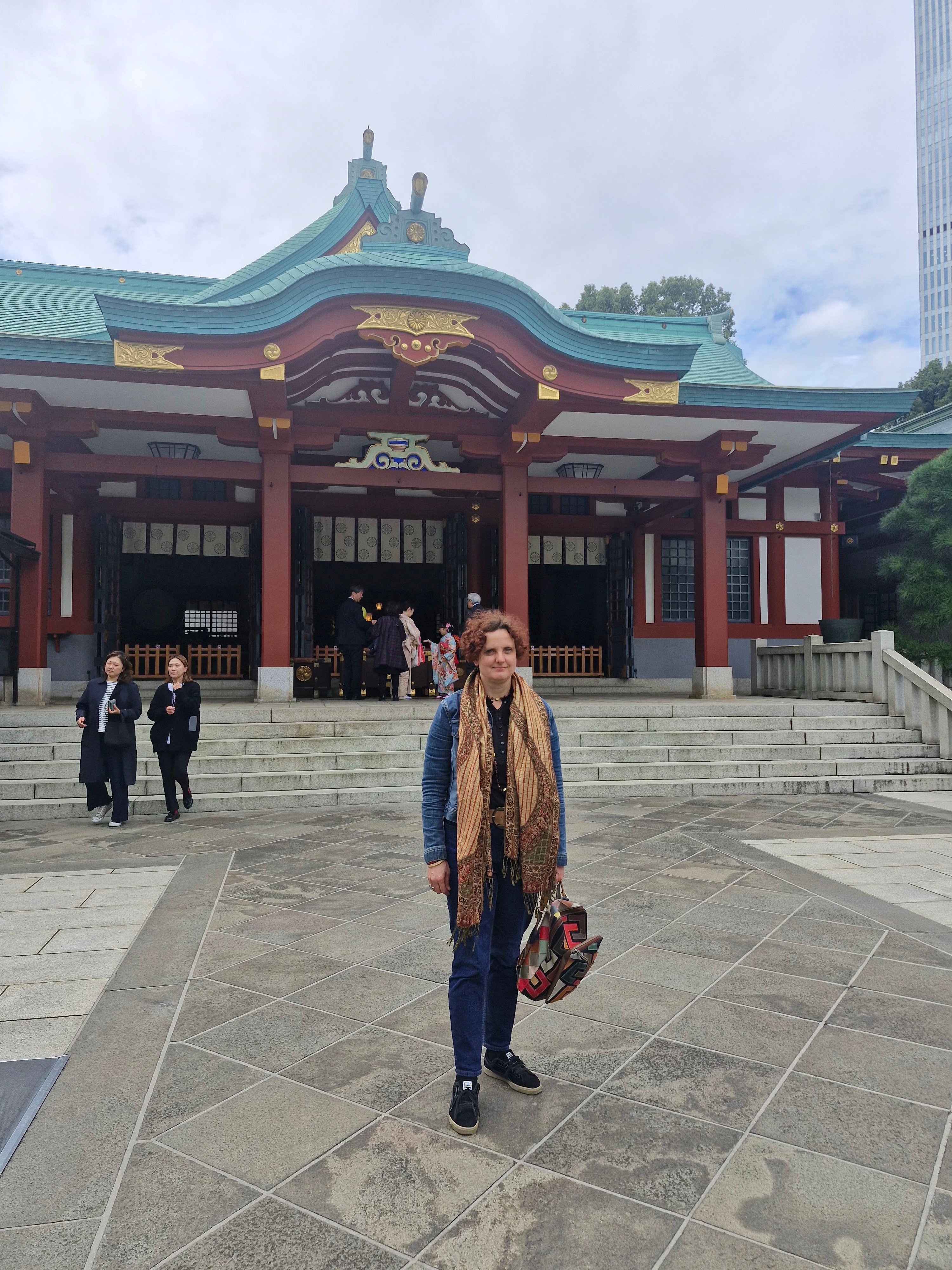
Hie Shrine in Akasaka
Our hotel was the lovely and affordable Hotel Risveglio Akasaka and we arrived there by about 12pm and dropped our bags. They offered free coffee in the reception so we recaffeinated and decided to go out walking and explore the neighborhood to beat the jetlag. (check in wasn’t until 2pm) It was a sunny day and we headed straight over to the Hie Shrine where we saw a few families with young children dressed in beautiful and colourful Japanese outfits. We learned later in the trip that the Shinto Shrines are especially revered as a place to take young children when they are aged 3, 5 and 7 to pray for blessings for their good health and growth. Shinto is centred on the belief in Kami, which are sacred spirits and deities found in natural elements like rivers, mountains and trees, as well as deceased ancestors. We then walked around the National Diet, the central government buildings in Tokyo and over to the Imperial Palace that is surrounded by a formidable wall and moat. We walked to the front gate and peered in but both the government buildings and Imperial Palace are guarded day and night by policemen and women in light blue uniforms wearing white gloves and holding long sticks. You can tour the Imperial Palace on a guided tour but decided against this.

Imperial Palace Moat and Walls
We were starting to fade so we headed back to Akasaka and poked our heads in the first ramen restaurant we came across which was a little hole in the wall place about 5 minutes from our hotel. The proprietor, a friendly and welcoming man probably in his sixties beckoned us in in Japanese which was a relief. A woman cook came over and showed us how to use the ticket dispensing machine; you stick your cash in, hit the button of the type of ramen you want and it spits out a ticket that you hand to the cook. We sat at the counter, happy to be so hospitably received. We opted for the spicy pork miso ramen with egg; 2 large bowls of delicious ramen were placed in front of us within 10 minutes. The price: about 5.60 Euros a piece. Iced water was readily available to drink for free. The Tokyo tap water is of excellent quality.


Our local Ramen Restaurant that served incredible ramen
We then went back to our hotel, checked in, had long hot, high pressure showers, put on the complimentary white cotton pajamas and fell into bed. The ramen had been the perfect meal after a long journey and we were both so delighted that our arrival in Tokyo and our first day had gone so smoothly. The bed was so comfortable and clean and the room was on the 9th floor with a view out over apartment buildings and office buildings and the pedestrian street below us. This was to be our base for the next 5 nights. Price: 890 Euros for 2 people sharing including breakfast. So, 89 Euros each per night, in central Tokyo in a desirable neighbourhood. We consider this a bargain for what we got. We opted for mid range hotels sharing the cost as a couple but Japan is apparently great for the solo traveler offering affordable capsule hotels.
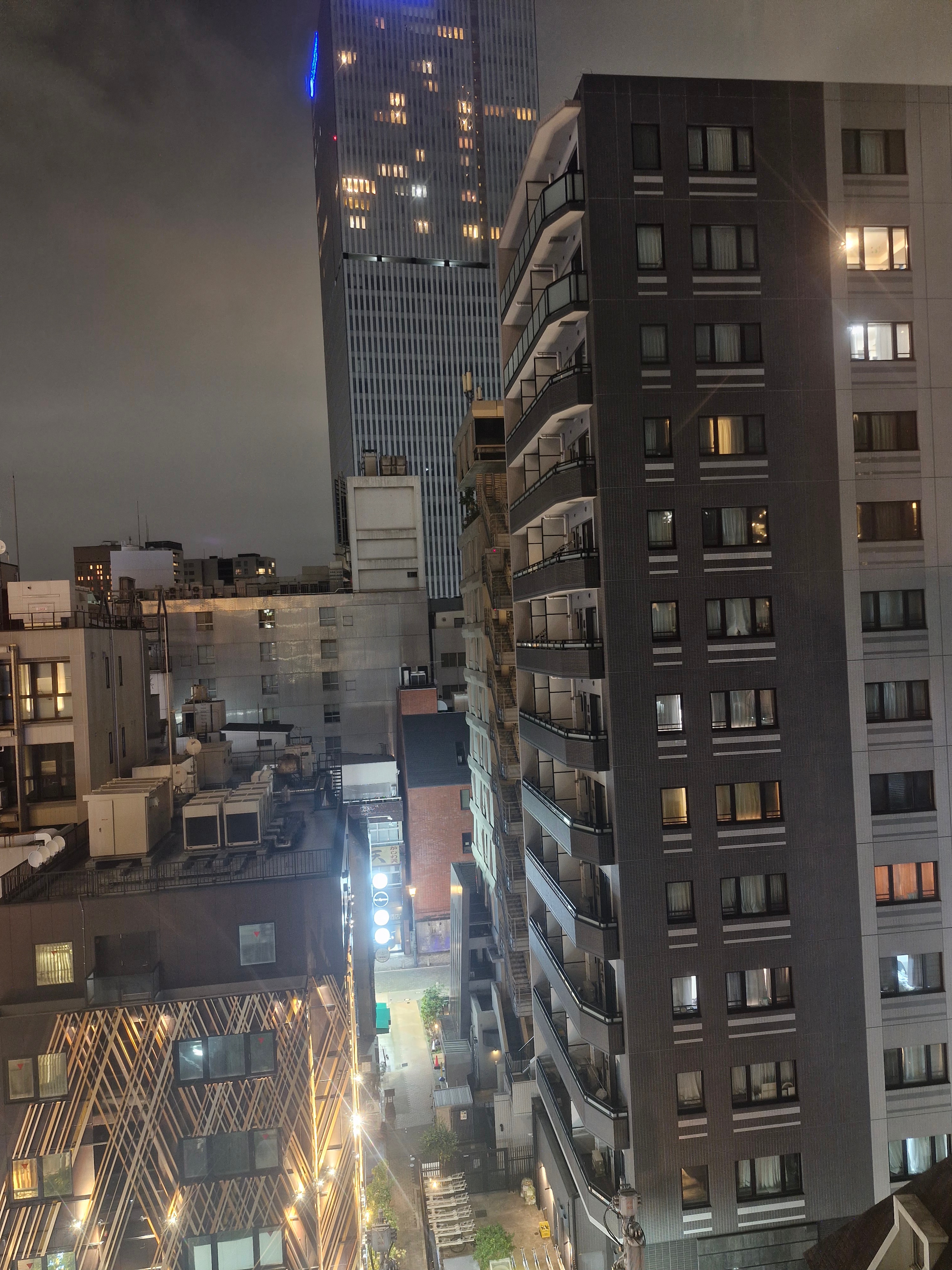
The view from our hotel room on the 9th floor
The next morning, after a somewhat broken night’s sleep due to jetlag, we headed downstairs to get our complimentary breakfast. We opted for what they called an American breakfast of an omelette (with no cheese or anything else on it) 2 pieces of toast with bacon, some rice crispies with yogurt and some pineapple. The breakfast was okay. It also came with a salad. We ate the salad for breakfast because our guts needed the vegetables. It also came with as much orange juice, grapefruit juice and delicious coffee as you wanted. I drank a lot of coffee and orange juice to get my day started. It tasted great. It was good to eat eggs for the protein because we were walking at least 20,000 steps a day, but by day 4 I couldn’t eat any more eggs. That’s just me. I am funny with eggs. We found a supermarket and bought muesli, prunes, bananas, walnuts and milk and also ate that in our room for good digestive health as well as the hotel breakfast because that is what our guts are used to and it kept us healthy during the trip.
After breakfast we walked to the Mori Building in the Azabudai Hills. It was a sunny morning and only took half an hour to walk to what had been recommended as a highlight in Tokyo: Team Lab, Borderless, an immersive museum known for its colourful digital art installations. It had many different rooms of fascinating and constantly changing digital images. We enjoyed it and spent about 2 hours there. Advance booking is essential for a timed entrance ticket. Everything is so well organised in Japan and the staff everywhere are polite and accommodating. As we exited the museum and were walking back down the sunny street, a Japanese woman was holding a bunch of flyers advertising Tokyo Art Week and she dropped them on the ground. We helped her pick them up and she was so grateful and thanked us repeatedly for helping her. It seems to be a cultural phenomenon to express gratitude effusively like this. We encountered it a few times. Are we just less grateful in the West? On our walk back to the hotel we stopped at a grocery store and bought a small tub of Haagen Daz Green tea ice cream. We sat outside the store and ate it because it is not good manners in Japan to walk and eat at the same time.

Team Labs Borderless Digital Art Museum
After we got back to the hotel we were tired but we packed a backpack with our dirty laundry and walked to a nearby coin laundry. We lucked out as one of the washer and dryer machines was just being emptied so we put our laundry in and were instructed how to use it by a very friendly Japanese man. (We had spent 3 days in Istanbul before arriving in Tokyo so it was time to do laundry. I will write another post about Istanbul, which was fabulous). Our laundry was washed and dried in one machine in about an hour and 15 minutes which was fantastic because this was an easy task to complete and proved to not be complicated or time-consuming in the least. We walked around the neighbourhood while it was washing. We then went straight back to our hotel and then headed out to another ramen restaurant to try their fare: more ramen and gyoza. We then went back to our room, had long hot showers again and got into another pair of fresh clean pajamas. We were offered clean pajamas every night of our holiday in Japan which was amazing and definitely made it easier to travel light. We only did one load of laundry the whole time. I wore the same shirt a couple days in a row but this is fine when the weather is lovely and mild between 11 and 20 degrees the whole time and you aren’t sweating. You couldn’t do it in summer, which one of our guides said was miserable this past summer with record breaking temperatures of 43 degrees celsius. November is a great time to visit with the maple leaves turning red and it was busy but not as busy as Sakura – Cherry blossom season – in March and April when Japan gets PACKED with tourists to see the cherry blossoms (and ducks struggle on ponds to dive for food because the ponds are so clogged with cherry blossoms).
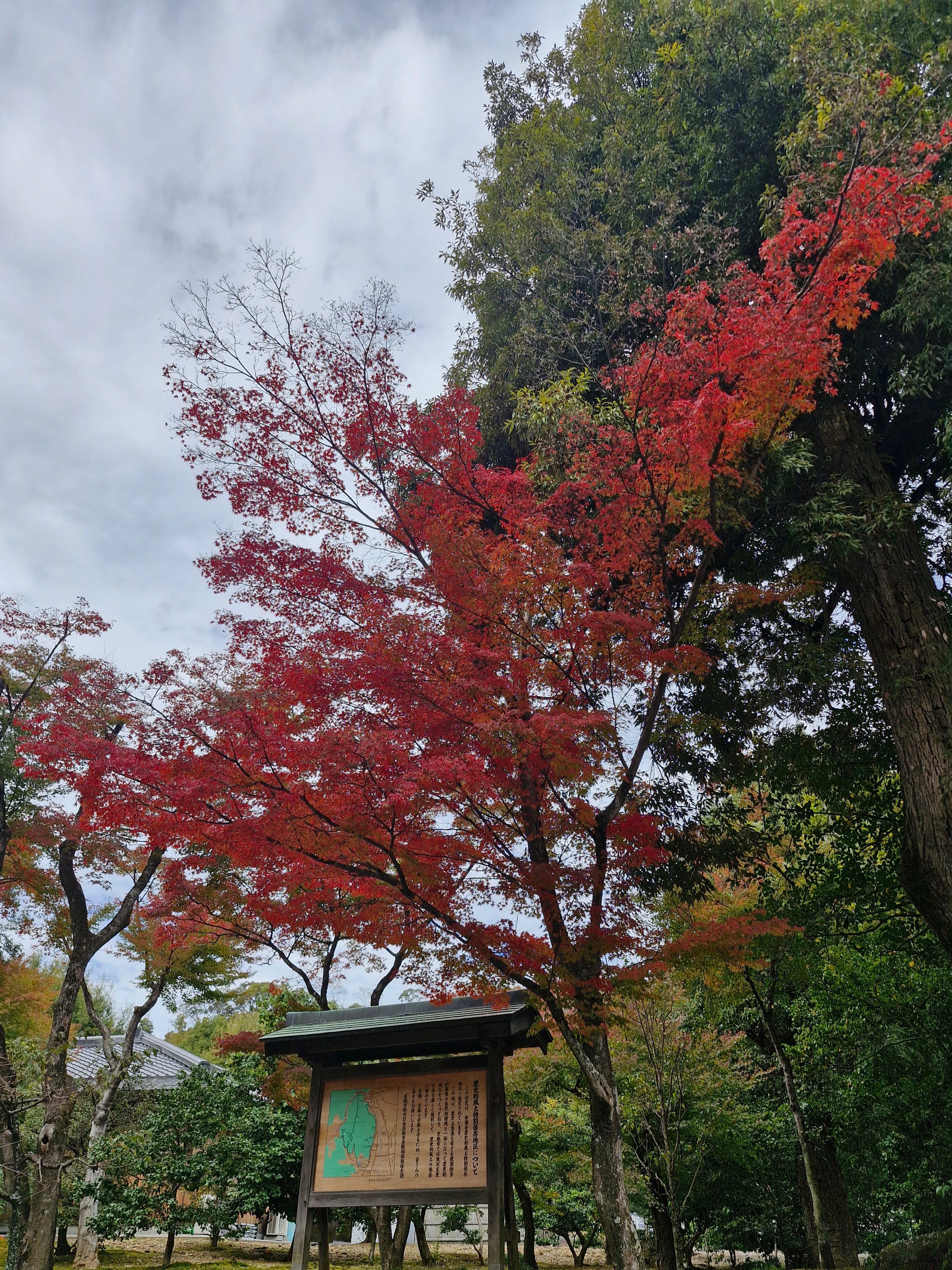
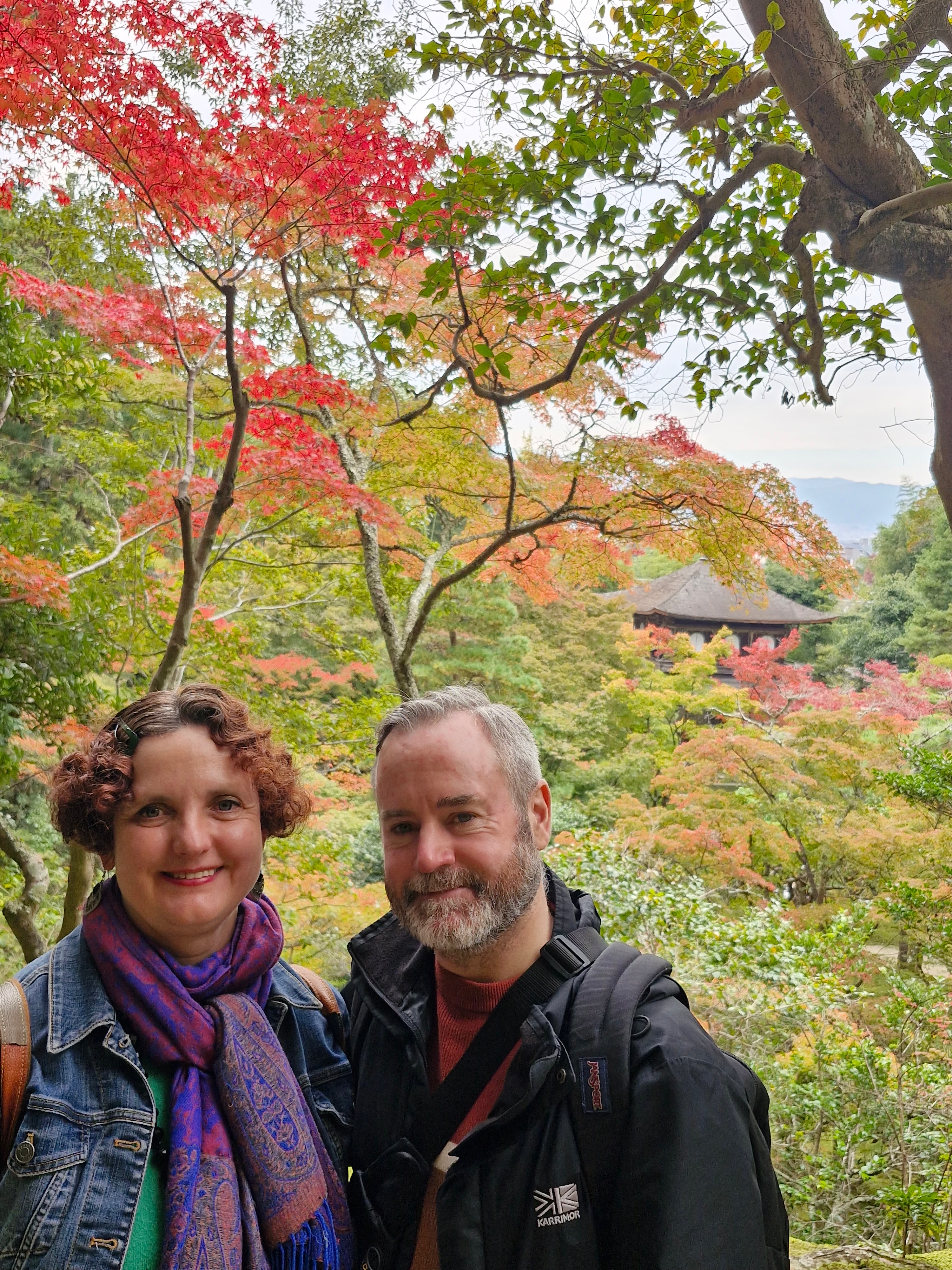
Maple Trees in November in Japan
The following morning the jetlag caught up with us and we didn’t wake up til 9.50am and we jumped out of bed, pulled on our clothes and ran downstairs hoping to still get breakfast which is served until 10am. We walked in at 9.59am and the Japanese woman serving breakfast looked at her watch and said to us with a big smile that we were still on time. (I suspect if we had arrived 2 minutes later she would have said it was too late. This is how everything is so orderly; rules are abided by. Japan reminded me of Germany quite a lot, a country I lived in for 15 years). After a leisurely breakfast and showers we took the subway over to Tokyo Station and jumped on the hop on hop off bus that has 3 different routes accompanied by an audio guide. We booked this and 4 other tours on the Get Your Guide app. This was a good choice because we knew we would be tired so there was no pressure to be at any specific timeslot. We rode past the Tokyo Sky Tree (which is the world’s tallest tower standing at 634 metres) a memorial to the victims of the Great Kanto Earthquake in 1923, as well as a memorial to the victims of the Second World War.

Tokyo Sky Tree – The World’s Tallest Tower
We saw a lot of highlights from the bus and then got off not far from the famous Shibuya Crossing which is basically Tokyo’s equivalent of Times Square in New York. The biggest difference being that it just isn’t as loud as New York. We are so loud in the West. Being quiet and respectful in public is simply ingrained in Japanese culture and it makes even the craziest and busiest tourist spots quite simply not as overwhelming as their counterparts in London, Paris and New York. Dáire spotted a large Tower Records store so we went in there so he could browse. While he was browsing I got a message from Get Your Guide saying our Mount Fuji Tour had been cancelled because of people dropping out due to the bad weather forecast. We didn’t get to see Fuji but we did then have an extra day in Tokyo which we used well. Get Your Guide refunded the full ticket price within a few days.

Shibuya Scramble Crossing from the Top of Shibuya Sky Observation Deck
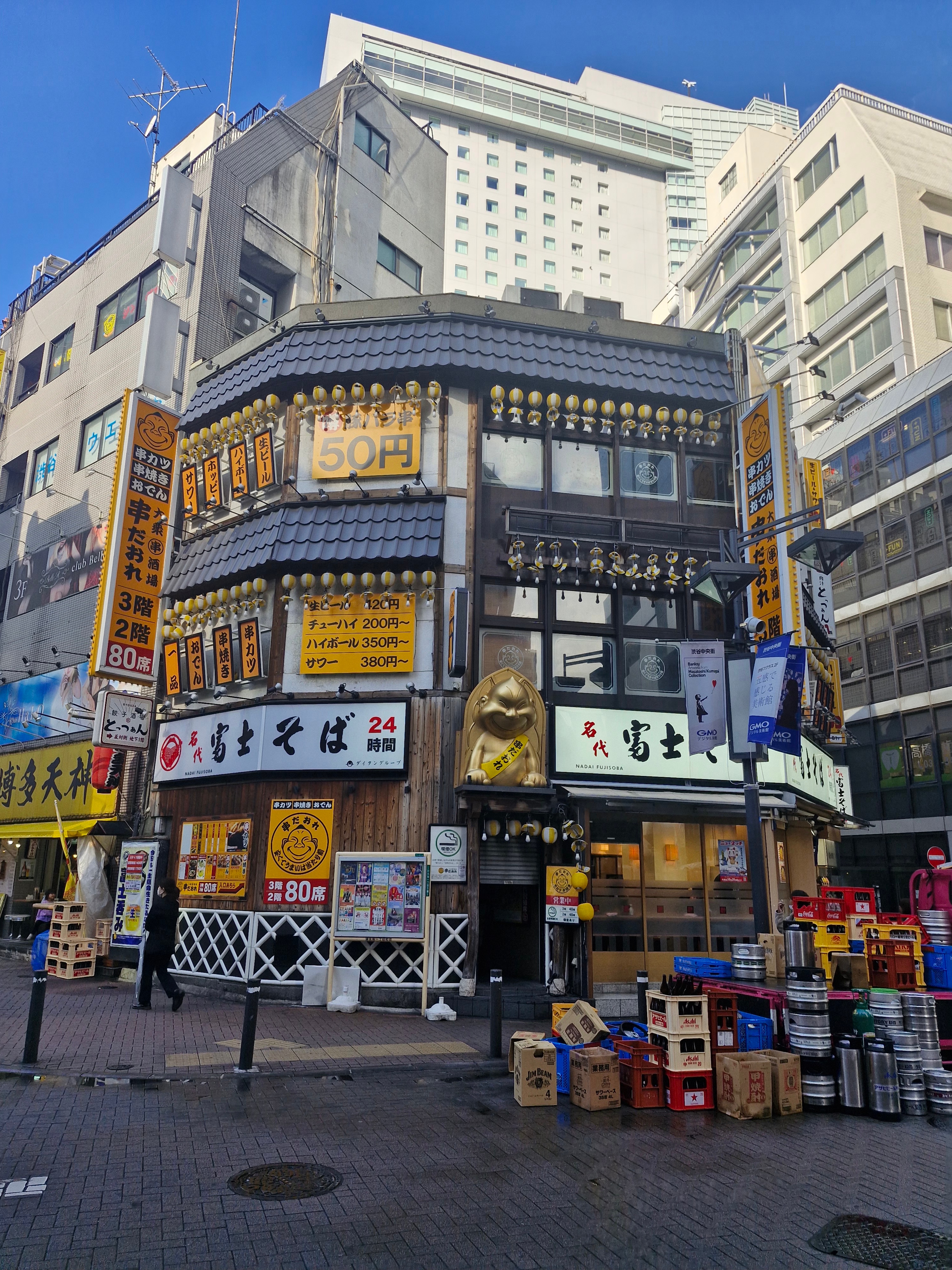
Shibuya
It was so fascinating just walking around central Tokyo on a Saturday night watching the people. I would have loved to photograph the people of all ages and genders with their daring and incredible fashions which are so different from our own. Young women especially stood out in their high heeled boots, mini skirts, slender and beautiful figures and their love of white socks, leggings and lace stockings. But even the more conservative fashions on older people were markedly different to our own; the combination of different textiles and shoes that you rarely see on the streets in the West. (Unless you want to get laughed and stared at).
As we wandered out of Shibuya we happened upon a cat cafe which was next to a veterinary hospital. We had read about this so we decided to just go in. We went up the elevator, took off our shoes, as instructed, and put them in lockers with our bags and then got a drink from the vending machine which came with the price of the ticket (Our guide on one of our tours told us there are more vending machines in Japan than people and this is not hard to believe as they are EVERYWHERE. Japan’s current population is about 123 million and is dropping due to low birthrates.) We went into the cat cafe and petted a lot of cute kitties and fed a couple of them a tuna lollipop. It was a novelty. We both love cats. However we did notice during our whole time in Japan that there are shops that sell small dog breeds right in the centre of really touristy areas next to other accessory shops and this made us sad. It made it seem like these poor animals are nothing more than accessories, although I suppose the Japanese look after their animals and pets with as much respect as they do everything else.

Cats in a Cat Cafe in Tokyo
After spending half an hour in the cat cafe we took the subway back to Akasaka and ate some vegetable and shrimp tempura with fried rice and an ice cold alcohol free beer in a cheap restaurant right near our hotel. We then went to the 7-11 right across the street from our hotel and bought a tub of Haagen Daz Green tea ice cream and a tub of purple sweet potato and pumpkin ice cream which we dutifully took back to our hotel room to eat. No eating on the street. And also, absolutely no smoking on the street. We saw several smoky smoking booths on our travels filled with people inhaling each other’s smoke. After our ice cream we took lovely hot showers again but not before laughing our heads off at a small sign that was posted at the top of the shower stall that we hadn’t even noticed till then. It read: ‘Caution. For one person only. No horseplay. Please refrain from using after alcohol intake. Please ensure that the water temperature is moderate before taking the shower.’ Well, we were respectful of Japanese culture so we refrained from engaging in any horseplay but I do like really hot showers so it was hard for me to abide by that rule. But no showering after alcohol intake? There are sake and whiskey bars everywhere in Japan. You aren’t allowed a shower after your night out?
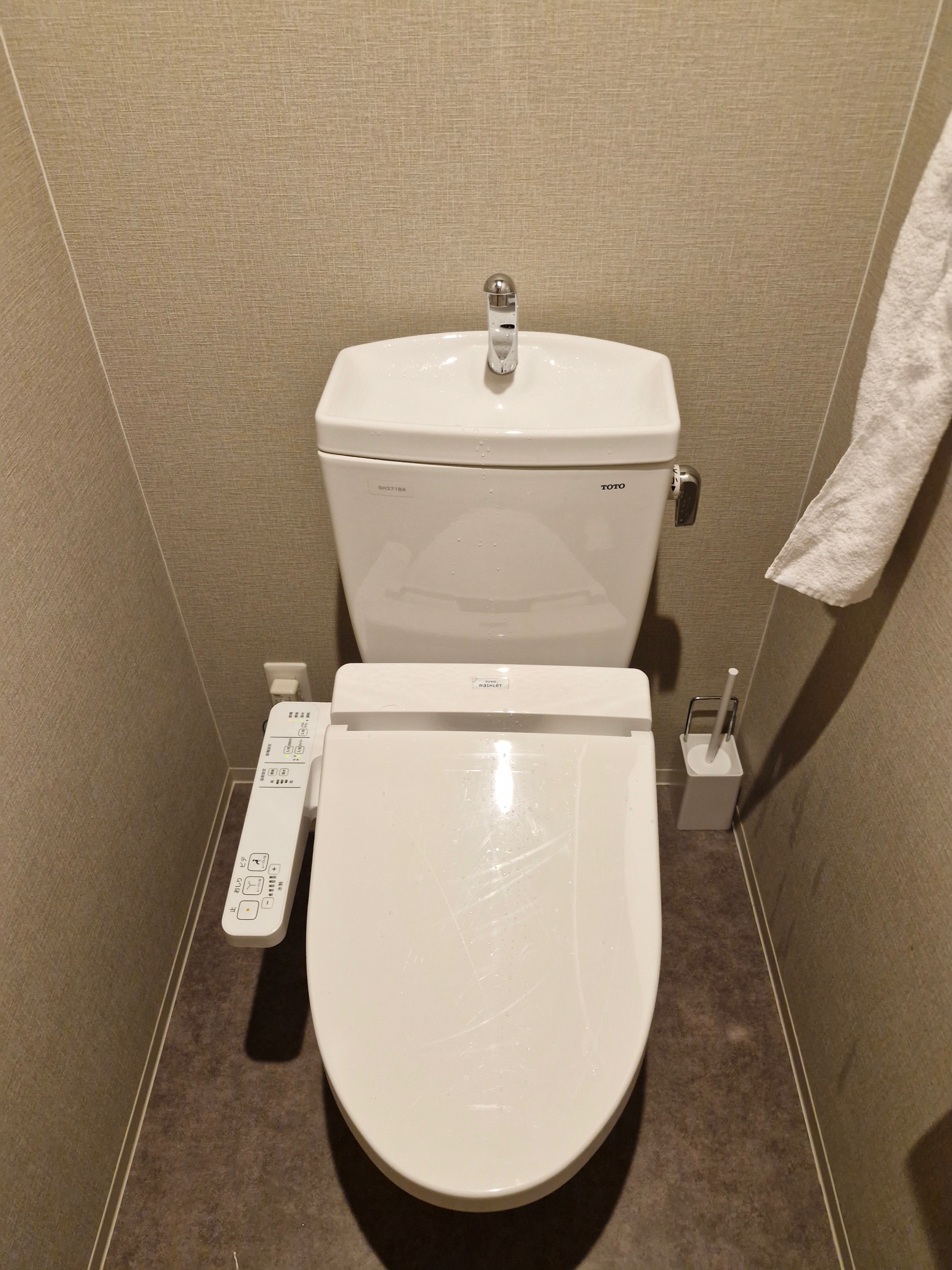
A Toto Bidet Toilet
We may have laughed at the sign at the top of our shower but we were in awe of the toilet in our room. It was a Toto toilet equipped with a heated seat and multiple bidet functions. It had an on/off button to control the time and pressure of warm water to your front or rear. Never have I experienced such clean nether regions as the duration of our stay in Japan. It had a pulsating and oscillating function to make it quite an enjoyable experience. It self flushes and the toilet lid closes automatically. These luxurious toilets are not limited to nice hotel rooms, oh no, not at all, they are EVERYWHERE in Japan. In all public spaces: parks, airports, train stations, museums, shrines, temples; you cannot walk 10 minutes without finding a clean public bidet toilet. And they are spotlessly clean everywhere. This was wonderful for me: a middle aged woman with a weak bladder who gets stressed on long excursions wondering where the next toilet will be. Some toilets were even equipped with lights inside the toilet bowl and most toilets in public stalls had a privacy setting. You press a button and a musical and watery sound starts up to spare you the embarrassment and indignity of having someone hear you poop in a public stall. Some toilets are even equipped with sinks on top of the cistern so that the water you use to wash your hands goes straight back into filling the cistern instead of wasting it down the drain. A great solution for areas plagued by drought. Our guide told us that there is even a Shinto God protecting Japan’s toilets and this did not surprise me in the least. I noticed, however, that quite a few women’s bathrooms had no hand dryer so I would walk out shaking the excess water off my hands. I then noticed some Japanese women in the bathrooms pulling their own little hand towels out of their handbags. The hand towels had different quirky patterns on them as well as animals including Miffy the Bunny and Hello Kitty.

A spotlessly clean woman’s bathroom looking out onto a bamboo forest
The next morning after breakfast it was raining so we decided to go to the MOMAT – Museum of Modern Art Tokyo. It was a Sunday morning so the subway was peaceful. We observed a sign in the subway which very clearly indicated which annoying and noisy behaviours you are expected to refrain from in public spaces especially on trains and as we discovered that day: museums. We spent 3 hours at the museum and it was busy but so peaceful and quiet. The Japanese are really quiet on trains. No talking to each other or on your phone. All phones set to silent. There are even designated cars on the train that are only for women during really busy rush hour times, with signs telling you to the minute what time these cars are to only be occupied by women. (presumably so they do not feel harassed during the peak travel times when people are packed into each carriage.) We planned our activities to avoid peak rush hour.

Tokyo Subway sign indicating which behaviours to refrain from engaging in
We really enjoyed the MOMAT with its large collection of Japanese art. We also couldn’t help but notice the lifespan of some of the artists; a LOT of the featured artists died in their thirties or forties. What was the cause? We pondered. Suicide? Feeling outcast for being different? A Google search gave the following answer: ‘the extreme pressures of work in a demanding industry, stress related health issues, and personal struggles with mental and physical health’. I am not inclined to now Google all of the artists and find out their cause of death, but we can conclude that many probably did die of suicide or alcoholism. We decided to enjoy the art and not dwell on their short lifespans too much, but it did make us think about the extreme work ethic in Japan. Harue Koga, whose art is featured below, died of the result of extreme pressure, chain smoking and syphilis.

Woman Divers by Harue Koga (1895-1933) MOMAT
After visiting the art museum, we wandered to the Shinjuku district with its amazing mixture of old and new architecture; lanterns and neon lights. A silly highlight there is to stand on the corner and watch a massive 3D billboard of a cat meowing and talking in Japanese. There is also a The Hotel Gracery that has a giant Godzilla looking into the windows of the dining room. We considered staying there during the planning phase of our journey but were happy we opted for the laid back Akasaka instead. Again, I simply enjoyed watching the people that populate this city, their fascinating fashions inspiring me to be more daring. I had just finished an 18 month contract working in a charity shop (thrift store) in Ireland and had the chance to try on and purchase many interesting garments but nothing matches the daring of the Japanese.
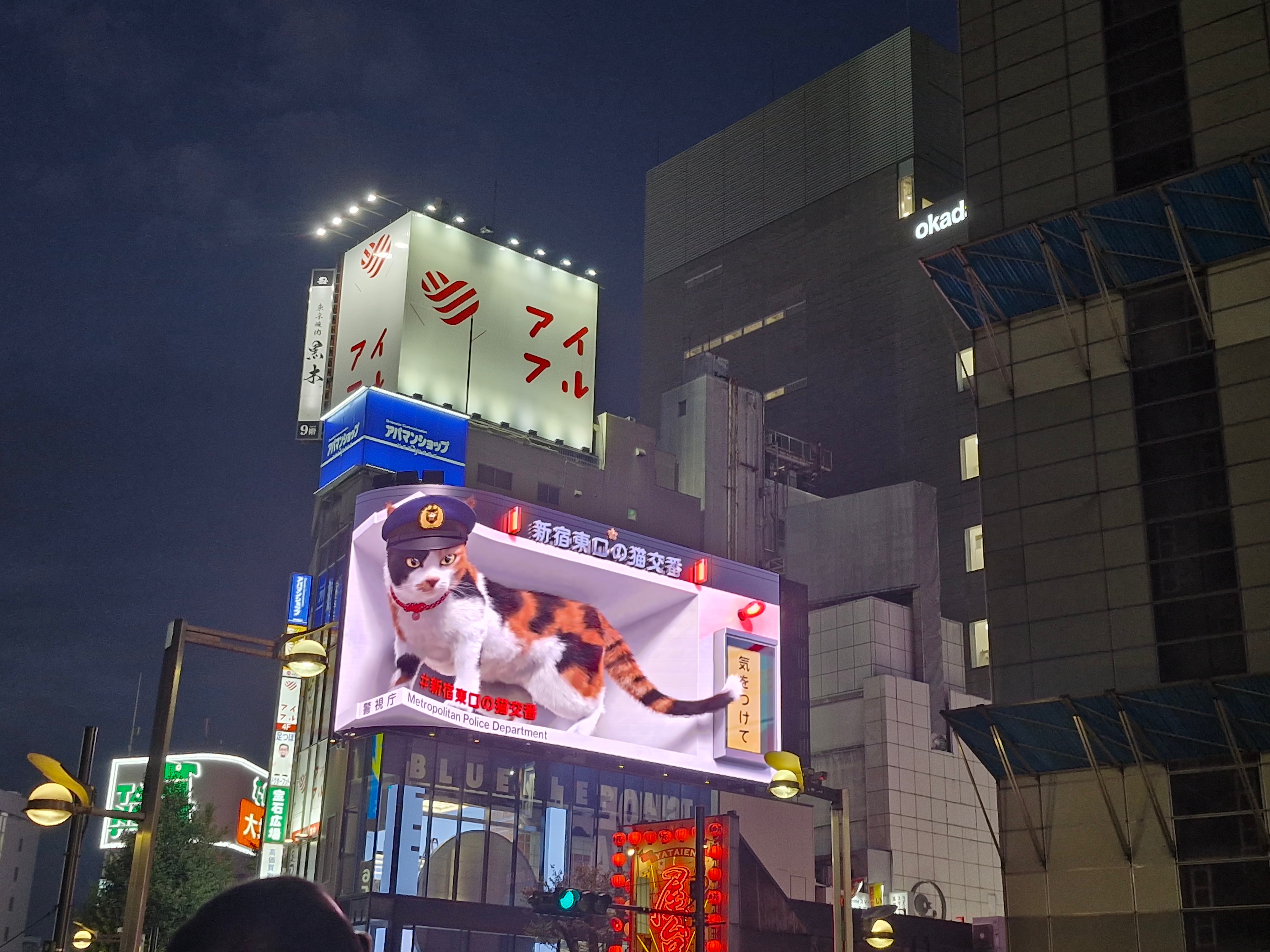
The Shinjuku Cat
After several hours wandering around Shinjuku we were hungry so we took the train back to Akasaka and went to a sushi restaurant. We had spotted a nice place earlier that day and it didn’t disappoint. We watched the chef make the large plate of sushi right in front of us that we had with bowls of miso soup, a salad and an alcohol free beer each. It was nice to eat some fish after indulging in pork ramen and greasy tempura and gyoza. Again, the entire meal came to about 11 Euros each. Also, you don’t tip in Japan. The price you see on the menu is the price you pay. Service charges are included.
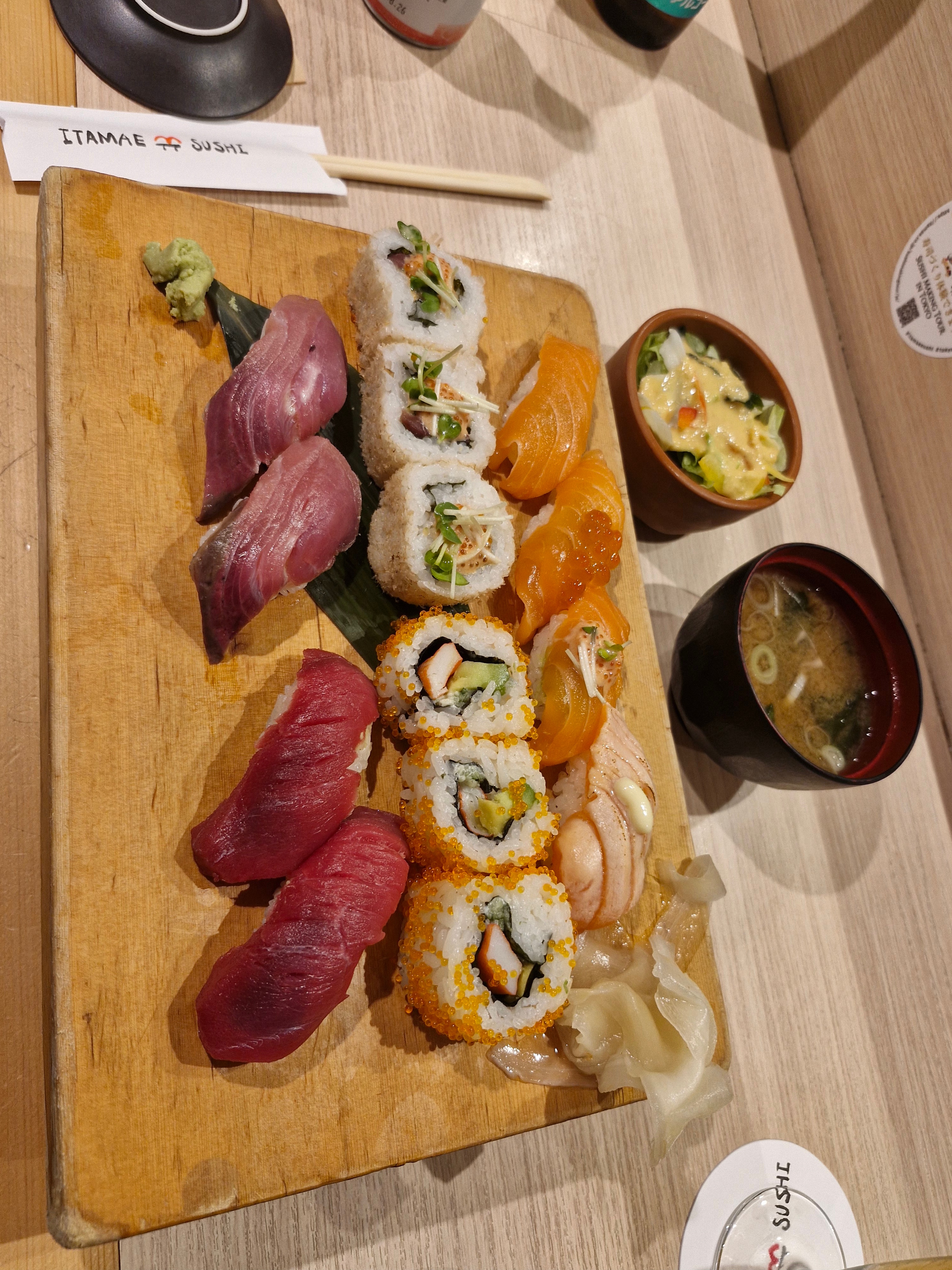
Delicious Fresh Sushi at Itamae in Akasaka
The next morning we were up early and had our breakfast and headed back to Shibuya to our timed entry slot of 10am to the Shibuya Sky Observation Deck. It cost about 15 Euros each and was worth every penny. It wasn’t too busy yet. (At sunset it gets packed) It was a beautiful morning and we got stunning views of Tokyo in all directions from the 46th floor of the building which looks down on Shibuya Crossing. We formed an impression of just how huge and sprawling this city is with its 37 million inhabitants, making it the most populous city on the planet. The three main tall towers in Tokyo that have 360 degree observation of the city are The Tokyo Skytree, Tokyo Tower and Shibuya Sky. We opted for Shibuya Sky and it was fabulous. There is loads of space to wander around on several levels both indoor and on the rooftop. There is also lots of comfortable seating up there so you can just relax with a drink and snack and enjoy the view. They have a full bar and snack menu. (We didn’t buy any food or drinks but the prices seemed reasonable enough. Some people were having cocktails). We spent nearly 2 hours there.

Shibuya Sky Observation Deck
After descending from the Shibuya Sky we walked in the direction of the Shinjuku Gyoen National Garden. En route we passed a building site which was well fenced in and the traffic lights were still working. No matter, there were still no fewer than 4 policemen and women with white gloves, sticks, and red and white flags, guarding the site and making sure that pedestrians are safe as they walk by it. We would never see these levels of safety and vigilance near a building site, especially if it is fenced off! We saw this a lot on our travels. Also about half the people in Japan still wear masks: pandemic or no pandemic.

A Masked and White-gloved Policewoman/Security Guard
The Shinjuku Gyoen National Gardens were definitely a highlight of our trip to Tokyo. The well landscaped gardens were bathed in dappled sunlight and roses were still blooming in November. It is a 144 acre park that blends 3 distinct types of gardens; Japanese traditional, formal and sprawling lawns with other natural landscaping. One feature that we found humorous were the perfectly landscaped and pruned sets of chrysanthemums and other flowers that were growing in perfect sets and rows under canopies with purple curtains decorating the sides and tops. The flower groups looked like ballerinas on stage about to jump up and dance. I have never seen anything like it.
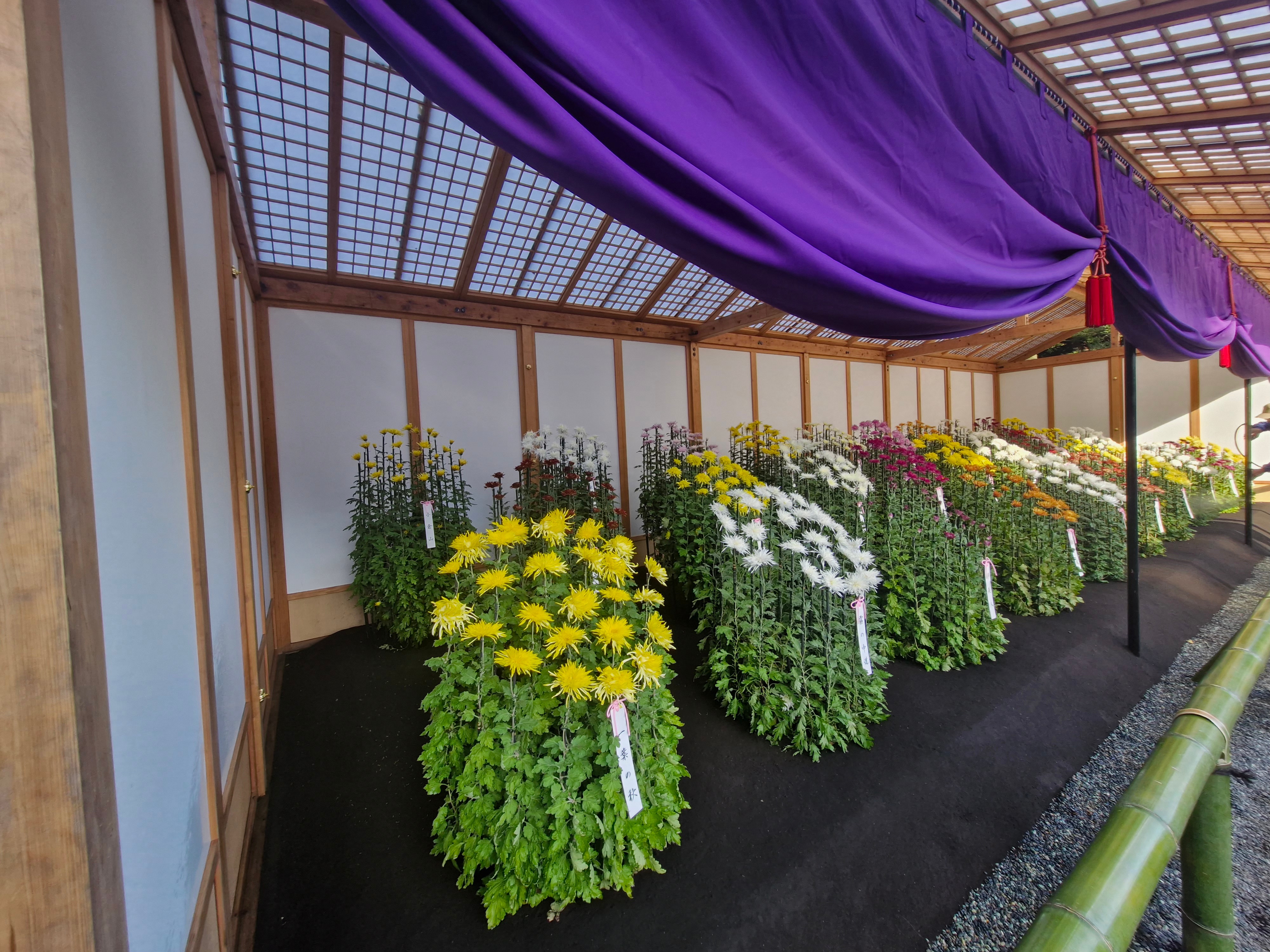
Flower Stages in Shinjuku Gyoen National Gardens
We gained entry to the gardens with our IC Card which is the Tokyo equivalent of the Irish Leap card or metro card. Entry was 500 Yen which is about 2.76 Euro. The Japanese love cash. You can pay with cash just about anywhere and some places only take cash. The IC card is also good for subways, buses and trains across Japan, plus as we discovered at the end of our trip, it was good to tap on vending machines! We couldn’t believe it. On our last day in Osaka we were trying to use up all our yen only to discover that we couldn’t top up our IC cards for our trip to the airport with our debit cards and so were forced to take out another 10,000 Yen which is about the equivalent of 56 Euros. (No smaller amount was available for withdrawal). And so to our delight, we discovered mere minutes before we boarded our flight that we could buy bottled water and juice and more packets of matcha green tea chocolate biscuits in order to empty our IC cards before we boarded. So, the IC card has many uses. We could see that this minimal entry fee to a park through turnstiles was well invested in the spectacular upkeep of these gardens right in the centre of Tokyo. What a beautiful and peaceful haven in the city centre. We walked the whole perimeter of the park before exiting where we entered and headed back to Akasaka to our favourite ramen restaurant for one final bowl of delicious ramen on our last night in Tokyo.

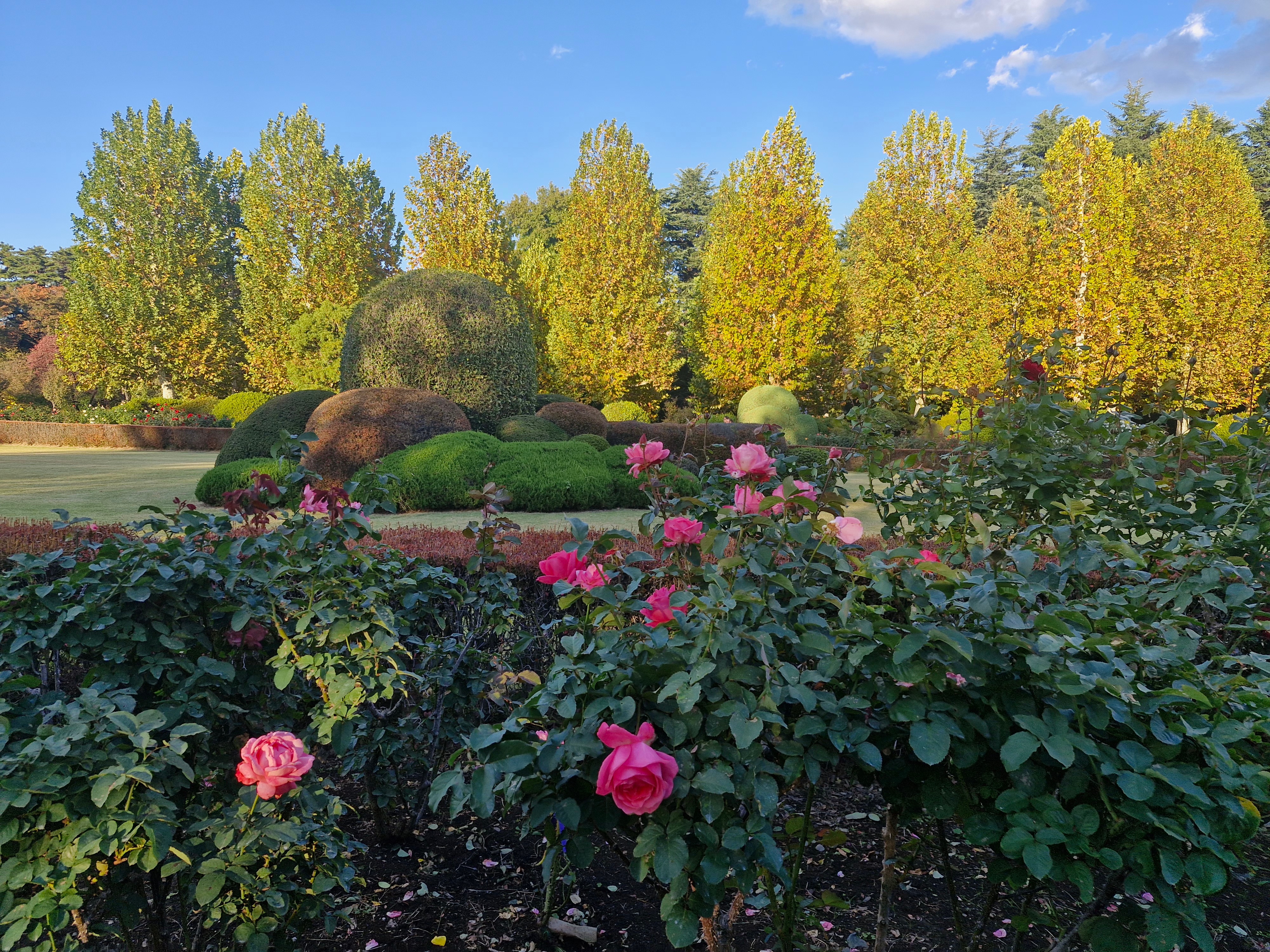
Shinjuku Gyoen National Gardens
The next morning we were up bright and early for one of the highlights of our trip: riding the Shinkansen – the bullet train to Kyoto. We splurged on first class tickets in the Green Car which were only marginally more expensive than 2nd class blue car tickets. We also sat on the right side of the train which should give you a view of Mount Fuji. Alas, it wasn’t to be, our second chance on the trip to see Fuji didn’t happen. First our tour was cancelled due to rain, then it was under cloud during our train ride. Oh, well. We looked at some nice photos of Fuji. Everything else went extremely smoothly on our trip. Japan is an easy country to travel in. Our next stop would be Kyoto.
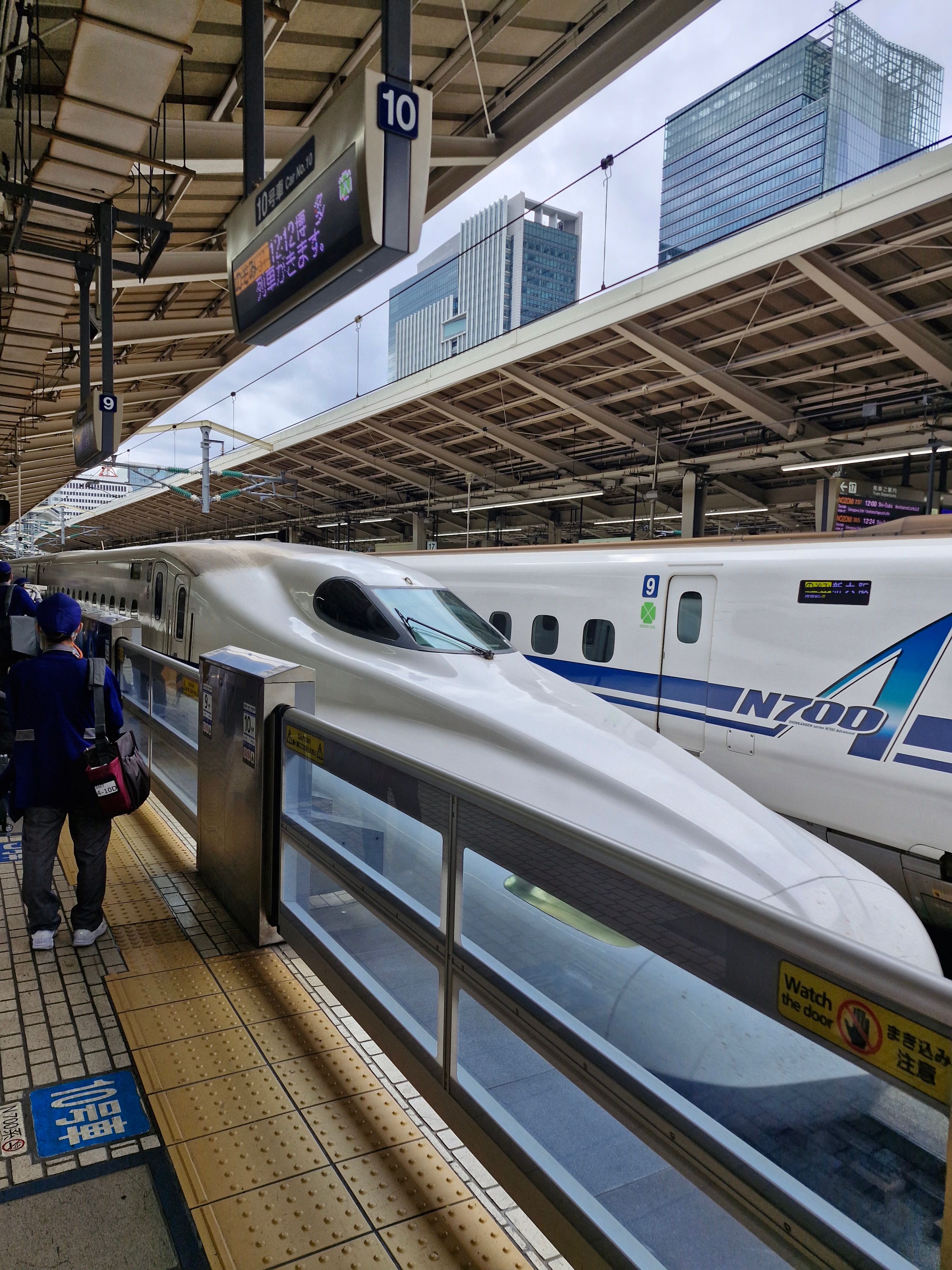
The Shinkansen – Japan’s Bullet Train
As we waited to board the train, service workers in light blue uniforms boarded the train with mops, hoovers and buckets to clean the whole train in about 15 minutes before we boarded for our 2 hour and 14 minute train ride to Kyoto travelling at 300 kms an hour. Talk about Japanese efficiency! The cleaners did their job, we boarded and the train left the station exactly on time. It has to depart punctually because the next bullet train for Kyoto departs 15 minutes later. It was a treat to ride this smooth and sleek train. Again, it was peaceful and quiet. We arrived in Kyoto, right on time, but I will tell that story in my next installment. We were so satisfied with the amount of activities we had packed into our limited time in Tokyo and now had multiple activities and tours lined up for Kyoto.
Photos by Dáire Delmar and Rhea Boyden
 rheaboyden
 Rhea Boyden