
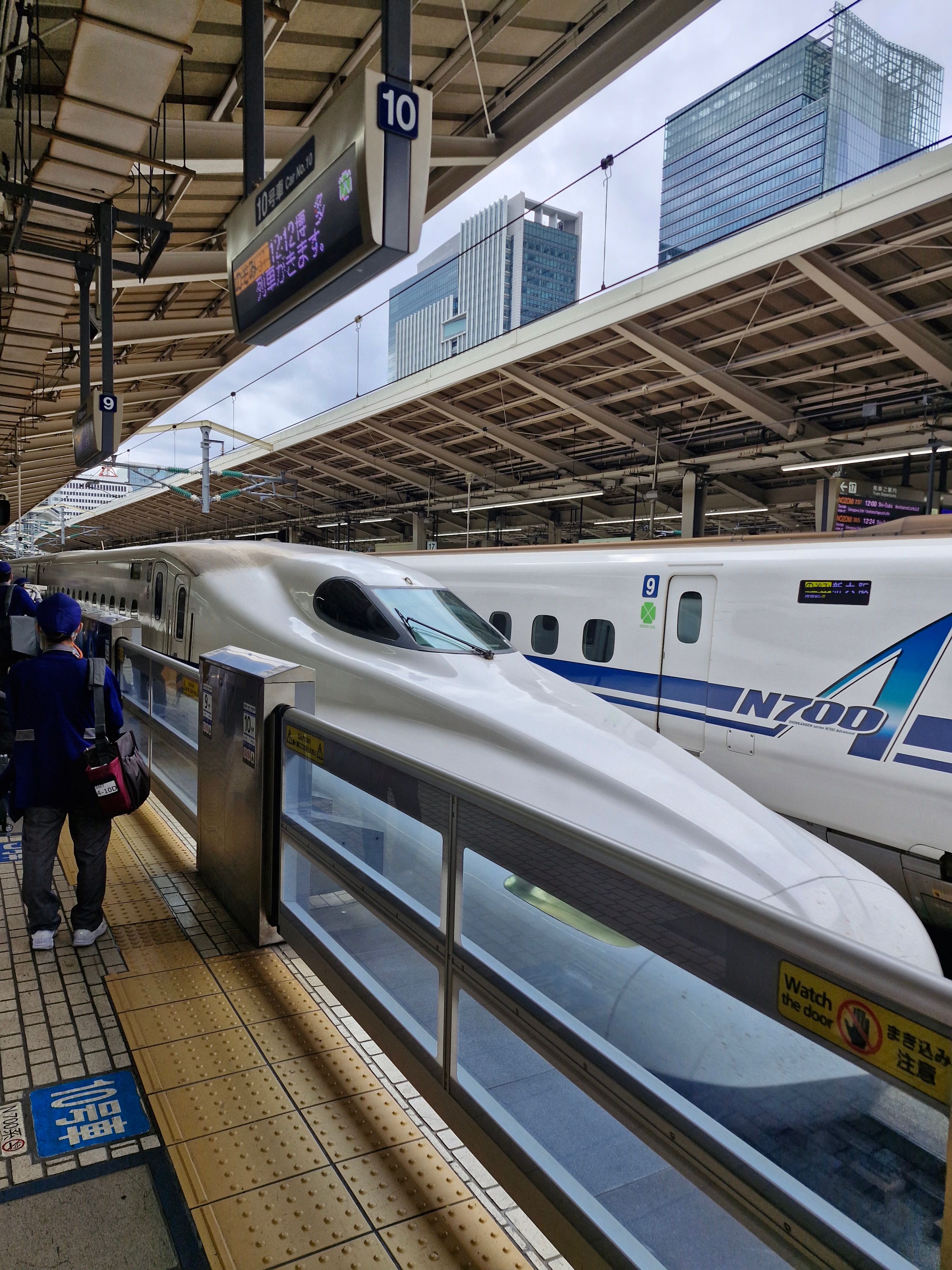
Dáire and I left Kyoto on Friday morning, November 14th. We checked out of our room and walked with our bags back to the station. It was a sunny morning and our next destination would be Nara for a few hours en route to our hotel in Osaka. There are two trains between Kyoto and Nara: the local and the express train. We just missed the express because we had to top up our IC cards.(Metro cards that are good on all trains in Japan) Google maps helpfully tells you approximately how much the train fare will be between cities, in this case the local was about 720 Yen (about 3.97 Euro) It took about 1 hour and 15 minutes, which was fine, after all, because we weren’t really in a massive hurry, plus we got seats because we got to the platform early. We also left after rush hour. One feature I especially noticed from our train rides in Japan were the many river beds that only had a small amount of water running through a much larger river area and under wide and tall bridges. In the rainy season – June and July, which also brings typhoons, these rivers really fill up. We were well advised to avoid going to Japan between June and August. First it is bucketing rain, followed by unbearable heat. We found November just lovely.
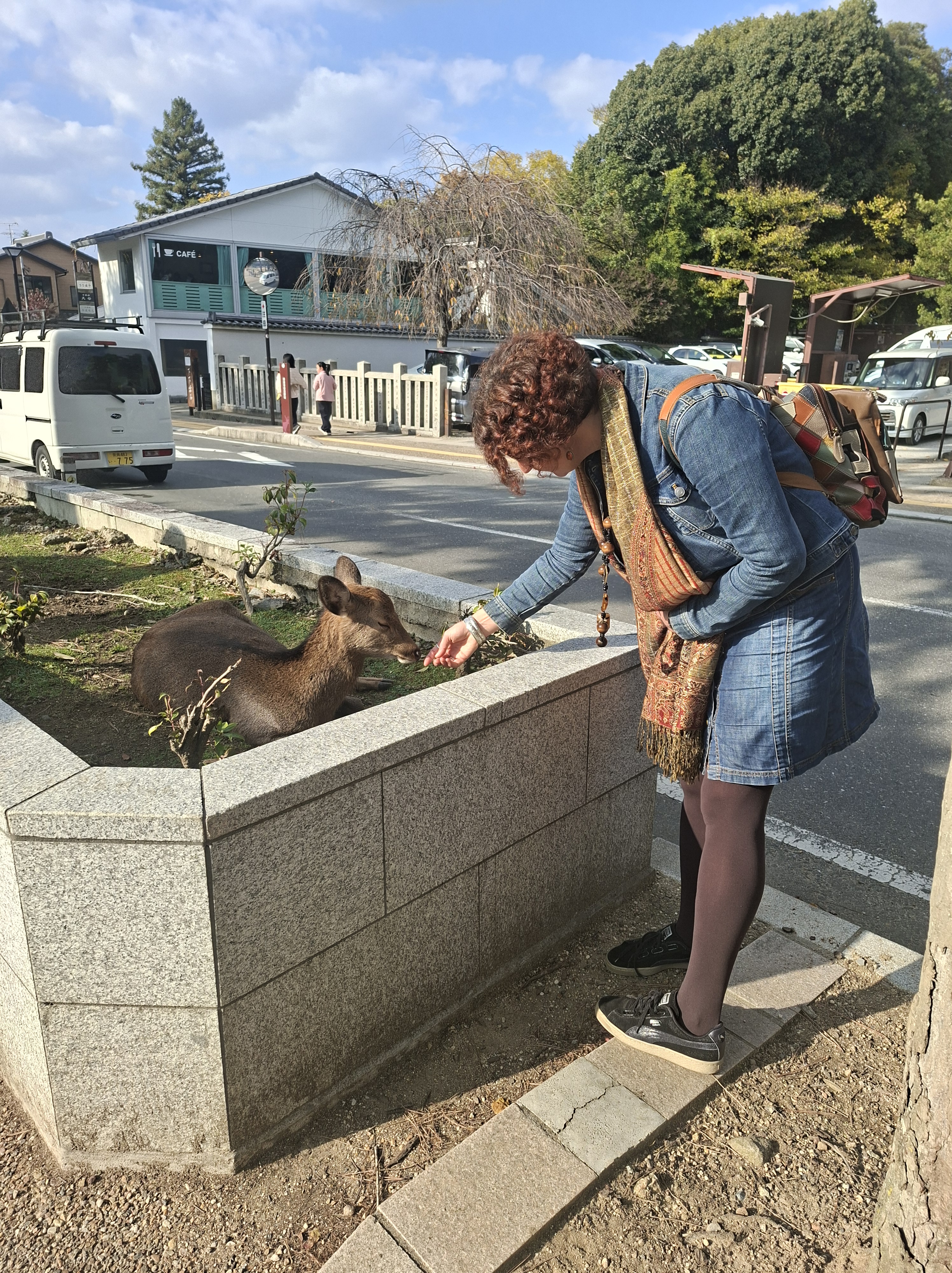
Bowing Deer at Nara Park
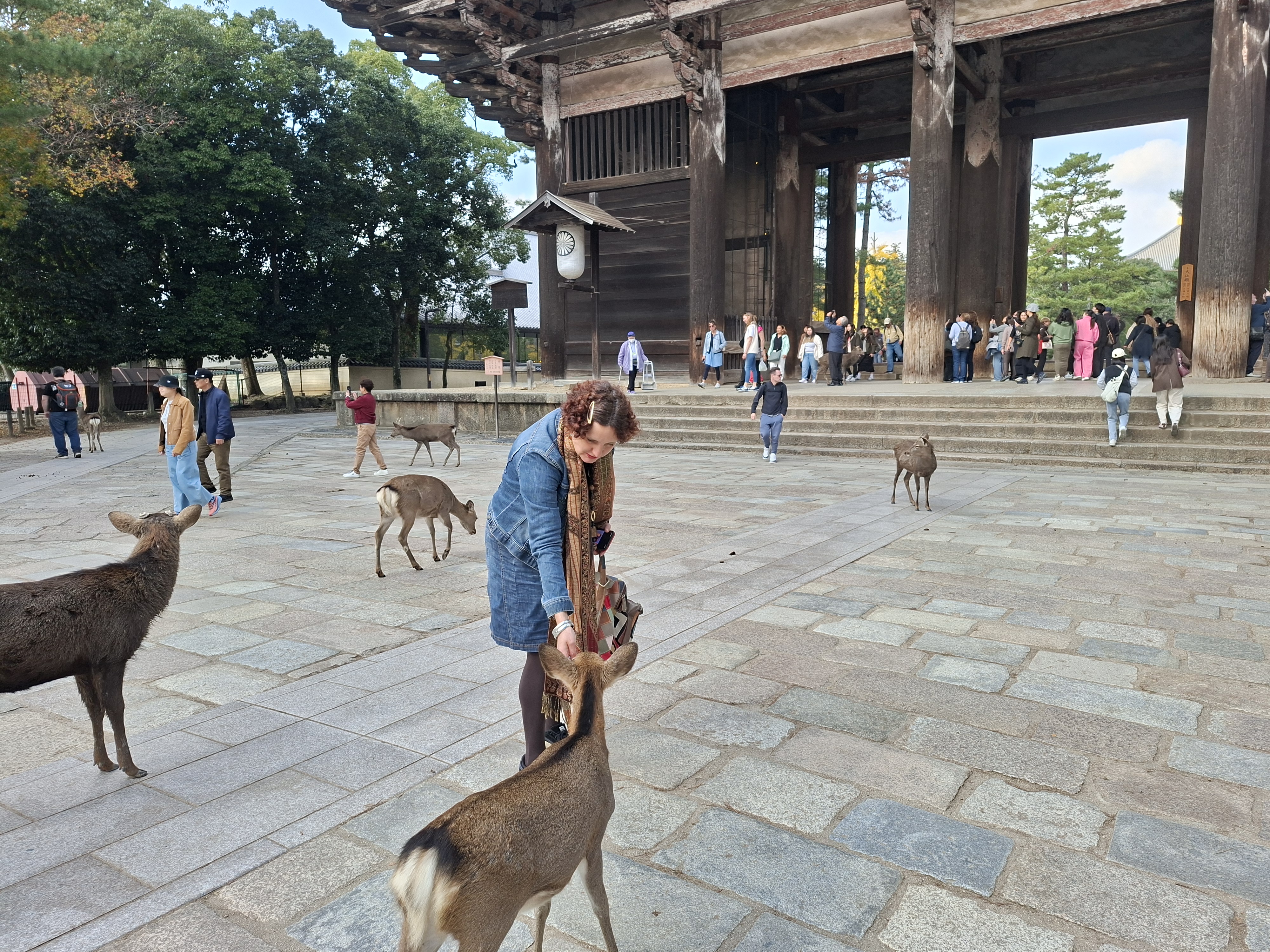
We arrived at Nara Station at about noon and looked for a locker for our bags. This took us about 20 minutes to do because the lockers upstairs were all full, but we found more downstairs in the station. One locker was quite big and fit both our wheelie bags (cabin sized) and both our backpacks. It cost 1,000 Yen (about 5.60 Euros). We then walked out of the station and there was a big sign saying Nara Park and a bus right next to it. This is why visitors come here: to see Nara Park and like most places in Japan, it was easy; there were attendants standing there, instructing you to stand in line and within 10 minutes we were on the bus to see one of the strangest things we have seen: bowing deer. Yes, that’s right. As soon as you arrive at Nara Park, there are deer everywhere: sitting at the side of the street, wandering around freely, sitting in raised flower beds resting. City authorities have clearly given up on trying to grow any plants in these raised, concrete flower beds; the deer use them as their beds. As soon as you walk up to the deer, they stand there in front of you, bowing at you and let you stroke them. We couldn’t help but be highly amused by this. In Japan, where people bow, the deer also bow! They especially bow to people who purchase the special deer crackers to feed them.


Toda-Ji Temple Entrance Gate and Dáire with a friendly deer
The deer were entertaining and they were all over the park, but the other incredible attraction in Nara besides these creatures is, of course, the unbelievable Toda-Ji Buddhist Temple. First you pass through a huge entrance gateway (with deer everywhere), then you walk past a beautiful pond with large orange koi swimming in it surrounded by perfectly landscaped gardens. From there you can pay a modest entrance fee into the temple which houses the world’s largest gilded bronze Buddha statue. The Buddha is seated on a platform and its height is 50 metres. We had just seen a lot of temples and shrines the previous week but this building blew our minds. It was the biggest one, by far, that we had seen. The site is a UNESCO World Heritage Site and it is no wonder. We have never seen anything like it.

The Great Buddha Hall at Nara
Nara Park covers about 500 hectares and has multiple shrines, temples and beautiful gardens, but we really didn’t have time to do more because we still had to get back to Nara Station, retrieve our bags and get on the train to Osaka before rush hour but we were very happy we took this detour slightly east from the direct route between Kyoto and Osaka because it impressed us greatly. It was a beautiful day, so instead of taking the bus back to the station, we walked the half hour which was lovely. We were on a train to Osaka by 3.30pm.
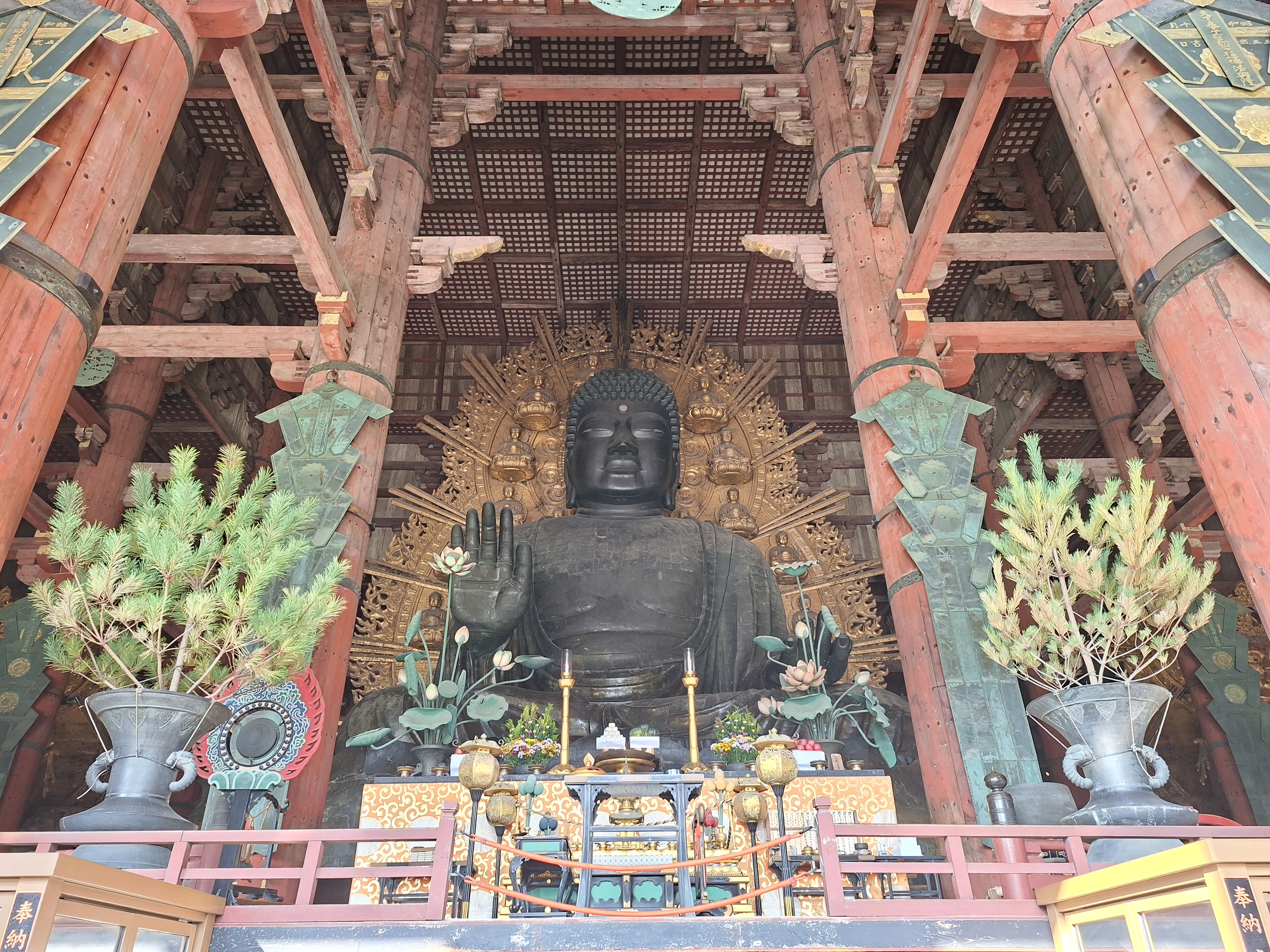
The World’s Largest Gilded Bronze Buddha Statue
We arrived at Tennoji Station in Osaka by about 4.30pm. During our whole trip to Japan we had no problems finding our way around on public transportation, with the exception of Tennoji Station. We had to change from the Japan Rail Station to the Metro Station which wasn’t more than a 6 minute walk but it was very confusing and not very well signposted. We found our train eventually. We also had to transfer back through this station en route to Osaka’s Kansai airport 2 days later and we weren’t stressed because we had left plenty of time, but apart from the station being quite confusing, the train to Kansai Airport also decouples after about 5 stops. The front half of the train goes to the airport and the back half goes to Wakayama. The announcements for this are only made in Japanese and English. Too bad if you don’t speak either of these languages. It seemed bizarre to us that, of all trains, they would decide to decouple the one going to the airport! We wondered how many travellers got caught out by this and missed their flights.

Cooking my own meat in Osaka
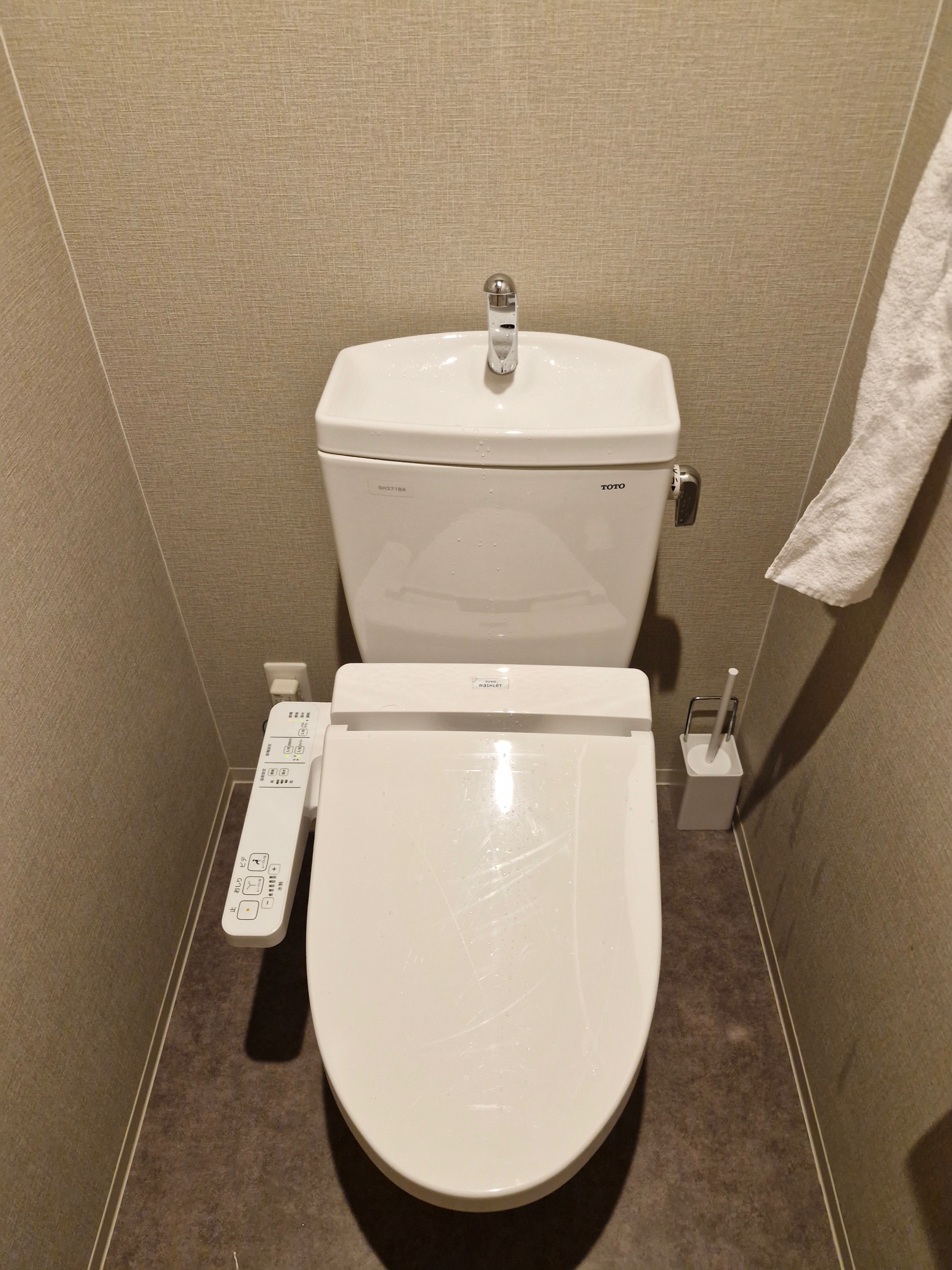
In any case, we arrived at our hotel, the Hotel Luxcare, in Osaka by about 5.30pm. It was another lovely room with a separate room with a bidet toilet (They are EVERYWHERE in Japan) and another lovely high pressure shower room. The price: a very reasonable 230 Euros for 2 nights sharing. We consider 57 euros each a night a really good deal. It also came with endless toiletries and bottled water and tea. We dropped our bags and headed out pretty quickly to find something to eat. We found a place nearby where you order raw meat and they bring it to you and light the grill right at your table and you cook it yourself. We had a salad and an alcohol free beer with this meal. I found the meal okay, but I am not going to highly rate this restaurant, neither do I remember the name of it, because we didn’t have any rice or noodles with it so the meat didn’t sit well with me. Either they didn’t provide this or I didn’t see it on the menu but my stomach needed something to soak up the fat. Still, it wasn’t bad. It was an experience. The Japanese seem to love their interactive meals. You cook your own food, right at the table. Clearly this experience is not suitable for children because they could easily burn their hands.

Osaka Castle at Night
We had chosen a very good location in Osaka to stay considering this was the end of our trip and we only had 2 nights here. We were only a short walk from the impressive Osaka Castle which we walked to right after our dinner and we saw it illuminated in blue. We walked around the castle grounds and moat and then walked back to our hotel stopping at the 7-11 right opposite to get some milk and bananas for our breakfast. We had brought the rest of our muesli with us. We had just enough to last us the final 2 mornings in Osaka. We were also a short walk to two Metro stations.

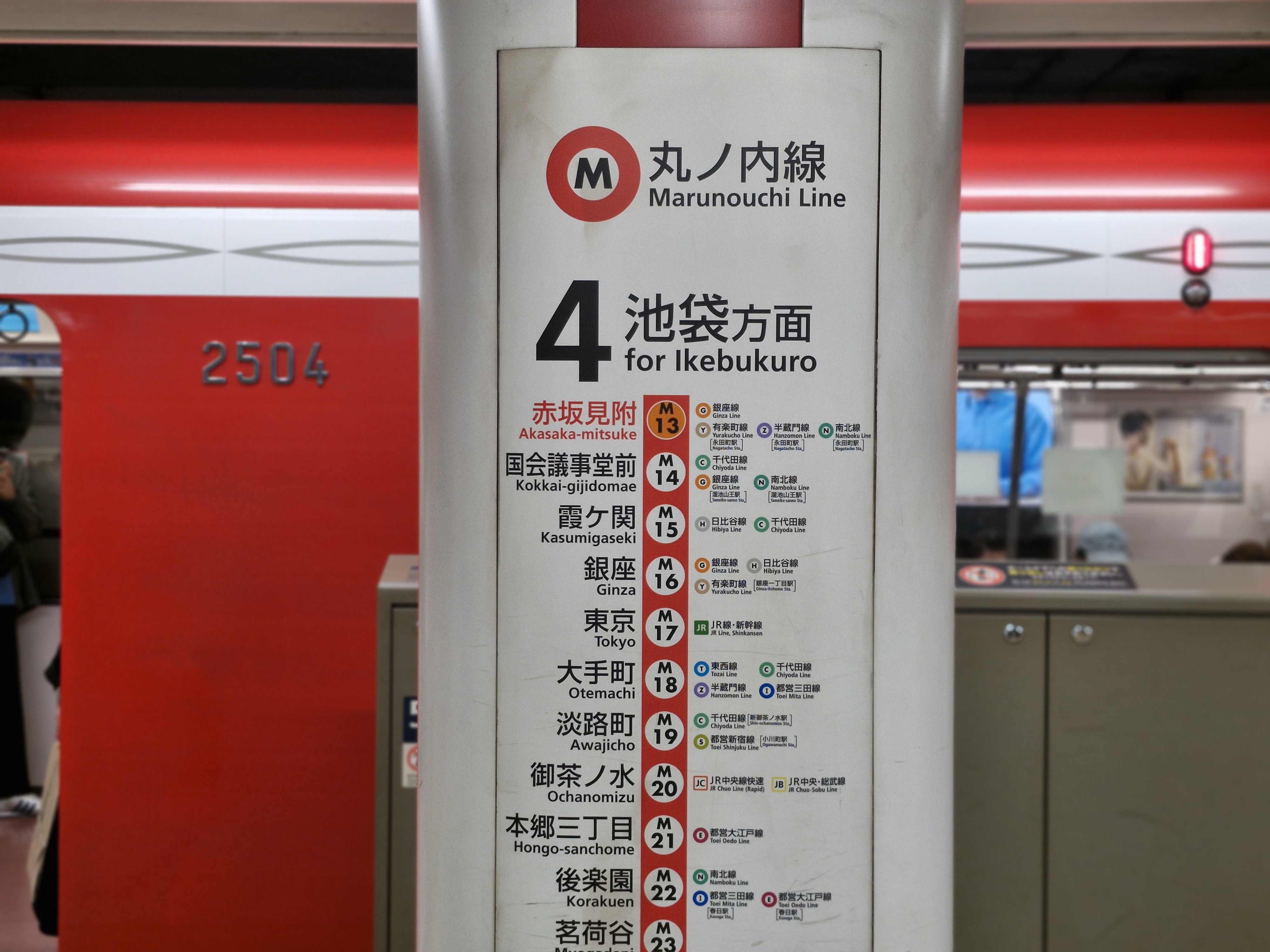
Osaka Metro
We had booked a 5 hour bicycle tour the following morning on the Get Your Guide app for about 100 Euros each. We were so lucky because there wasn’t a cloud in the sky and it was 20 degrees. It was the perfect day to get on a bike. We also really welcomed it after the many miles of walking we had done the previous 2 weeks. This was mid November and it was gorgeous weather. It was all the more appreciated when we looked at the current weather back at home in Ireland: storms and floods. We would be flying back to that in 36 hours.
Our tour started at 10am at the Temmabashi Station only a 5 minute walk from our hotel which made our life easy. We met our guide, a very pleasant Japanese man, probably in his late 30s. There were 4 other Americans on our tour. We highly recommend these small group tours. You get to meet a few other people and talk to them, but you are not in such a big group that you get overwhelmed or the tour is held up by too many people. I would definitely do these again while travelling. Fully private tours are very expensive and it is actually quite enjoyable to meet a few other people for a few hours and exchange experiences with them. None of our tours had more than 4 to 6 other people on them and were perfectly paced with chilled out guides who we found very pleasant. We picked up our bicycles from the station parking garage. (the bikes only had the flimsiest of locks. Bike theft is a problem in Japan, but not half as much as other places. Bikes were unlocked in Kyoto, but this was Osaka, a city of 18 million people.)
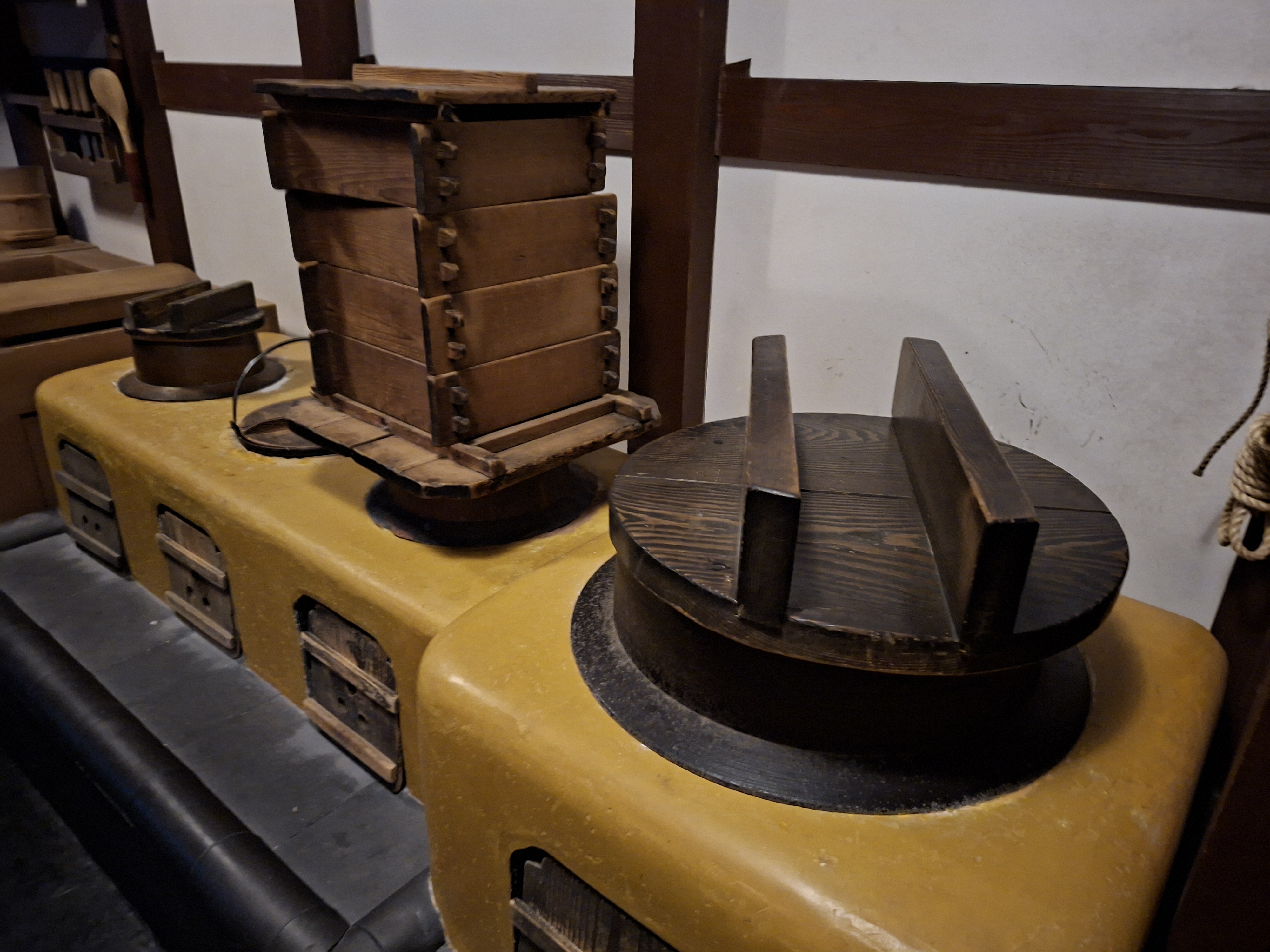
Traditional Oven and Rice Cooker at the Museum of Housing and Living
Our first stop on the bike tour would be Osaka Tenmangu Shrine. Here we saw quite a few young children in colourful outfits getting blessings for their health and growth. We then cycled to the Osaka Museum of Housing and Living. There was a reconstructed village from about 1830 showing us how life was in many parts of Japan then. It was interesting to see how the houses were laid out with their raised platforms for sleeping and resting on bamboo mats and futons (where removal of shoes is required) and their kitchens on the lower levels. A staple of each house was, of course, the rice cooker in the old style ovens.
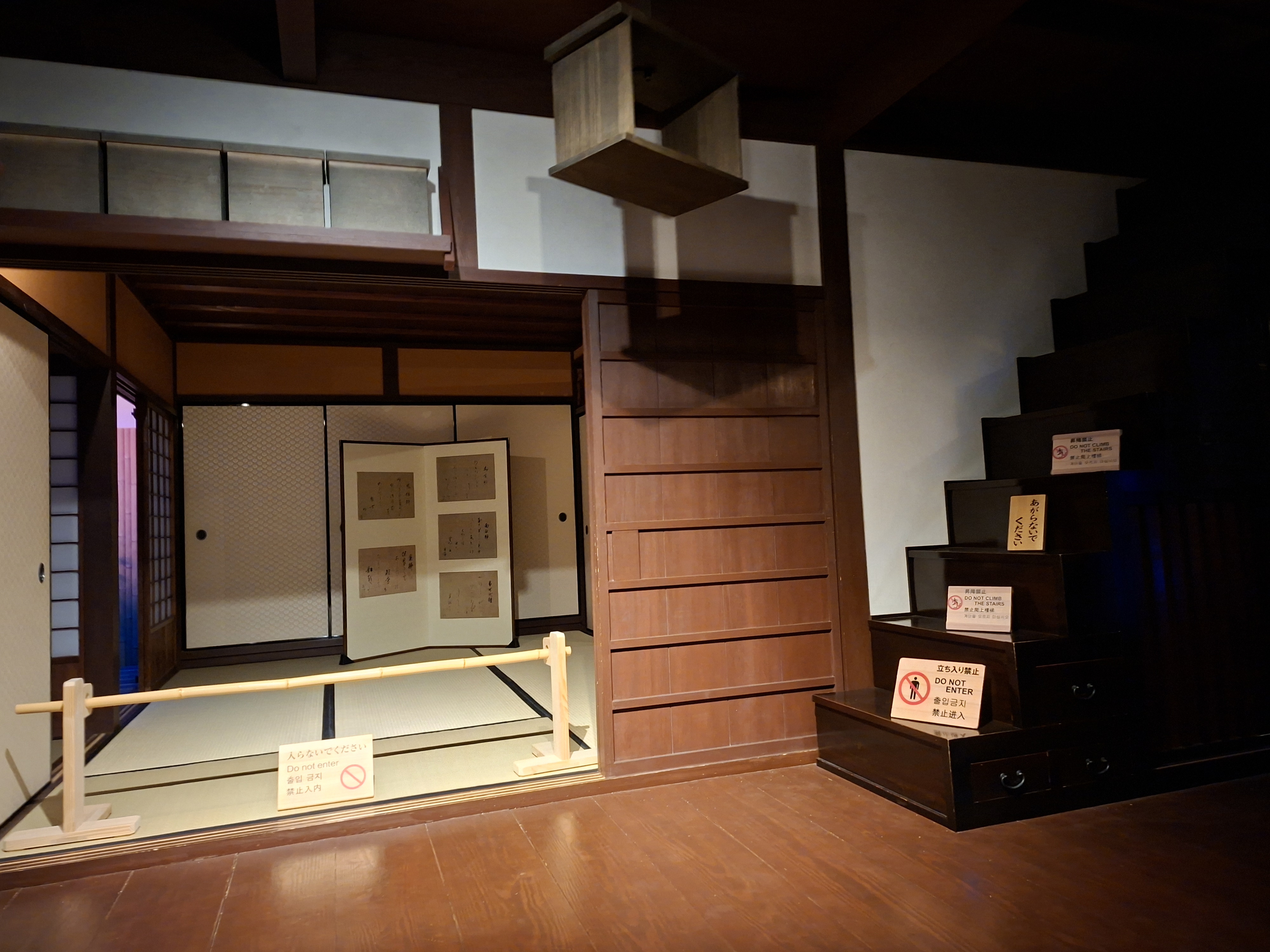
Interior Living Quarters at Museum of Housing and Living
From there we cycled along the Yodo River. Our guide pointed out a building that had a large round feature on it that looked like a giant coin. The city mint, he informed us. The Japanese love cash and you can pay almost anywhere with cash and a lot of places only take cash. The smallest denomination is a One Yen coin which equals about half a penny. We arrived at a restaurant at exactly 12.30pm for our lunch reservation. I credit our guide for his excellent timing with this. He obviously knew exactly what he was doing. We went in and had a semi private room in the back of the restaurant; a large table with a large griddle in the middle and lots of delicious condiments. We were here to try an Osaka speciality; Okonomiyaki which is a delicious Japanese savoury pancake made of wheat flour, batter and other ingredients. Dáire ordered the one with pork and I ordered the one with cheese and we shared them. It also had cabbage and spices in it. It is brought to you cooked and kept hot on the griddle while you pile it up with aonori (seaweed flakes) bonito flakes, okonomiyaki sauce (which is basically Worcestershire sauce) and a good squeeze of Japanese mayonnaise. We were hungry after all the cycling that morning, so we really enjoyed this.

Okonomiyaki – An Osaka Speciality
After lunch we got back on our bikes and cycled another 15 minutes to the next stop on our tour: Osaka Castle. We parked our bikes and walked up and around the castle grounds which were stunning. It was Saturday afternoon so there was a long line to get into the castle. Our guide told us there is really no point trying to get in on a weekend when it is packed with visitors, this is why he opts for the Museum of Housing and Living instead. In any case, it was a lovely day so we were happy to stay outside. He took us to a great spot to take a photo of the castle with a pond and maple trees. Others were also waiting in line to get this picturesque shot. I found Osaka Castle to be quite a stunning piece of architecture. It is one of Japan’s most famous landmarks and was built in 1583 by Toyatomi Hideyoshi who unified Japan. The castle you see today is a 1931 reconstruction and it sits on a formidable stone base.


Osaka Castle
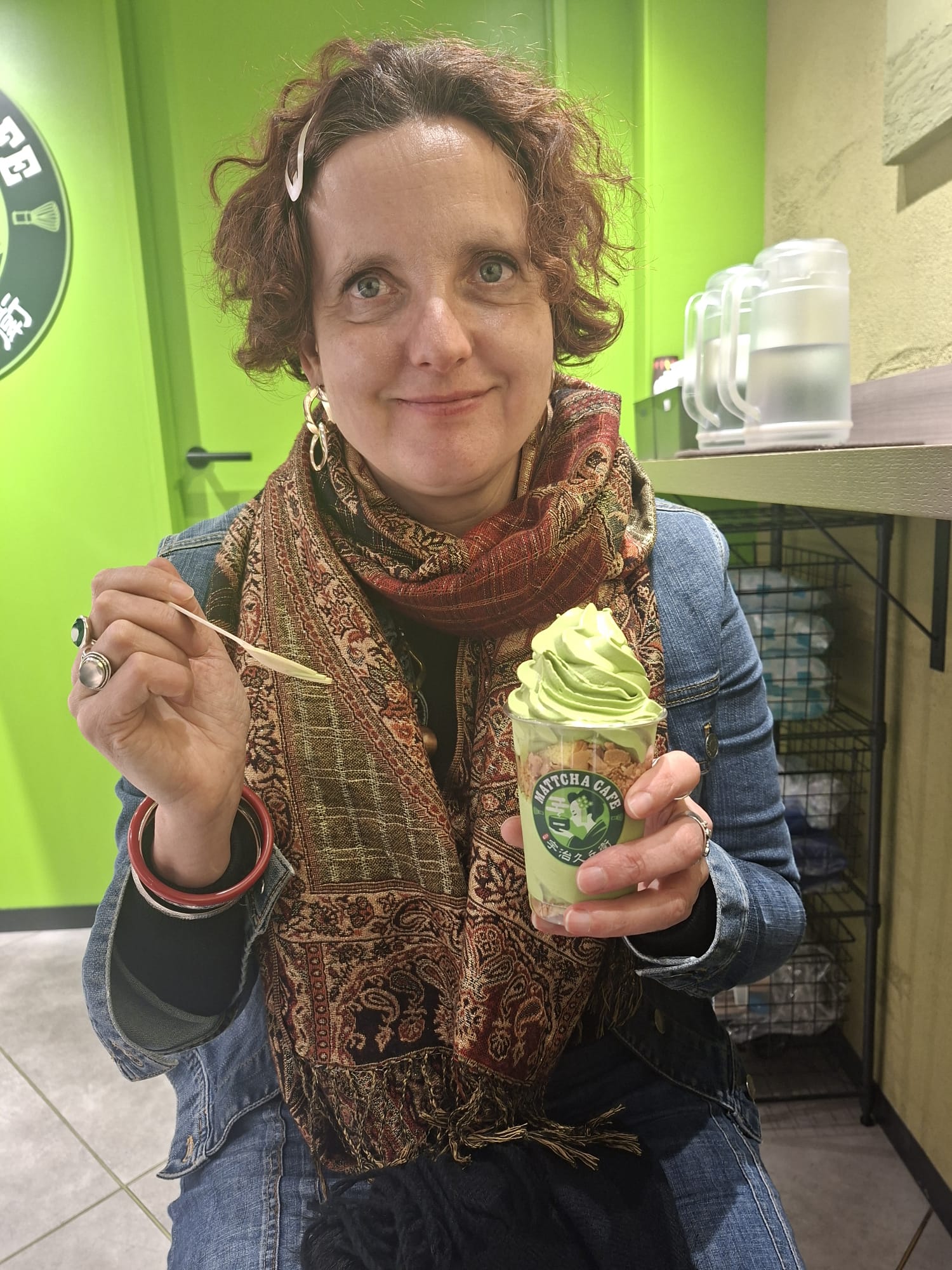
After a while we got back on our bikes and peddled to our last stop: the foyer of a museum where they had a lovely matcha cafe. We sat on bamboo mats surrounded by huge plate glass windows and our guide ordered another Japanese speciality for us: matcha green tea and mochi. We had already eaten a lot of matcha green tea soft serve ice cream in Kyoto but this was the first time we had actually had a matcha tea. Personally I found it a little bland only frothed with water but I suppose it was good to taste it pure. (I would add hot frothy milk and honey to it).
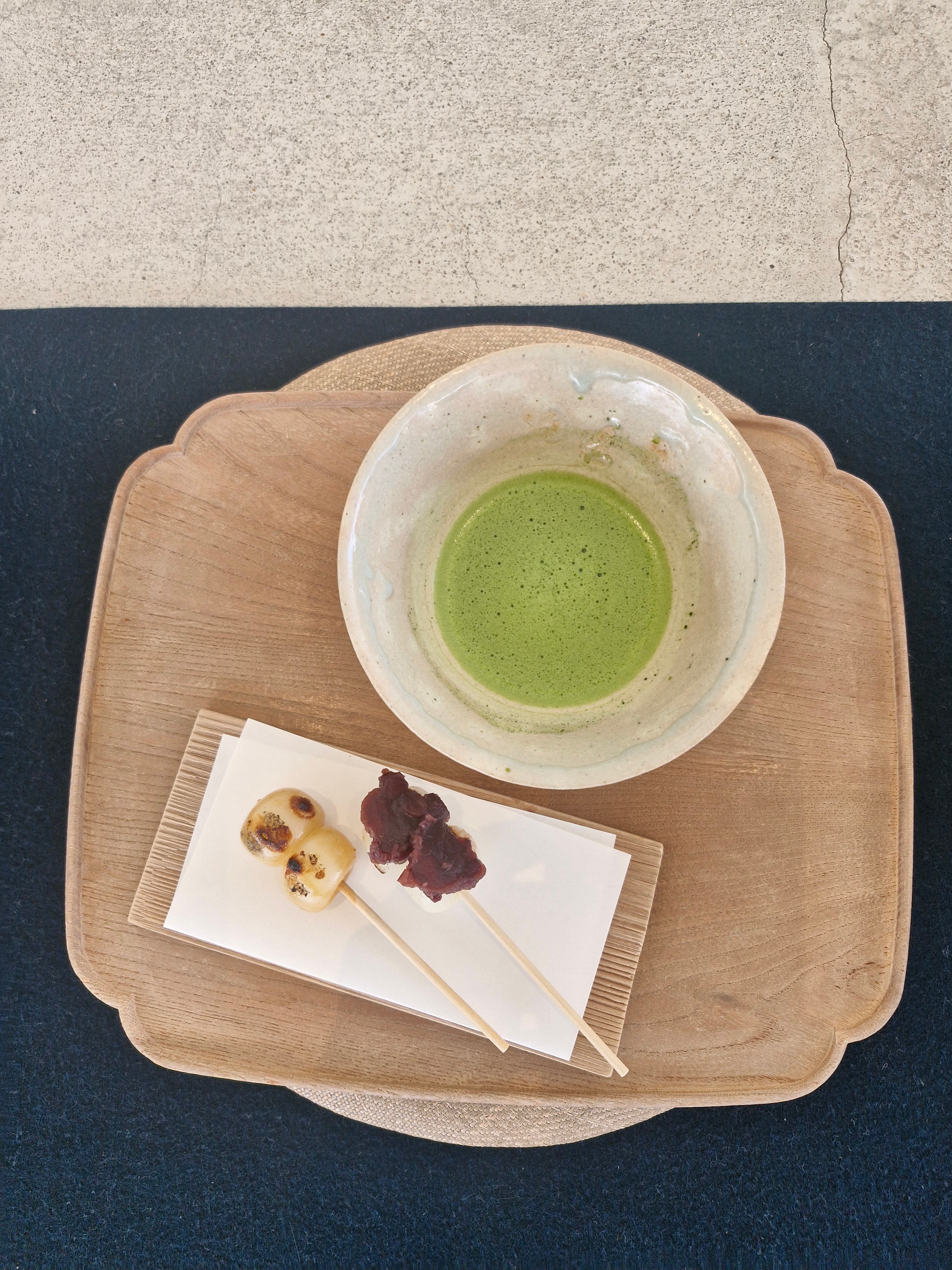
Matcha Tea and Mochi
After tea we cycled back to Temmabashi Station, put our bikes back in the garage and walked the 5 minutes back to our hotel to relax for a while. We were tired but this was our last night in Japan so we had showers and went out again to an area that had been recommended by our guide: Osaka’s Shinsekai District and the Tsutenkaku Tower which was originally built in 1912 and modelled after the Eiffel Tower. The current tower was rebuilt in 1956 after World War 2 damage. It also has a slide from the 3rd floor down for people seeking an adrenaline rush. We took the train back to Tennoji Station and walked through Tennoji Park. It was dark and we could see the brightly lit tower in the distance. Before long we were in a bustling street with tonnes of neon lights and vendors selling all kinds of fried foods. A speciality of Osaka are fried octopus balls known as takoyaki. Vendors have hot skillets that have little round holes in them which they pour batter into and then add a bit of octopus into the middle of each ball. We decided not to eat these because they looked really greasy and we like octopus alive and not cooked because they are highly intelligent and lovely creatures. We saw a sign in Osaka that made us laugh. It was an octopus holding out a tray of fried octopus balls. Basically saying: ‘Eat me!’ Um, no thanks. Still, it was a kick to experience the atmosphere of this area on a Saturday night.

Octopus with Octopus Balls known as Takoyaki
We went up the tower and expected it to have a bar and restaurant on top, but no, it had a lot of weird looking figurines in glass cases and practically looked like a temple in the sky. People were getting their goshuin stamps in their colourful booklets as a souvenir of having been there. We learned later that the attraction up here for Japanese tourists is to rub the feet of the Billiken statue; The God Of Things As They Ought To Be. It is said to bring you good luck.

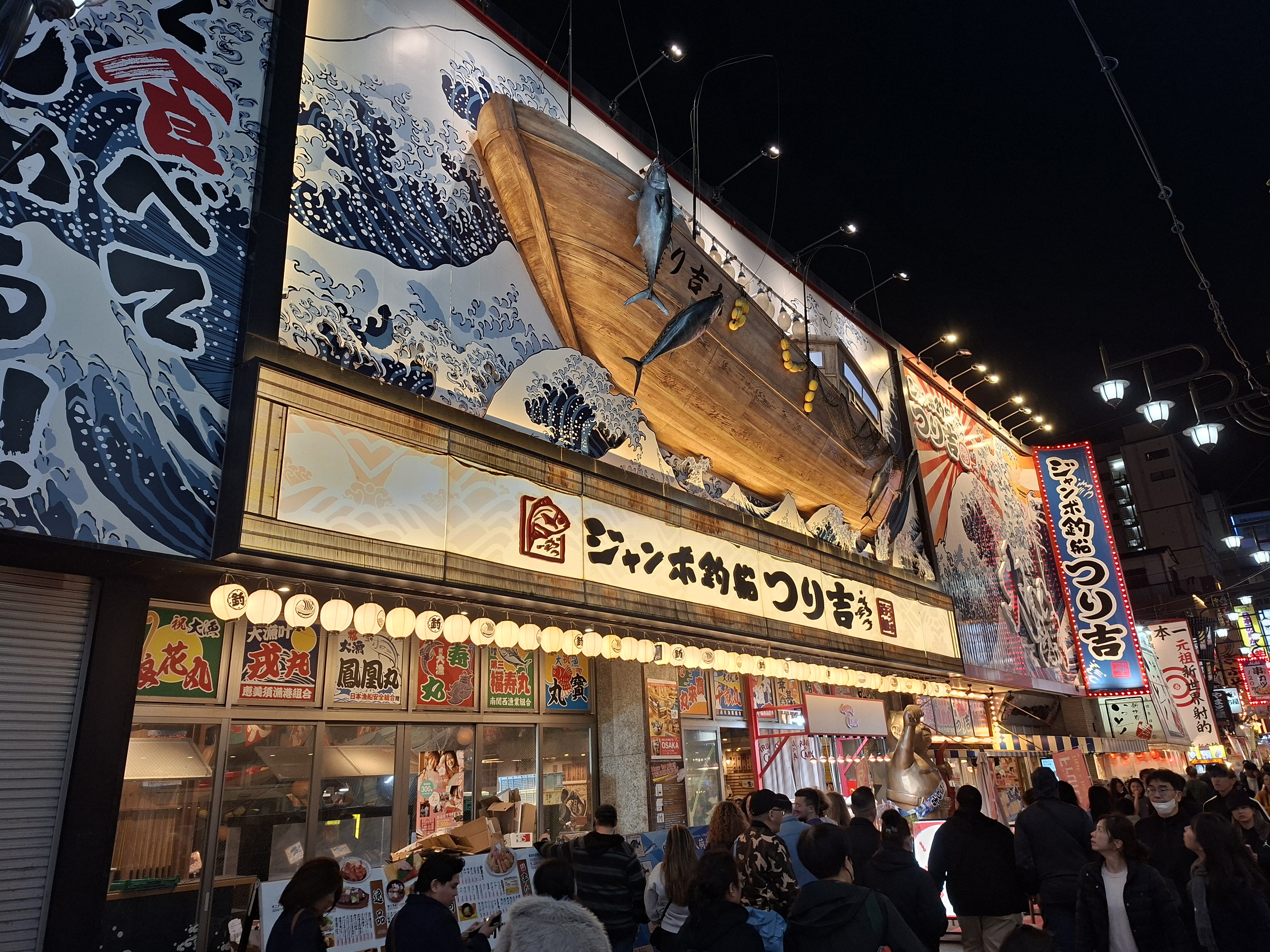
Shinsekai District and the Tsutenkaku Tower
From there we walked back to Tennoji Station and back to our hotel room for hot showers and another pair of clean, fresh pajamas. This was our last night and we were very satisfied with how the trip had gone. After a good night’s sleep we checked out at 10am, stored our bags at reception and headed to Osaka’s famous Dotonbori district. Our flight wasn’t until 10.30pm that night so we still had time to do some exploring and have another meal. It was yet another beautiful day. Dotonbori has wooden boardwalks along the edge of a canal and is lined with restaurants and shops. We bought some matcha tea, matcha chocolate and sweets to bring home and also sat right at the canal in the sun and ate one last bowl of ramen and some gyoza.
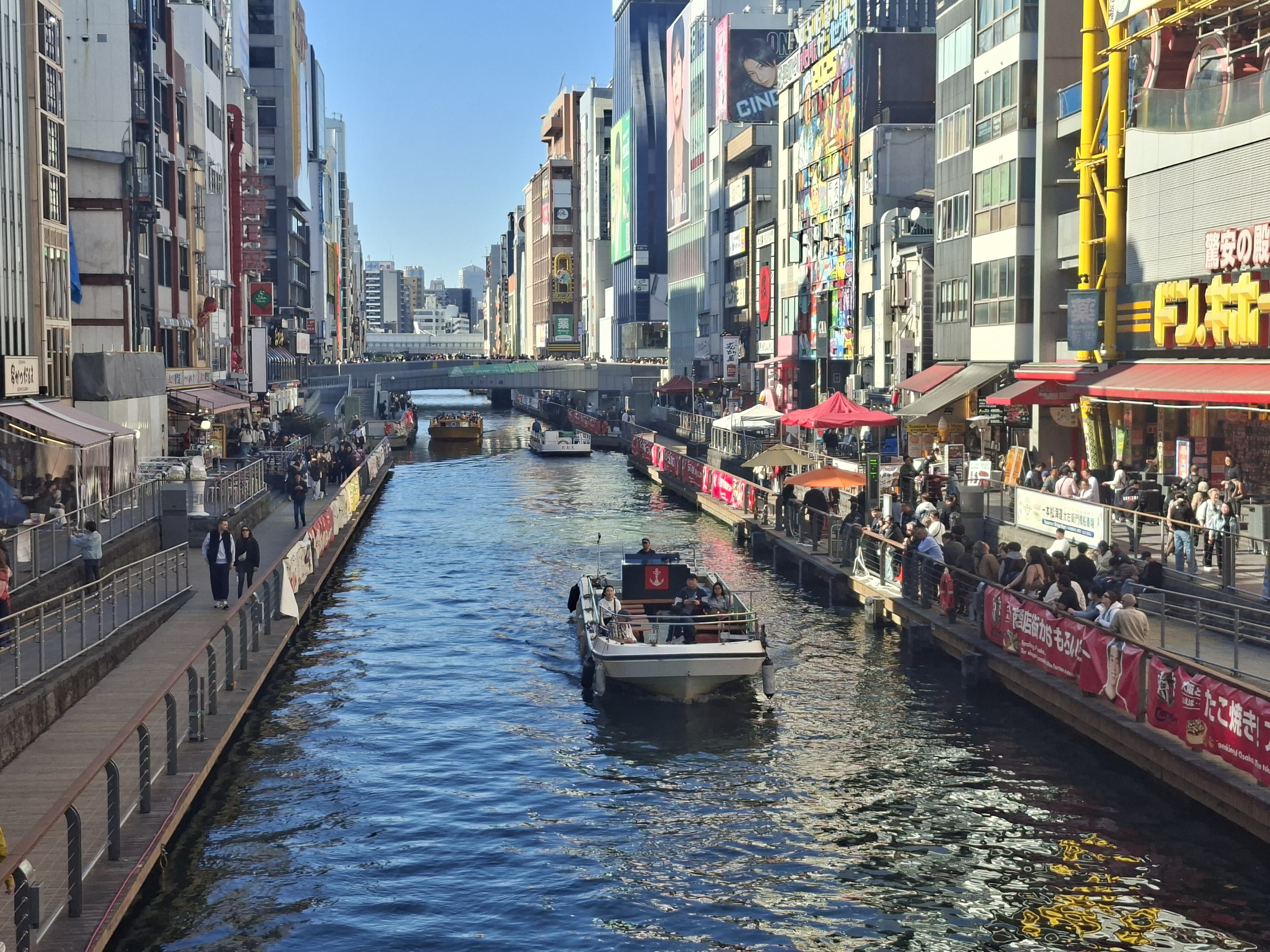
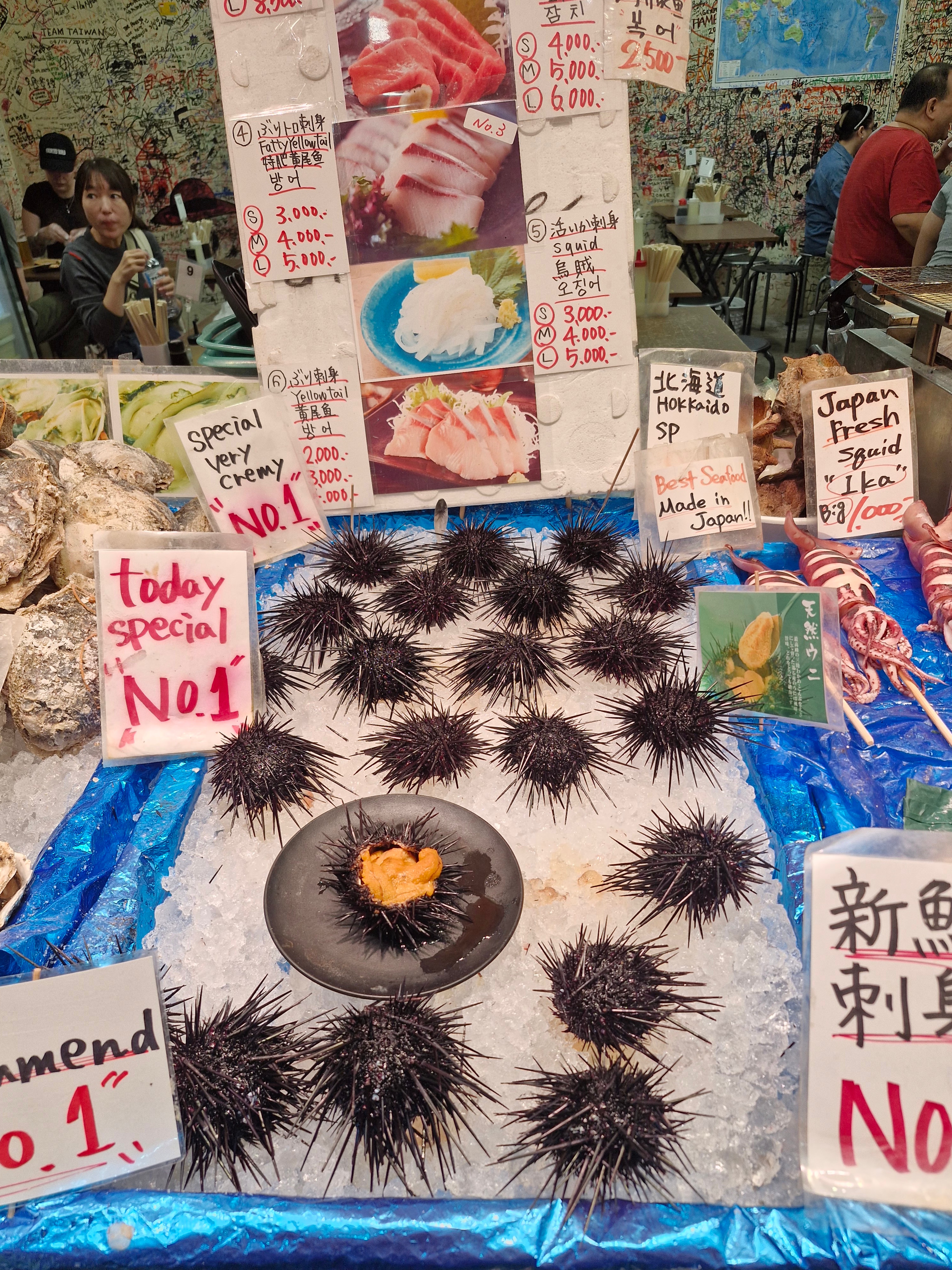
Dotonbori Canal and Kuromon Ichiba Fish Market
As we wandered out of Dotonbori, we happened upon the Kuromon Ichiba Market with its many stalls selling fresh fish; crab, sea urchins and many other delicacies. This was the most authentic market we had been to in Japan so far and also seemed a little off the beaten track. It was fun to just observe people and their goods for sale. We wandered a little more, aimlessly, enjoying the exercise and sun because in a few hours we would be heading to Kansai International airport for a 20 hour journey back to Dublin via Istanbul with Turkish Airlines which have excellent economy class service. We headed back towards our hotel, stopping again at a Cafe Veloce to have a large coffee for 2.18 Euros plus lots of free, very drinkable water. We got our bags from the hotel, headed to the airport in plenty of time (to deal with the Tennoji Station change and the decoupled train) As we waited to board our 12 and a half hour flight to Istanbul a group of at least 30 Japanese teenagers in their school uniforms (on a Sunday night) walked up to our gate. They were a bit excited as they stood there and we thought ‘Oh no, a school tour, we won’t get any peace.’ How wrong we were. They boarded and were seated all around us. We didn’t hear a sound out of them. That is Japanese discipline for you! We had our dinner and then fell asleep, so happy that our Japanese adventure had gone so smoothly. We had, of course, barely dipped our toes in Japanese culture and we had stayed on the well trodden tourist path, but it was a fantastic introduction to this fascinating culture and the time we had spent planning and researching what we wanted to do really paid off. We really recommend a 10 day trip to Japan. We broke the journey on the way there with 3 days in Istanbul which was also fantastic. When flying from Dublin you can generally fly via Dubai, Abu Dhabi or Istanbul and we chose the latter because we thought it would be the most interesting. It all worked out great. I am looking forward to the next adventure. Who knows where it will take us!
Photos by Dáire Delmar and Rhea Boyden






















 rheaboyden
 Rhea Boyden