Archive by Author

Consider the Cold Spot

8 Dec

By Rhea H. Boyden  

A city can be a wonderfully inspiring place to live-most of the time. As a writer you can observe all kinds of incredible things every day that can become the marrow of your next story. The way an old man sits sadly on a bench with his lip curled up can make you wonder about his day, and you can turn him into a character in your next story. Snippets of conversation overheard on the train between colourfully dressed hipsters can provide you with the first lines of a glittering dialogue that could go anywhere. Observe a strange building closely and then describe it in as much detail as possible, and you have the setting for your next scene. There is indeed so much exhilarating sensory overload the entire time, that you need to go somewhere peaceful to digest and decompose these images through your subconscious mind before you can sit down to write about them. So where does one go to get into this peaceful and meditative state?   Well, in Berlin there are a lot of lush parks which are fabulous in summer, but in winter I head to my heated swimming pool, followed by an even more heated sauna, and then I relax in the so-called “Himalaya Room”. This is a room with comfortable reclining chairs which face an entire illuminated wall of a Himalayan mountain landscape with an icy river meandering in the foreground. It is the perfect place to relax, doze and meditate about writing. Last week, however, I was rudely interrupted from my post-sauna reverie by not one, but two different tones of beeping noises. I sat up, irritated and groggy, and saw that the man to the left of me was fiddling with his iphone and the woman to the right of me was deeply engrossed in reading something on her ipad-with the sound turned on. Do they take them into the sauna with them too? I wondered. I got up and left the room, but the experience had already given me an idea for a new article. “Yes”, I thought. “I want to write about the importance of mobile, Facebook, twitter, chat and beep free zones as essential in certain public spaces in order to give people the space to meditate and give their overloaded brains a chance to recuperate. This is important for everybody, not only for writers and other creative people, but my focus here is particularly how important this is for people who have to work creatively. They need space from the incessant need to be turned on, plugged in and available.   In her recent article in The Sunday Times, Laura Atkinson talks about the importance of turning off your phone to recharge your creative energy. And she says that just switching your phone off for 3 hours over a long and leisurely dinner doesn’t count. You need to really switch off to unwind. She talks about the increasing blending of business and leisure -bleisure- as being stifling to creativity. These days, you can jump on a plane and fly to an exotic destination and the first thing you can enquire about at hotel reception is where the hotspot is, where you can get online, and where you can plug your laptop in to upload your beach photos of your adorable kids up onto Facebook within a few hours of deplaning. Atkinson says that in the future it will more likely be cold spots –places where there is no internet access- that will experience a sharper rise in demand as people become and more aware of the damaging and draining effects of always being switched on.   It seems there is already a demand for this. After polling 1,000 travellers about how they deal with the stresses and demands of always being digitally connected, Marriot Hotels are now offering tech-free zones to travelers in 9 resorts in Mexico and the Carribbean. These zones will offer tech-weary travelers a “braincation”- a chance to really unwind without their mobile gadgets. In these areas, guests can enjoy other leisure activities that don’t include any tech gadgets, and -what a revelation- will be encouraged to simply interact with the other real world individuals they encounter in these areas. This takes considerable willpower for some people who are addicted to their gadgets, but after a little practice they may find it quite lovely to spend the afternoon reading a real book instead of staring at an iphone for hours on end.   I have frequently felt irritated when my mobile gadgets fail to function while visiting my family in rural Ireland. I have often found myself wandering around our front lawn waving my phone around desperately seeking a signal to send a text message. Or I have had my phone upstairs in our house for days and have felt lonely and despondent when I don’t get a response to the many text messages I have been sending, only to find that 10 messages come in at once when I walk downstairs and out into the orchard with my phone. Clearly my bedroom was a nice cold spot.   “I don’t know how you function here with no broadband!” I used to moan to my dad. He just smiles at me and says “Welcome back to the cybersticks, it’s great isn’t it, you can really unwind here.” I used to find this unamusing and would continue to will my poor phone to work, but more recently I see the great value of going somewhere where my phone refuses to cooperate. I also remember being a young child snuggled in my bed, and hearing my dad in the next room typing away for hours into the night on his old typewriter. He was clearly happily lost in his work with no internet or phone to distract him.   When I left the pool the other evening, I resolved to come home, turn on my laptop, and only open my word document to write and not go online at all. I wanted to create a cold spot right in my living room, with no internet to distract me. I was thinking of my dad and his typewriter and serene and quiet space. Upon opening the door to my flat, however, I got more than I bargained for. I stared at my desk and saw that my laptop was gone. Burglars had created a very cold spot for me. Now, 24 hours later, after dealing with the mayhem of a break-in, I am now sitting at my desk calmly typing this article on an old laptop borrowed from a friend and I have no internet connection. Naturally, I am livid that my space has been invaded and my personal belongings stolen, but I could think of only one way of curing the pain I feel of being the victim of a burglary and that was to replace the lock to my front door, bolt it tight, make a fresh pot of coffee, and get lost in writing.     Of course, having your laptop stolen is an extreme method of being forced offline. If your laptop happens not to be stolen, then you must take other drastic measures yourself to make your workspace conducive to creativity. The successful music producer Illiam Gates shares his methods for success in his workshop “The Ill Methodology”. He says that if you plan on producing a track that day then you must pull the modem jack out of your wall and take the battery out of your phone and store it at the other end of your house. No exceptions. He states that our brains get crippled by over thinking and we must clear our minds of other noise if we want to get into the creative zone and get on fire creatively. We have to train our creative minds to stay in the right brain-which is the side of the brain from where most creative impulses stem- and become removed from the analytical noise of the left brain. The left brain functions are marvelous indeed for many a pursuit, but not when you want your actions to be clear of doubt and ego. When in the heat of composition you need to simply follow through and not analyse what you are doing or question it. You must follow your instincts and roll on the wave you have caught with no doubt to stop you. Illiam Gates talks about how society rewards and  encourages us to live in the left brain constantly analyzing, thinking, doubting, proscrastinating, doubting and thinking again. We are not encouraged to think outside the box in mainstream pursuits. Internet addiction and useless hours of staring at an iphone seem in some ways to be a combination of doubt and brain turning to mush at the same time, and ultimately not really achieving anything of any value in either the left or the right brain halves, but rather confusing and draining both.   Naturally some of us are more talented at right brain activities and others at left brain activities, but Illiam Gates surely has a point when he talks about left brain careers and activities being more rewarded in our society. Look at all the accountants, mathematicians and computer scientists in our society who are rewarded handsomely for their analytical skills.   In his novel ‘The Pale King’ David Foster Wallace ridicules his character Sylvanshine, who is a trainee accountant, for his petty way of over-analysing every situation and every outcome of every action he takes in the same manner a tax accountant can analyse cost and profit analysis in every situation. Foster Wallace himself was a tortured right brain genius who very much spent most of his time in the creative state of writing, feeling very much alienated from the rewards of the left brain analytical world. He had his incredible left brain talents too, being a superb tennis player, but he suffered severe depression and eventually committed suicide at age 46, but not before leaving us with a great dose of his opinions on modern society. It seems he could never shut his brain off.   Foster Wallace was extremely critical of many aspects of American society and he spoke the crystal truth of how he saw things. His views could not be denied even by many a left-brain conforming analyst. He was sent on the strangest journalistic assignments that seemed clearly, from the outset, not what the magazine had intended. His critical essay of the treatment of lobsters at the Maine Lobster Festival which was then published in Gourmet Magazine- does not contain a lovely recipe for how to prepare a lobster, but rather how he is loathsome of mass tourism and of the fact that lobsters are thrown live into a pot of boiling water to be cooked. One has to respect Gourmet magazine for thinking outside the box and publishing his whole article ‘Consider the Lobster’. Its publication was a marvelous surprise for the world of animal rights movements too-whose work, like many people who live in right brain endeavors are also not richly financially rewarded.   And what area of the brain are burglars using when they operate, and how analytical or creative are they when they are at work? It is an area I find too painful to even explore in depth at  this present time, but I would imagine that they use both halves marvelously when  at work, and I would also guess that they don’t care to have much down time or living in cold spots to meditate on the wonderful jobs they are doing. I can only guess that constant online access makes their jobs easier to coordinate. So while I sit here genuinely enjoying and making the most of my forced internet offline cold spot, I shudder to think what those burglars are now doing with my laptop and my data. I certainly do not want to torture myself too much and get overly analytical and doubtful and obsessive over it though, because it will only disturb the surprisingly easy-going and happy creative state I have somehow managed to work myself into within only 24 hours of a burglary, and I would rather wait until tomorrow to deal with it again when I will then be forced to unhappily deal with tedious, painful and analytical bureaucracy that is filing police reports and insurance claims. For now I am going to stay in my happy offline right brain activities making the most of it, away from the noise, images and beeps of the city and its gadgets.

Link

Link to Prenzlauer Berg-A Personal Memoir in Slow Travel Berlin

5 Dec


Ellen pic window

Link to Prenzlauer Berg-A Personal Memoir in Slow Travel Berlin

Link

Link to Marat/Sade Preview in Slow Travel Berlin

3 Dec

Link to Marat/Sade Preview in Slow Travel Berlin

Helping Little Old Ladies versus Getting To Work On Time

3 Dec

by Rhea H. Boyden

‘Can we spend next Monday’s lesson working entirely on preparation for a really important presentation I have to give in English?’ one of my students requested of me last Monday. ‘It’s urgent and I am stressed about it and will need the whole class time for it’ she informed me. ‘Absolutely,’ I responded agreeably. ‘I will bring all the materials you need. There is no need to stress about it, I will get you prepped,’ I assured her.

This morning the sun was shining and it was a beautiful December morning. I was in an amazingly good mood considering it was Monday morning. I packed my bag with my presentation materials and headed out the door. As I approached the station a little old lady on a walker stopped me. I pulled my headphones off my head. ‘Can you help me walk home?, she panted. ‘I can’t manage it on my own’, she said. I looked at her with concern but simply said ‘I am really, really sorry, but I have a train to catch to an important meeting and I cannot be late’. She just looked at me sadly and I gave her another look that said how sorry I was, and I ran to catch my train. As soon as I took my seat on the train the realisation of what I had just done-or rather failed to do- hit me hard. ‘Wow, you are a real asshole, you just refused to help that poor old lady’: My heart sank and my good mood disappeared. I then pondered the moral implications of this and obsessed about it all the way to work.

When I arrived at work, I unlocked the meeting room and pulled out my materials and waited for my student. I kept watching the clock. 15 minutes later there was still no sign of her. I started feeling even worse about the little old lady and wondered if she was okay ‘Why am I letting this ruin my day?’ I thought. Eventually, half an hour late, my student came running in the door. ‘I am so sorry I am late’ she said, all flustered. ‘There was this little old lady at the bus stop and she was really stressed out and didn’t know where she was, so I had to help her.’ she explained. I just sat there listening in disbelief. ‘She said she needed to go to the hospital and I assured her it was not this bus but she had to take the other bus in the other direction. I think she was quite demented. I then took her to the right bus, but missed my own bus and had to wait another 20 minutes for the next bus.’ she continued. ‘God, what a morning. So much stress. I hate Mondays.’ she groaned. ‘Yes, I agree, Mondays suck’ I said, feeling bewildered. ‘I guess we better get to work on your presentation now, we really don’t have much time for it after all.’ I reminded her, my heart sinking even further. ‘Oh right, the damn presentation!’ she said. I haven’t prepared a thing!’

Link

Link to Preview of ‘The Magic Flute’ in Slow Travel Berlin

25 Nov

Link to Preview of ‘The Magic Flute’ in Slow Travel Berlin

The Creative Timeline

17 Nov

The creative process

A friend of mine recently posted a nice illustration of the creative

timeline on my Facebook timeline. The timeline showed how one

typically goes through the creative process and it stated it like

this: Start project, mess around for days, panic, then do all the
work in the last minutes while crying as the deadline slaps you in
the face. I can definitely relate to this as a writer with deadlines.
I used to freak out even more about deadlines until I read a nice
little essay by a teacher of creative writing named Natalie Goldberg
who defines the ‘messing around’ phase as necessary and she calms
your nerves by calling this part of the process ‘composting’. She
says your thoughts, reading and notes have to decompose through your
subconscious for a spell before your ideas hit you and roll through
you like a tidal wave in a creative burst to help you complete the
project. This really helps to conceptualise the whole phase of
procrastination and indeed many people have pointed out that
procrastination is a very necessary part of the creative process and
there is no point in battling against it in agony. Ride with it and
let it take you where it takes you.

Last
summer an artist friend of mine from Chicago arrived at my apartment
in Berlin en route to Kassel to present her work at the international
contemporary art show Documenta. She was very definitely in the panic
stage of her project. ‘I couldn’t manage to get my boot off when I
was going through customs.’ she said, recounting the story to me with
exhausted frazzled jet lag. ‘The boot was simply stuck to my foot’.
That, however, was the least of her problems. She had hired an art
student to cut out thousands of white paper spiders that were
supposed to be part of her project and she realised with horror that
the student had failed to produce enough spiders. She sat up half the
night, distraught, cutting out paper spiders in a frenzy. I was
little help to her as my mind had gone completely blank. I was trying
to write an inspired essay under pressure and I was getting nowhere
with it. ‘Why?’ I queried ‘Am I able to write something great and fun
when I have no deadline, and not when a deadline is given. ‘You
better learn,’ she warned, ‘If you really want to be a successful
writer.’ I was in bits. ‘How do you learn this?’ I asked. ‘With
practice and determination’ she said. She clearly had more practice
with with the creative process than I did.

Thankfully
we both got our projects completed to our satisfaction. She presented
her spider project at the show and I got my article published. We
joke about it now, and I sent her a message recently telling her that
I had found yet another stray spider that had somehow made it under
my couch. I keep it on my desk as a souvenir of that panicked
creative night that we agonised through last summer. On and on we
work to the next stage of procrastination, panicked work and
satisfied completion of a project. It can be terrifying at times, but
there is nothing I would rather be doing than writing and
understanding the workings of and becoming more comfortable with the
stages of the creative process.

Link

Link to Preview on Jewish Museum Talk in ‘Slow Travel Berlin’

17 Nov

Link to Preview on Jewish Museum Talk in ‘Slow Travel Berlin’

Link

Michael Lovatt- Bio

13 Oct

Michael Pygmalion

by Rhea H. Boyden

Irish-born producer and Dj Michael Lovatt spent his early childhood in the United States, where he became interested in music in his early teens. He developed a love of hip hop while listening to pirate radio stations in Philadelphia in the 80’s. He then started making his own music when he got his first sampler, an Ensoniq EPS. His first tunes were inspired by 80’s synth pop and ebm like OMD, Kraftwerk, DAF, New Order, Depeche Mode, Front 242, Nitzer Ebb and classic Chicago house. He spent the 90’s in Greece where his music was further influenced by his love of rave, acid house, trip hop, techno, progressive house, acid jazz and drum and bass. He became immersed in the illegal rave scene in Athens, djing at many private parties. He was resident dj for 3 years at Athens’ only electro bar Inoteka. As the years passed, he played in various bands, dj’d a lot and continued to pursue his love of 80’s electro, techno and house. In the late 90’s he decided to take a break from the music to focus on his career as a graphic designer. He realised soon enough though, that he was dying a slow creative death and listened to the voice of reason and another dear dj friend, and put his soul back into making music fully in 2002. In 2005, he moved back to Dublin where he became resident Dj with a collective known as The Hospital Crew where he played weekly gigs. He has since played at festivals all over Ireland and also in Switzerland and Germany, and has released music on record labels Melonsound (DK), Subtec Records (DK), Dublin Express (IE) and Echo Deluxe (BR). His sets flow between deep, soulful house to hard hitting techno and classic party tunes. One of his successful side projects is ‘Urban Response’ which is a mix of funky and soulful Brazilian flavoured trip hop. He has recently relocated to Berlin where he is already feeling very inspired to produce more music in this fabulous city that is famous for its techno, electro and house music scene.

Michael Lovatt Bio and Link

Wrestling with Writing

12 Oct
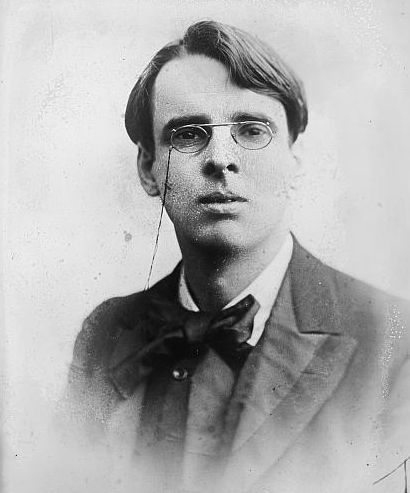
William_Butler_Yeats_1 Maud Gonne
by Rhea H.Boyden
Turning and turning in the widening gyre
The falcon cannot hear the falconer;
Things fall apart; the centre cannot hold;
Mere anarchy is loosed upon the world,
The blood-dimmed tide is loosed, and everywhere
The ceremony of innocence is drowned;
The best lack all conviction, while the worst
Are full of passionate intensity.

William Butler Yeats- The Second Coming

When my dear mentor sent me back an article I had written covered in correction symbols it felt like a punch in the face. I had genuinely been of the opinion that it had been very good, and nearly ready for publication. How wrong I was. ‘So, I will have to wrestle with this article all night and follow her instructions and disssect and interpret every red mark, green symbol, blue sign and purple arrow’, I sighed in exasperation. She had helpfully included a key to aid me in deciphering the symbols, and told me exactly what I needed to change and how to proceed. I had to do the work though, she wasn’t going to do it for me. I had never been published, and this was my first big chance to get my art show review into a New York magazine, so I was going to heed her rules. I took a deep breath. This was work, much unlike the creative heat of the inspiration of writing a first draft, which is fun and intoxicating. The symbols she had provided reminded me of formulae from my high school maths class which I had hated. Even very experienced writers with a couple novels under their belts, a knowledge of the process of getting a manuscript completed, and a tonne of confidence in their own ability, dread the proofs of their manuscripts being returned to them besmeared with red ink. The accomplished author Zadie Smith (who is my age) talks about her fear of receiving her novel back from editors. ‘Proofs are so cruel!’ she writes in her essay on writing. ‘Breeding lilacs out of the dead land, mixing memory and desire, stirring dull roots with spring rain. Proofs are the wasteland where your novel dies and the cold reality asserts itself.’ she says. I read this and I wonder if I will ever get my book finished. How is it I came to be writing a book anyway? It wasn’t really my plan. I already have a full time job and a very busy social life. And now I have to spend hours editing in my limited free time? I can only say that somehow writing chose me and not the other way around. Some of the essays I have written just somehow wrote themselves and were stream of consciousness, flowing out of me and onto paper in a river of ink flowing through a burst dam, uncontrolled by me. I am simply a conduit. My article ‘Musings on Modern Gender Relations’ wrote itself as I was under the influence of vodka cocktails on a cold December night. That article ended up as cover story in Gloss Magazine with the Irish Times and the response to the longer unedited version has reverberated throughout this entire year. And everyone had read the unedited version! I have been scrambling to edit it and make it better, but it seems people even loved the unproofed version. ‘It kind of flows and rambles in a very entertaining way, and I mean this as an absolute compliment.’ one friend of mine posted. Why I posted it online the minute I finished writing it, without even editing it or spell checking it is a mystery to me, and one of these crazy ideas of a beginning writer. I am not of the opinion that second drafts and editing are for sissies, and I am, of course, willing to put in the work, but I was just dying to get that essay out there. It couldn’t wait for editing, and the overwhelming feedback on it seemed to confirm this. Scores of people said: ‘What a timely essay, I couldn’t stop reading it.’ Even Gloss Magazine ignored the fact that it was clearly unedited and offered to publish a shorter version of it. This must have been beginner’s luck. I wouldn’t dare send an unedited article to a magazine again. What was I thinking? Even now, when I edit a draft two or three times, glaring errors still become apparent on a fourth read through. I do still post my articles on my blog and on Facebook all the time after two reads through, fully aware that there are still errors, but I think most of my readers are forgiving of this. I do not have the time to stay up til midnight every night, editing stories to magazine quality before I share them. If I ever get any of these articles published in a magazine again, I will go back and rework them. For now, they are good essays for my friends to read and that is fine. Writing is just a hobby that chose me and I was not even intending to get published yet. I started slowly writing an autobiograhy in recipes a year and a half ago for fun with the idea that maybe some day, if I am lucky, I will get it published, and it will be something that will be enjoyed by my circle of extended friends and family. I have no real formal education in style and syntax, neither am I journalist, or in possession of real solid skills that are needed to edit an article to top quality on my own. People keep saying: ‘Rhea, keep writing, you are so talented. Know it, own it, claim it!’ Hearing this kind of feedback is indeed very flattering and motivating, but I know only too well where my weaknesses lie. I need to spend more time studying style and syntax, punctuation and prose style, and all of this takes time. My book, of which I have written 50 pages, has been ignored these past 6 months in the excitement of getting my first two articles published, and then writing lots of other articles and prose poems on the heels of my publishing success. I need to forget all these other projects and get back to my book. Somehow I have developed a fear of revisiting that project though, partly because despite my lack of confidence, I do realise that my writing style and voice has improved a lot since I started that project , due to the sheer number of hours I have been writing. Going back to my book will be going back to a time when I was a worse writer than now, and I will likely groan and cringe at what I have written and realise how much work there is to be done to bring that project up to scratch, and indeed finish it. I completely relate to what Zadie Smith writes about revisiting things she has written and how daunting a task that is. She sums it up nicely in her essay by saying: ‘To look back at all past work induces nausea, but the first twenty pages in particular bring on heart palpitations. It’s like taking a tour of a cell in which you were once incarcerated.’ Indeed. Who wants to go back to jail? I need to have a more positive attitude and go back to that project that is dear to me and attack it with all my love. The very act of writing this essay here is yet another writing project I am throwing myself into in an attempt to ignore my book project. I have hope that I will attack it with a happy heart soon, especially as I am reminded by many teachers of writing that it is a good idea to leave things you have written for a spell before going back to them, as you can then approach editing with fresh and new energy that is somewhat removed from yourself and your ego. As Natalie Goldberg, teacher of creative writing and poetry, says in her essay on rereading and rewriting: ‘Time (away from what you have written) allows for distance and objectivity from your work. You can sit down and read something as if it weren’t yours. Become curious. Read it page by page. Even if it seemed dull when you wrote it, now you will recognise its texture and rhythm’. Yes, I must fight the nausea at my own earlier writings that I am bound to experience while rereading them, as Smith so clearly points out, but I can still have the benefit of re reading them from a detached and objective space. Quite apart from needing to squeeze time for writing and editing into an already busy work schedule, I must also find time for reading. Serious reading takes time, concentration and mental alertness. An alertness that is, depressingly, not always present after a long day of teaching. But read I must if I have any hope of being a good writer. My current reading materials are style guides, poetry, essays written by other writers, magazine articles on relationships, psychology, economics and history. I also read memoirs and the occasional novel of contemporary fiction. I have read many of the classics, but sadly my reading still has large gaps in it that I intend to fill when I find time for it. I have not read ‘War and Peace’ or ‘Crime and Punishment’ and neither of these books are high on my list of priority reading, even though I am aware that these are both books that one is ‘supposed to have read’. Both Smith and Goldberg talk about reading in their essays on writing. They both discuss how so many writers fear that their own voice will be lost if they read too much of another author’s work. Goldberg says in her essay that a student of hers complained to her that she was reading so much Hemingway that she was afraid her voice was not hers anymore, but that she was copying him. ‘That’s not so bad’, Goldberg writes. ‘It’s better to sound like Ernest Hemingway than old Aunt Bethune, who thinks Hallmark greeting cards contain the best poetry in America.’ Goldberg states that writing is a communal act, and that no one can lay claim to any voice. Obviously, if all you read is Hemingway over and over again, then you do not develop your own voice. You must read lots of different styles and different authors to broaden vocabulary and ideas constantly. While reading you will never know what will influence your style or not. In my experience, I notice with great joy while I am writing, how the different things I have read influence my writing, and I never have the feeling that it effects my own voice. If anything, all the diverse things I have read strengthen my writing. Surely it is arrogant to say that reading will ruin your voice? I would assume that most good writers have read a fair amount of books in their lives to date, and that all this reading influences their writing. How else have these good writers even developed a sophisticated enough vocabulary to write something worth reading if not by reading a lot themselves? Zadie Smith is also a proponent of reading a lot while writing, and says her writing desk is always covered in open novels while she is in the midst of writing a novel. As she says beautifully in her essay: ‘I think of reading like a balanced diet, if your sentences are too baggy, too baroque, then cut back on fatty Foster Wallace, say, and pick up Kafka as roughage. If your aesthetic has become so refined it is stopping you from placing a single mark on white paper, stop worrying so much what Nabokov would say, pick up Dostoyevsky, patron saint of style over substance.’ she advises. Who would worry about your reader thinking you have adopted someone else’s voice? I stand in awe, instead of Zadie Smith, who finds the time and energy to read all these other novels and write her own too. I have another very entertaining and ironic book that I love to read while commuting entitled ‘How Not To Write a Novel.’ by Sarah Newman and Howard Mittelmark. The book lays out, misstep by misstep, how you can sobotage your own novel in laugh -out-loud anecdotes that are easy to digest and somewhat silly, but at the same time very useful. They have one section where they talk all about how they understand how the beginning novelist wants to impress us by proving what an extensive vocabulary they have by wrestling with as many important and big words as possible that even they seem not to know the definition of in their writing. Newman and Mittelmark then offer a simple test that you can apply to any word to see if you know the definition. The test goes as follows: Ask yourself: ‘Do I know this word?’ If the answer is no, then you do not know the word.’ Natalie Goldberg also talks about how beginning writers are intimidated by the success and achievement of published and talented writers. She says simply that you need to subtract rules for writing, not add them muddying your prose with needless clutter. Writing needs to be kept clear, simple and honest if it is to make sense and keep the attention of your reader. ‘Good writing’ she says,’ is more of a process of uneducation than education.’ and her essays and simple tips seem to confirm this. Newman and Mittelmark humourously go on to talk about how confident and published writers have no problem using the speech tag ‘said’ when someone in a dialogue says something. Unpublished and inexperienced authors, on the other hand are uncomfortable with the boring repetition of the word ‘said’ when someone says something and try out every other word under the sun that indicates exactly in what manner someone has uttered something. The following section from their book is entitled: When the author thinks he is too good for the word ‘said’: ‘It was a dark and stormy night’, he divulged. ‘And, far from the coast we had no fear of any sea creature. How wrong we would be proved!’ he appended. She queried, ‘It was a sea creature? How is that possible?’ she further wished to determine. ‘It was a sea creature,’ he affirmed, ‘but one which had subtly mutated to be far more dangerous, far more deadly, than its marine counterpart. For on dry land,’ he uttered, ‘it had become both larger and more muscular. It’s funny’, he smirked, ‘now that I look back from safety.’ ‘Funny?’ she interrogated. ‘Hilarious!’ he expostulated. ‘Surely not?’ she doubted. ‘But how little you know!’ he exclaimed. ‘Says you!’ she objected. ‘That’s the last I am willing to say,’ he concluded. ‘Some listener you turned out to be!’ he snorted. This book wisely says that if we use too many words to say how something is said, we distract from what is being said, and we kill any chance of holding the attention of our readers, let alone landing a book deal. I am a beginning writer and I also get intimidated by all I have not read, all I do not know, and the sheer amount I have to read and learn, but I just try and be patient with myself. I do not have to write if I do not want to. I do it because it brings pleasure and gives me something to get lost in after a long day of work. When I am tired and in a bad mood, or lonely, I sometimes do not write. I sit on the couch, eat cookies, day dream and listen to music. That is ok too. And sometimes I do write when I am lonely and depressed and I find it lifts my mood. Goldberg has a whole chapter on loneliness and how you can write to reconnect with the universe. Smith too talks about how you can fall in line with a feeling, write, and go where it takes you instead of fighting it and going against the grain. Both of their essays on these topics have proven very useful therapy for me when I am feeling blue. In short, writing is therapy on so many levels and it can lift you up and help you process any low feeling you may have, whether it may be inadequacy, depression or loneliness. I live and breathe writing and I feel it is now an integral part of my life and essential for my sanity on many levels. When I was a young student at university in the United States, I did not do a whole lot of extracurricular reading and some would say that I was academically lazy. If I had not had to work the whole way through college, I may have had more leisure time for reading books for pleasure, but it was not the case. I did the coursework, made good grades, and that was that. I read about six novels in my free time for fun throughout my whole university career. I was more interested in going out and having a good time and doing a lot of sports when I was not at work or in class. It was not until a year after I graduated from university that I started reading again for pleasure. The book that set off my post university reading career was an autobiography by a woman named Mary Karr called ‘The Liar’s Club.’ It was so funny and so honest that I devoured it in one sitting and I immediately ordered her other novels and poetry and I have never looked back. Karr awakened in me a mature love of poetry, something which I, like a lot of people, found to be a chore at school. In Ireland we were forced to read a lot of W.B. Yeats and I never appreciated it. Presumably educators realise that the average teenager will not appreciate poetry at school, but will hopefully appreciate it at a later point and their wish is to lay the groundwork for this future appreciation. Mary Karr quotes Yeats’ ‘The Second Coming’ which is a serious poem about Christ’s Second Coming in the middle of talking about her crazy, hilarious Texan childhood. This was the first time I saw that poetry can come to life and have meaning in the middle of not such high brow literature. It was a revelation to me. Since that time, I have found poetry to be of great solace and find that it is speaking to me in a special language that only I can deciper at that time. This of course, is the very essence and beauty of poetry: it is very personal and it is there to be interpreted in many ways. I have cried and laughed at poetry and recently even written some of my own prose poetry, a process which was an incredible experience. Here again, like some of my crazier inspired essays, the poem wrote itself and just flowed out of me with me as the conduit. These are the times when I am not wrestling with words, rather they flow easily through my soul, muscles, blood and sub conscious mind easily, and with great pleasure. As an adult who has suffered unrequited love, I can feel compassion for Yeats when I write my own prose poetry. He was desperately in love with the Irish revolutionary and feminist Maud Gonne, who rejected his three marriage proposals. It seems the best muses for poetry and writing are the ones who are unable to give us the love we so seek from them. I wrote a poem (that I am very proud of) this past summer for a man, and I sent it to him and told him I had written it for him. He read it and politely rejected my advances. He has remained my muse however, as I have not yet been able to lodge him from my head. He has served a good purpose, however, as muse and character in nearly every poem and article I have written since then. If he had said he loved me too, and we had indeed started the love affair that I had built up in my silly head, I doubt I would have gotten a whole lot of writing done these past months. This is my solace. I am productive with my writing while not in love. Rejection breeds fertile ground for writing, and I am thankful to say that the writings inspired by him are merely mournful and hopeful for future reconciliation, and not bitter and resentful. Much of Yeats’ poetry requires dedication and a knowledge of Greek myths and a qualified teacher as a guide if you are to become a dedicated scholar and really get what he is talking about. I have read a lot of his poetry and I get a lot out of it, but a lot is lost on me because I do not have a professor at my side to guide me through it. But that is fine, we do not all have to be academic scholars of a poet to allow their writings to touch our busy lives and feed our souls. Poetry can lift you up regardless. Both Zadie Smith and Natalie Goldberg rave about John Keats and what an accessible poet he is. Smith talks about how she much she can relate to him and how he opened her mind to the beauty of poetry. ‘Keats offers his readers the possibility of entering through the side door,’ writes Smith, ‘the one marked ‘Apprentices Welcome Here’. For Keats went about his work as an apprentice. He took a sort of MFA of the mind, albeit alone, and for free in his little house in Hampstead. A suburban lower middle-class boy, he made his own scene out of the books of his library.’ To this I can most definitely relate. I am a homebody too, surrounded by my books, my ambition to write, and no advanced degree beyond a BA and no more professors to guide me. I do enjoy surrounding myself with my intellectual superiors and I lap up what they have to offer, and do not fear it. Keats’ poetry is so wonderful precisely because it is intellectually demanding, while at the same time unpretentious. He admits the limits of his knowledge and education in his poetry. His sonnet ‘To Homer’ opens with the folllowing two lines: ‘Standing aloof in giant ignorance, of these I hear and of the Cylades’. He pays homage to Homer in this sonnet, but admits his ignorance of the Greek language. It does not appear, however that his lack of knowledge of Greek impedes his own talent for writing poetry. His sonnets openly explore his weaknesses, his fear of not being loved, his fear of being alone and his mortality. These are universal fears whether we can read Homer and understand it, or have dropped out of high school and are struggling for recognition in society. We are all searching for love and are wrestling with whatever comes our way in life and we want attention and to be understood. Goldberg warns in one of her essays not to write because you want to be loved. ‘Writers get confused’ she says. ‘We think writing gives us an excuse for being alive. We forget that being alive is unconditional and that life and writing are two separate entities. Often we see writing as a way to receive love and attention. See what I wrote. I must be a good person.’ I must admit that I am guilty of using writing as a way of getting love and attention. I can hardly deny it after what I divulged above. That I have a muse and I wanted him to love me and my poetry. I wanted him to be a fan of my mind and my body. That is the fantasy that lives inside me. Quite apart from my romantic fantasies, however, I simply hope that people will like and appreciate my writing. I am ecstatic when I get messages from happy readers saying how much they love what I write. How could I not be happy? I have my critics too, of course, and I try and take their advice and learn from it. And I apologise for my terrible syntax and my somewhat perverse refusal to use ever use spellcheck. My writing, I know, swims in a sea of misplaced commas, which could, along with my poor syntax, be a result of my having learned the German tongue fluently, which is a language awash with commas and neverending sentences. I need to bear in mind Natalie Goldberg’s teaching that good writing is a process of uneducation. In my case unlearning German syntax while writing English sentences. It is something I wrestle with every day. But this relentless wrestling with language, writing, syntax and style need not be a tough match that ends in bruises if I remind myself that it is all a learning process that I can do in my own time. I, like Keats can set the pace and do my own MFA of the mind, in my own cozy living room, surrounded by the books and people I love.


Featured images: William Butler Yeats 1920 (Bain News Service) Maud Gonne (Max Elbo Graphics)

Image 7 Oct

Flora and Zephyr

by Rhea H.Boyden

Flora has carefully sown her seeds that will blossom in the spring watered tenderly by Zephyr, God of the west wind. She will not bare all too soon. She prepares herself for the long, cold retreat to the underworld where all is crisp and covered with ice. That same ice that does not feel as cold as winters past. Zephyr flies to her and adorns her with kisses and blossoms to give her strength. She slowly leaves the warm, wet place she wallowed in for too long with Satyr the goat man, in a fairy tale of unspoken words. Satyr remains cheerily chomping grasses in that wet fantasy land that she could never penetrate, so cloaked in clouds it was. She sees Venus shining ever brightly as her guide. Patience is the seed that will blossom for Flora in the end.<

Image is the painting 'Flora and Zephyr' by John William Waterhouse